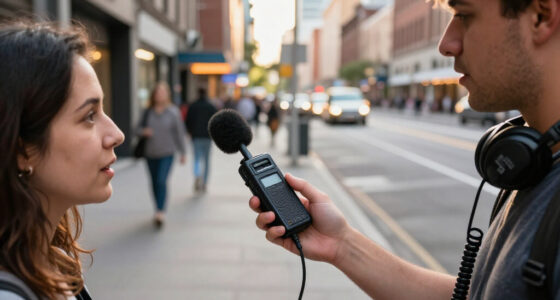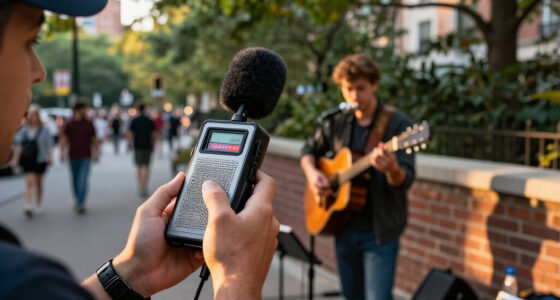

For journalists who need a pocket recorder with clear, dependable operation, I would start with the Sony ICD-UX570 as the best overall pick, while the Sony ICD-TX660 stands out for discreet portability and the EVISTR L359 for its large listed storage and transcription feature. The main tradeoffs are portability versus hands-on controls, simple recording versus extra playback and file features, and built-in capacity versus the work of managing recordings. A recorder that suits a sit-down interview may not be the right choice for a fast-moving press event or long field assignment. Read on for my comparison of all 15 models and guidance on matching one to your reporting routine.

Get everyday essentials delivered free with Prime
- Fast, free delivery on millions of items
- Prime Video, Amazon Music and more included
- Member-only deals all year
Key Takeaways
- Sony’s lineup covers distinct reporting needs: the compact TX660 favors low-profile carrying, while the UX570 is a more rounded everyday option and the older ICD-PX333, ICD-UX533, and ICD-SX712 offer alternate control and handling approaches.
- Storage figures vary widely across the list: models advertised with 64GB to 136GB suit people who keep many recordings on-device, but capacity alone does not establish sound quality or make file offloading unnecessary.
- Voice activation and playback extras are common selling points on several non-Sony models; they can help with long sessions, but journalists should check how each recording mode affects file continuity and review workflow.
- Simple recorders still have a place: the Olympus VN-7200 and Sony ICD-PX333 are less feature-led than options with transcription or expansive storage, which may suit reporters who want straightforward capture over an elaborate feature set.
- Feature claims do not replace workflow checks: AI transcription, password protection, MP3 playback, and rechargeable power address different needs, so the best fit depends on interview length, file handling, and how quickly notes must become usable text.
| EVISTR L359 128GB Digital Voice Recorder with AI Transcription |  | Best for AI-Assisted Reporting | Storage: 128 GB | Maximum recording bitrate: 3072 Kbps | Continuous recording time: Up to 33 hours | VIEW LATEST PRICE | See Our Full Breakdown |
| Tonfarb 64GB Digital Voice Recorder with Playback |  | Best for Hands-On Playback Review | Storage: 64 GB | Recording quality: Up to 1536 kbps PCM | Audio formats: MP3, WAV | VIEW LATEST PRICE | See Our Full Breakdown |
| Sony ICD-PX333 Digital Voice Recorder |  | Best for Replaceable-Battery Field Work | Internal memory: 4 GB | Expandable memory: microSD | Recording format: Mono MP3 | VIEW LATEST PRICE | See Our Full Breakdown |
| EVIDA 128GB Digital Voice Recorder with Voice Activation, Playback, and Password Protection |  | Best for Long Recording Sessions | Storage: 128 GB | Maximum recording time: 9,296 hours claimed | Continuous recording time: Up to 54 hours | VIEW LATEST PRICE | See Our Full Breakdown |
| Olympus VN-7200 Digital Voice Recorder |  | Best for Basic, Offline Dictation | Memory: 2 GB | Maximum recording time: Up to 1,151 hours | Recording modes: 3 | VIEW LATEST PRICE | See Our Full Breakdown |
| Sunlan 16GB Digital Voice Recorder with Playback |  | Best for Simple Interview Recording | Storage: 16 GB | Recording format: WAV | Microphone: Built-in mono with noise cancellation | VIEW LATEST PRICE | See Our Full Breakdown |
| EVISTR L357 64GB Digital Voice Recorder with Playback |  | Best for Flexible Field Interviews | Storage: 64 GB | Recording formats: MP3, WAV | Microphone: Built-in stereo | VIEW LATEST PRICE | See Our Full Breakdown |
| 16GB Voice Recorder with Voice Activation, USB Rechargeable Battery, and MP3/WAV Playback |  | Best for Organized Interview Review | Storage: 16 GB | Recording formats: MP3, WAV | Microphone: Built-in stereo | VIEW LATEST PRICE | See Our Full Breakdown |
| Sony ICD-UX570 Digital Voice Recorder, 4 GB |  | Best for Recording in Changing Environments | Storage: 4 GB | Microphone: Built-in stereo | Recording modes: Normal, Focus, Wide-stereo | VIEW LATEST PRICE | See Our Full Breakdown |
| ESCYTEGR 80GB Digital Voice Recorder with Playback and MP3 Player |  | Best for High-Capacity Fieldwork | Storage: 80 GB (16 GB onboard and preinstalled 64 GB microSD card) | Recording formats: MP3, WAV | Maximum PCM bitrate: 1536 Kbps | VIEW LATEST PRICE | See Our Full Breakdown |
| Sony ICD-TX660 Ultra-Thin Digital Voice Recorder with 16GB Built-In Memory |  | Best for Discreet, On-the-Go Reporting | Built-in storage: 16 GB | Maximum file count: Up to 5,000 files | Recording formats: MP3, Linear PCM | VIEW LATEST PRICE | See Our Full Breakdown |
| Olympus DM-520 Digital Voice Recorder |  | Best for File Management and Expandable Storage | Internal memory: 4 GB | Expandable memory: MicroSD compatible | Recording formats: PCM, MP3, WMA | VIEW LATEST PRICE | See Our Full Breakdown |
| Sony ICD-SX712 Digital Voice Recorder |  | Best for External Microphone Flexibility | Built-in storage: 2 GB | Expandable storage: SD card slot; supports cards up to 16 GB | Recording formats: LPCM (44.1 kHz, 16-bit), MP3 (320–8 kbps) | VIEW LATEST PRICE | See Our Full Breakdown |
| Tonfarb Digital Voice Recorder, 136GB |  | Best for Long Assignments Without File Offloading | Storage: 136 GB total: 8 GB built-in and included 128 GB TF card | Audio formats: MP3, WAV | Recording quality: Up to 1536 kbps PCM | VIEW LATEST PRICE | See Our Full Breakdown |
| Sony ICD-UX533 Digital Voice Recorder, 4 GB, Black |  | Best for Everyday Interview Work | Internal memory: 4 GB | Memory expansion: microSD/M2 card slot | Audio formats: MP3, AAC, WMA, WAV | VIEW LATEST PRICE | See Our Full Breakdown |
| digital voice recorders for journalist | Weight | Microphone | Connectivity | Storage |
|---|---|---|---|---|
| EVISTR L359 128GB Digital Voic | 2.24 ounces (65 g) | Built-in, mono | USB Type-C; wired OTG | 128 GB |
| Tonfarb 64GB Digital Voice Rec | — | Built-in stereo | USB 2.0 | 64 GB |
| Sony ICD-PX333 Digital Voice R | 74 g | — | USB | — |
| EVIDA 128GB Digital Voice Reco | 3.35 ounces | Built-in mono, noise cancellation | USB 2.0 | 128 GB |
| Olympus VN-7200 Digital Voice | 1.76 ounces | Built-in, mono | — | — |
| Sunlan 16GB Digital Voice Reco | 35 g | Built-in mono with noise cancellation | USB | 16 GB |
| EVISTR L357 64GB Digital Voice | 2.24 ounces | Built-in stereo | USB Type-C | 64 GB |
| 16GB Voice Recorder with Voice | 1.6 ounces | Built-in stereo | Micro USB | 16 GB |
| Sony ICD-UX570 Digital Voice R | 50 g | Built-in stereo | USB | 4 GB |
| ESCYTEGR 80GB Digital Voice Re | 3.67 ounces | — | USB Type-C | 80 GB (16 GB onboard and preinstalled 64 GB microSD card) |
| Sony ICD-TX660 Ultra-Thin Digi | — | Built-in | USB Type-C; supplied USB-A to USB-C cable | — |
| Olympus DM-520 Digital Voice R | 12 ounces | Built-in stereo | — | — |
| Sony ICD-SX712 Digital Voice R | 68 g (2.4 oz) | — | — | — |
| Tonfarb Digital Voice Recorder | — | — | — | 136 GB total: 8 GB built-in and included 128 GB TF card |
| Sony ICD-UX533 Digital Voice R | 58 g | Built-in stereo, 2-element array | Built-in USB | — |
More Details on Our Top Picks
EVISTR L359 128GB Digital Voice Recorder with AI Transcription
I’d put the L359 on a journalist’s shortlist when turning interviews into workable notes matters as much as capturing them. Its AI DVR Link app supports transcription in 113 languages, plus summaries, speaker identification, and mind maps—tools that can speed up the first pass through a long interview. The 128GB capacity also leaves room for extensive assignments, while one-touch recording and voice activation reduce setup friction. Compared with the EVIDA VR01, the L359 offers app-based transcription and USB-C/OTG transfers, but the EVIDA claims longer continuous recording time and does not depend on an AI app for its core recording functions. The L359 records with a built-in mono microphone, so it is better suited to clear, close interviews than capturing several voices spread across a noisy room. AI functions require the companion app, and the listed battery is nonstandard.
Pros:- AI app offers transcription in 113 languages, summaries, speaker identification, and mind maps.
- 128GB of storage accommodates a large archive of recordings.
- One-touch recording and voice activation help capture conversations quickly.
- USB-C and wired OTG support file transfers, with password encryption for stored files.
Cons:- Transcription and related AI tools require the AI DVR Link app.
- The built-in microphone records in mono, limiting its suitability for room-wide or multi-source audio.
- The included battery is described as nonstandard, and charging time is not specified.
Best for: Reporters who conduct frequent interviews and want app-based transcription and summaries alongside large onboard storage.
Not ideal for: Journalists who need stereo capture, dependable app-free transcription, or a standard, easily replaced battery.
- Storage:128 GB
- Maximum recording bitrate:3072 Kbps
- Continuous recording time:Up to 33 hours
- Transcription languages:113
- Audio formats:MP3, WAV
- Microphone:Built-in, mono
- Connectivity:USB Type-C; wired OTG
- Weight:2.24 ounces (65 g)
- Security:Password encryption
Our verdict“Choose the L359 if you want extensive storage and app-based interview transcription; skip it if you need stereo recording or a standard battery.”
Tonfarb 64GB Digital Voice Recorder with Playback
The Tonfarb suits journalists who want to record, replay, and check a passage on the device without building their workflow around transcription software. Its 1.44-inch screen, A-B loop playback, scheduled recording, and one-click operation make it more hands-on than the EVISTR L359, whose standout advantage is app-based AI transcription. The Tonfarb also lists a built-in stereo microphone, a useful distinction when an interview includes more than one voice, though microphone performance in a busy setting is not specified. At 64GB, it has ample room for routine reporting but half the capacity of the L359 or EVIDA VR01. The claimed battery figures vary: the listing gives up to 48 hours at a low MP3 bitrate and also cites a 32-hour average. I would treat those as setting-dependent, not a guarantee for high-quality recording.
Pros:- A-B loop playback helps revisit and check specific interview passages.
- Built-in stereo microphone offers a different capture approach from mono models such as the Sony ICD-PX333.
- One-click recording and scheduled recording support quick and planned sessions.
- 64GB storage, USB file transfer, and password protection support a practical recording workflow.
Cons:- Published battery figures vary and depend on recording settings.
- The product description does not list AI transcription or automated interview summaries.
- Its USB 2.0 interface is less current than the USB-C connection on the EVISTR L359.
Best for: Journalists who want on-device playback controls, looped listening, and scheduled recording for interviews or planned events.
Not ideal for: Reporters who need AI transcripts, clearly established high-quality battery runtime, or more than 64GB of storage.
- Storage:64 GB
- Recording quality:Up to 1536 kbps PCM
- Audio formats:MP3, WAV
- Microphone:Built-in stereo
- Screen:1.44 inches
- Battery:600 mAh; one included AAA battery required
- Continuous use:Up to 48 hours at MP3, 32 kbps
- Connectivity:USB 2.0
- Playback features:A-B loop playback
Our verdict“Pick the Tonfarb if you value on-device playback tools and stereo capture over AI transcription or maximum storage.”
Sony ICD-PX333 Digital Voice Recorder
I’d favor the Sony ICD-PX333 for reporters who put replaceable batteries and straightforward file handling ahead of high-capacity storage or automated transcription. It runs on two AAA batteries and lists up to 55 hours of battery life, giving field users a simple power option that contrasts with the EVISTR L359’s nonstandard included battery. Sony’s microSD expansion slot can add space beyond the 4GB internal memory, though the recorder remains a more basic mono MP3 tool than the L359’s app-connected workflow or the Tonfarb’s stereo microphone and A-B playback. Noise cut and track marking can help organize spoken material, while USB supports transfers to a computer. The main compromises are its mono-only recording, small internal capacity, and older listed computer operating-system requirements; journalists relying on current devices should check compatibility before choosing it.
Pros:- Two AAA batteries are replaceable in the field.
- Battery life is listed at up to 55 hours.
- A microSD slot expands on the 4GB internal memory.
- Noise cut, track marking, and USB transfer support basic interview review and file handling.
Cons:- Records mono MP3 only, unlike the Tonfarb’s listed stereo recording.
- The 4GB internal memory is limited without a microSD card.
- Listed operating-system requirements are dated and may not suit every current computer workflow.
Best for: Field reporters who prefer a simple recorder powered by replaceable AAA batteries and want expandable storage.
Not ideal for: Journalists who need stereo recordings, modern AI transcription, large built-in storage, or verified compatibility with newer computer systems.
- Internal memory:4 GB
- Expandable memory:microSD
- Recording format:Mono MP3
- Battery:Two AAA batteries
- Battery life:Up to 55 hours
- Maximum recording time:1073 hours
- Headphone jack:2.5 mm
- Connectivity:USB
- Weight:74 g
Our verdict“Choose the ICD-PX333 for replaceable power and simple expandable recording, but look elsewhere for stereo capture or AI-assisted interview work.”
EVIDA 128GB Digital Voice Recorder with Voice Activation, Playback, and Password Protection
The EVIDA VR01 makes the strongest case here for journalists who need long sessions and lots of onboard space, rather than an AI-assisted post-recording workflow. It offers 128GB of storage and lists up to 54 hours of continuous recording, compared with the EVISTR L359’s 33-hour maximum and app-based transcription features. Its adjustable six-level voice activation can help reduce silent gaps, while playback and password protection keep the device useful for routine interview work. The tradeoff is a fairly conventional feature set: unlike the L359, the VR01 does not list transcription, and its built-in microphone is mono. It also lacks a headphone jack, which limits direct monitoring and on-device listening with wired headphones. The claimed maximum recording time of 9,296 hours depends on settings, so I would not treat that figure as a measure of high-quality recording capacity.
Pros:- 128GB of onboard storage supports a large recording archive.
- Up to 54 hours of continuous recording is listed.
- Six voice-activation sensitivity levels allow adjustment for different recording conditions.
- Playback, password protection, and USB transfer cover core interview management needs.
Cons:- No headphone jack for wired monitoring or listening.
- The built-in microphone records mono, unlike the Tonfarb’s listed stereo microphone.
- It lacks the transcription and AI summary tools offered by the EVISTR L359.
Best for: Journalists recording long meetings or interviews who want generous storage, adjustable voice activation, and computer file transfer.
Not ideal for: Reporters who need headphone monitoring, stereo capture, or transcription and summaries built into their workflow.
- Storage:128 GB
- Maximum recording time:9,296 hours claimed
- Continuous recording time:Up to 54 hours
- Recording formats:MP3, WAV
- Maximum recording bitrate:1536 kbps
- Microphone:Built-in mono, noise cancellation
- Voice activation:6 sensitivity levels
- Connectivity:USB 2.0
- Weight:3.35 ounces
Our verdict“Choose the EVIDA VR01 for long, high-capacity recording sessions if you can work without a headphone jack or AI transcription.”
Olympus VN-7200 Digital Voice Recorder
The Olympus VN-7200 is the simplest fit for a reporter who wants basic voice capture and playback without computer-based file management. Three recording modes, voice activation, and fast or slow playback cover straightforward dictation and meeting notes. Its listed capacity reaches up to 1,151 hours, but that figure should be read alongside its 2GB memory and low-detail product information, not as evidence of high-quality interview recording. Compared with the Sony ICD-PX333, the Olympus lacks a PC interface, so moving audio into a newsroom workflow is less convenient; Sony offers USB transfer and expandable microSD storage. The Olympus is lighter at 1.76 ounces and includes a 3.5mm headphone jack, but its mono microphone and absence of computer connectivity make it a poor choice for journalists who need to archive, transcribe, or share recordings digitally.
Pros:- Lightweight design at 1.76 ounces.
- Three recording modes offer a choice of basic capture settings.
- Voice activation and fast or slow playback support simple note review.
- Includes a 3.5mm headphone jack.
Cons:- No PC interface makes computer transfer and digital archiving difficult.
- The 2GB memory is limited compared with 64GB and 128GB options in this roundup.
- Records through a built-in mono microphone, with no stereo option listed.
Best for: Reporters who need lightweight, basic dictation or meeting-note capture and do not need to transfer files to a computer.
Not ideal for: Journalists who must upload, archive, transcribe, or share audio through a computer-based reporting workflow.
- Memory:2 GB
- Maximum recording time:Up to 1,151 hours
- Recording modes:3
- Microphone:Built-in, mono
- Playback:Fast and slow
- Voice activation:Yes
- PC interface:No
- Headphone jack:3.5 mm
- Weight:1.76 ounces
Our verdict“Choose the VN-7200 for lightweight offline dictation, but skip it if your reporting depends on transferring or processing audio on a computer.”
Sunlan 16GB Digital Voice Recorder with Playback
I’d pick the Sunlan for a reporter who wants to start recording quickly without sorting through many settings. Its one-button operation and voice activation make it straightforward for sit-down interviews, while A-B repeat helps replay a quote without searching through the whole file. The 16GB capacity and WAV recording are a more focused setup than the EVISTR L357’s 64GB storage and stereo microphone, which better suits longer assignments or more flexible capture. Sunlan’s built-in microphone is mono, so it is less suitable when stereo separation matters, and its playback time is listed at just seven hours. The compact 35-gram body is easy to carry, but I’d choose it for uncomplicated speech recording rather than a feature-rich field kit.
Pros:- One-button recording and playback keep operation simple during interviews.
- Voice activation can reduce stretches of silence in recordings.
- WAV recording and 16GB storage support straightforward interview capture.
- Light 35 g body is easy to carry in a pocket or press bag.
Cons:- Built-in mono microphone does not offer stereo recording.
- Playback is listed at only seven hours.
- Limited controls make it less adaptable than the EVISTR L357 for varied recording situations.
Best for: Journalists who mainly record one-on-one interviews and want simple controls, voice activation, and WAV files in a small recorder.
Not ideal for: Reporters who need stereo capture, long playback between charges, or the larger storage and adjustment options of the EVISTR L357.
- Storage:16 GB
- Recording format:WAV
- Microphone:Built-in mono with noise cancellation
- Recording time:Up to 30 hours
- Playback time:Up to 7 hours
- Recording bitrate:1536 kbps
- Connectivity:USB
- Weight:35 g
Our verdict“Choose the Sunlan if simple controls and portable WAV interview recording matter more than stereo sound or extended playback.”
EVISTR L357 64GB Digital Voice Recorder with Playback
The EVISTR L357 is a strong fit for reporters who want more control over how speech is captured and reviewed. Its stereo microphone, seven recording-gain levels, and seven voice-activation sensitivity levels offer more adjustment than the simpler Sunlan 16GB recorder. MP3 and WAV support let me choose between smaller files and a higher-quality format, while scheduled recording and variable-speed playback add practical options for assignments and transcription. USB-C file transfer is a useful advantage for moving recordings to Windows or Mac computers. The product information gives different capacity claims: 107 hours of digital recording and up to 4,660 hours at 32 Kbps, so I would not plan a reporting schedule around the maximum figure alone. Its 64GB storage is generous, but the conflicting time estimates make capacity less clear.
Pros:- Built-in stereo microphone gives it broader capture capability than the mono Sunlan.
- Seven gain and voice-activation sensitivity levels allow recording settings to be adjusted.
- MP3 and WAV recording with variable-speed playback supports different workflows.
- USB-C transfer works with Windows and Mac computers.
Cons:- The stated recording-time figures conflict, making actual usable capacity difficult to judge.
- More controls may be unnecessary for reporters who want simple one-button operation.
- The listed 32-hour recording time may require more frequent charging on long assignments.
Best for: Journalists recording frequent interviews who want stereo capture, gain controls, multiple formats, and USB-C transfers.
Not ideal for: Reporters who prefer a very simple recorder or need unambiguous recording-capacity figures before relying on it for extended assignments.
- Storage:64 GB
- Recording formats:MP3, WAV
- Microphone:Built-in stereo
- Recording gain:7 adjustable levels
- Voice activation:7 sensitivity levels
- Continuous recording time:Up to 32 hours
- Connectivity:USB Type-C
- Weight:2.24 ounces
Our verdict“Pick the L357 for adjustable stereo interview recording and USB-C transfers, but treat its maximum recording-time claims cautiously.”
16GB Voice Recorder with Voice Activation, USB Rechargeable Battery, and MP3/WAV Playback
This 16GB recorder puts more emphasis on finding and reviewing interview material than on long recording sessions. File timestamps, password protection, A-B repeat, and variable-speed playback can help a reporter keep recordings organized and revisit a quote efficiently. It also records in MP3 or WAV and has a built-in stereo microphone, giving it a more versatile capture setup than the mono Sunlan. The headline capacity of 1,120 hours applies at the listed low bitrate, not necessarily when recording in WAV, so I’d focus on the 16GB storage rather than treating that maximum as a typical reporting allowance. Battery endurance is another limit: up to 20 hours recording and eight hours of playback are shorter than the EVISTR L357’s stated playback time. Micro USB also makes file transfer less current than USB-C.
Pros:- Stereo microphone and MP3/WAV support provide more format flexibility than the mono Sunlan.
- Timestamps and password protection support organized handling of interview files.
- A-B repeat and variable-speed playback help with quote review and transcription.
- Voice activation can limit silent stretches in recordings.
Cons:- Up to 1,120 hours depends on recording at the lowest listed bitrate.
- Recording time is listed at up to 20 hours and playback at up to 8 hours.
- Micro USB is less convenient for buyers seeking USB-C file transfer.
Best for: Journalists who value timestamps, password protection, and playback tools for reviewing and organizing recorded interviews.
Not ideal for: Reporters who record long assignments between charges or want USB-C transfer and more playback time, as offered by the EVISTR L357.
- Storage:16 GB
- Recording formats:MP3, WAV
- Microphone:Built-in stereo
- Continuous recording time:Up to 20 hours
- Playback time:Up to 8 hours with earphones
- Maximum recording time:Up to 1,120 hours at 32 kbps
- Connectivity:Micro USB
- Weight:1.6 ounces
Our verdict“Choose this model if interview organization and playback tools matter more to you than long battery sessions or USB-C.”
Sony ICD-UX570 Digital Voice Recorder, 4 GB
The Sony ICD-UX570’s strongest case for journalists is its three recording modes: Normal, Focus, and Wide-stereo. That choice gives it a more environment-aware approach than the Sunlan, which offers simpler mono recording, and may suit reporters moving between a close interview and a broader scene. Its built-in stereo microphone, 1.5-inch screen, USB connection, and quick charging add to its appeal as a compact, direct-to-use recorder. The tradeoff is the 4GB storage, which is far less than the 64GB EVISTR L357 or 80GB ESCYTEGR. Product details also list digital recording time as 60 minutes without clarifying the recording conditions, and battery information is unclear. I’d treat it as a simpler, mode-focused option rather than a high-capacity recorder for extended reporting.
Pros:- Normal, Focus, and Wide-stereo modes offer more recording choices than the Sunlan.
- Built-in stereo microphone suits a wider range of interview and scene recordings.
- USB connectivity and quick charging support practical file handling and top-ups.
- The 1.5-inch screen is larger than the 1-inch displays listed for the Sunlan and EVISTR L357.
Cons:- 4GB storage is far below the 64GB EVISTR L357 and 80GB ESCYTEGR.
- The listed 60-minute digital recording time is unclear and may not reflect typical use.
- Battery details are not specified in the product information.
Best for: Journalists who record shorter interviews or scenes and want selectable microphone modes in a compact Sony recorder.
Not ideal for: Reporters who need clear, high-capacity recording-time information or ample storage for frequent, extended assignments.
- Storage:4 GB
- Microphone:Built-in stereo
- Recording modes:Normal, Focus, Wide-stereo
- Audio formats:MP3, WMA
- Connectivity:USB
- Headphone jack:3.5 mm
- Screen size:1.5 inches
- Weight:50 g
Our verdict“Consider the Sony ICD-UX570 for its selectable recording modes, but skip it if storage capacity and clear endurance details are priorities.”
ESCYTEGR 80GB Digital Voice Recorder with Playback and MP3 Player
For a journalist who records often and wants room to keep files on the device, the ESCYTEGR combines 80GB of storage with dual microphones, stereo operation, and USB-C transfer. Its capacity exceeds the 64GB EVISTR L357, while the 1.44-inch color display gives it a different, more screen-oriented feel than that model’s 1-inch display. Voice activation, timer recording, line-in recording, and password protection make it more than a basic interview recorder, and the stated battery life of up to 100 hours is appealing for extended field use. The main qualification is that maximum recording time depends on using low-bitrate MP3; high-bitrate PCM files will use storage faster. The product also notes that external microphone support may require an additional microphone, so I wouldn’t assume the built-in pair covers every reporting setup.
Pros:- 80GB onboard and microSD storage exceeds the EVISTR L357’s 64GB capacity.
- Dual stereo microphones and DSP noise reduction support speech recording.
- USB-C, timer recording, and line-in recording offer a broad set of fieldwork options.
- Up to 100 hours of stated battery life may suit extended reporting schedules.
Cons:- Maximum recording time depends on using low-bitrate MP3 rather than high-bitrate PCM.
- External microphone support may require buying a separate microphone.
- At 3.67 ounces, it is heavier than the compact Sunlan and the 1.6-ounce recorder in this lineup.
Best for: Journalists who record frequently, keep substantial material on-device, and want USB-C transfer plus multiple recording methods.
Not ideal for: Reporters who need an external microphone included or expect the maximum recording-time claim while using high-bitrate PCM.
- Storage:80 GB (16 GB onboard and preinstalled 64 GB microSD card)
- Recording formats:MP3, WAV
- Maximum PCM bitrate:1536 Kbps
- Battery life:Up to 100 hours
- Microphones:Built-in dual microphones; stereo operation
- Display:1.44-inch color screen
- Connectivity:USB Type-C
- Weight:3.67 ounces
Our verdict“Choose the ESCYTEGR for high storage capacity and varied recording options, provided you understand that high-bitrate files reduce available recording time.”
Sony ICD-TX660 Ultra-Thin Digital Voice Recorder with 16GB Built-In Memory
For reporters who need a recorder that stays out of the way, the Sony ICD-TX660 is the standout here: at one ounce and less than a third of an inch thick, it can clip to a jacket or notepad without adding much bulk. One-push recording helps capture a sudden comment quickly, while automatic voice recording can reduce handling between interviews. Its 16 GB holds up to 5,000 files, and time-jump playback is useful when reviewing long interview recordings for a particular passage. Compared with the more expandable Sony ICD-SX712, the TX660 is slimmer and has more built-in storage, but it has no stated card slot and relies on its built-in microphone. It also records in MP3 or Linear PCM, so journalists should choose settings with file size and audio quality in mind. The supplied cable connects USB-C to USB-A, not USB-C at both ends.
Pros:- Ultra-thin, one-ounce body clips easily to clothing or a notepad
- 16 GB internal memory supports up to 5,000 files
- One-push and automatic voice recording help capture interviews promptly
- Time-jump playback and USB-C connectivity simplify review and file transfer
Cons:- No expandable storage is specified
- Built-in microphone only, with no external microphone input listed
- Included cable is USB-A to USB-C rather than USB-C to USB-C
Best for: Journalists who travel light, record frequent interviews, and want a recorder they can clip to clothing or a notebook.
Not ideal for: Reporters who need removable storage, an external microphone input, or the flexibility to swap cards during a busy reporting day.
- Built-in storage:16 GB
- Maximum file count:Up to 5,000 files
- Recording formats:MP3, Linear PCM
- Maximum recording time:Up to 636 hours
- Microphone:Built-in
- Connectivity:USB Type-C; supplied USB-A to USB-C cable
- Headphone jack:3.5 mm
- Dimensions and weight:0.79 × 4.02 × 0.29 in; 1 oz
Our verdict“Choose the ICD-TX660 if a discreet, lightweight recorder matters more than removable storage or external-mic flexibility.”
Olympus DM-520 Digital Voice Recorder
The Olympus DM-520 suits journalists who want more control over organizing recordings on the device itself. Its file-moving, copying, and editing functions can help separate interviews or trim material before transferring it, while the MicroSD slot gives it an expansion route that the Sony ICD-TX660 lacks. The built-in stereo microphone and PCM, MP3, and WMA options offer flexibility for different recording and storage needs. Its stated maximum of up to 1,076 hours refers to recording capacity, not battery endurance: battery life is listed as up to 51 hours, and it uses two AAA batteries. That makes spare-power planning more hands-on than with the rechargeable Tonfarb recorder. At 12 ounces, it is also far heavier than the pocketable Sony TX660. I would favor it for organized, longer assignments, not for reporters prioritizing a light carry.
Pros:- MicroSD compatibility allows storage expansion beyond the 4 GB internal memory
- Built-in stereo microphone and three recording formats offer recording flexibility
- On-device file moving, copying, and editing support interview organization
- Listed battery life is up to 51 hours
Cons:- Two AAA batteries are required
- At 12 ounces, it is substantially heavier than the Sony ICD-TX660 and Sony ICD-SX712
- The listed capacity of up to 1,076 hours depends on recording conditions and format
Best for: Journalists who manage many interview files on the recorder and want MicroSD expansion plus onboard file tools.
Not ideal for: Mobile reporters who need a very light pocket recorder or prefer a rechargeable battery over carrying spare AAA cells.
- Internal memory:4 GB
- Expandable memory:MicroSD compatible
- Recording formats:PCM, MP3, WMA
- Microphone:Built-in stereo
- Maximum recording capacity:Advertised up to 1,076 hours
- Battery life and type:Up to 51 hours; 2 AAA batteries
- Headphone jack:3.5 mm
- Weight:12 ounces
Our verdict“Pick the DM-520 if onboard file management and MicroSD expansion matter more than a light, modern carry.”
Sony ICD-SX712 Digital Voice Recorder
The Sony ICD-SX712 has a useful advantage for reporters who sometimes need more than a built-in microphone: its 3.5 mm stereo microphone input supports an external mic, while its two-position stereo microphone can handle simpler interviews on its own. It records LPCM or MP3 and accepts an SD card up to 16 GB, so journalists can shift from higher-detail recording to smaller files or add storage as assignments grow. Compared with the slimmer Sony ICD-TX660, the SX712 is less convenient to clip discreetly and has only 2 GB built in, but it offers more microphone flexibility. The built-in speaker and headphone jack help with field playback, though headphones are a better choice for checking detail. Its two AAA batteries last up to 25 hours, so it falls short of the TX660’s stated recording time and needs spare batteries for longer stretches.
Pros:- 3.5 mm stereo microphone input supports external microphones
- SD card slot accepts cards up to 16 GB
- Records LPCM and MP3, allowing a choice between higher-detail audio and smaller files
- Built-in speaker, headphone jack, and USB connection support field review and transfer
Cons:- Only 2 GB of built-in storage
- Two AAA batteries provide up to 25 hours of battery life
- Less pocket-discreet than the one-ounce Sony ICD-TX660
Best for: Journalists who want a built-in stereo mic plus the option to connect an external microphone and add an SD card.
Not ideal for: Reporters seeking a slim, easily clipped recorder with substantial built-in memory and long battery endurance.
- Built-in storage:2 GB
- Expandable storage:SD card slot; supports cards up to 16 GB
- Recording formats:LPCM (44.1 kHz, 16-bit), MP3 (320–8 kbps)
- Maximum recording time:Over 500 hours
- Microphone connections:Built-in two-position stereo microphone; 3.5 mm stereo microphone input
- Battery:2 AAA batteries; up to 25 hours
- Audio connections:3.5 mm headphone jack; 3.5 mm microphone input
- Weight:68 g (2.4 oz)
Our verdict“Choose the SX712 if external-mic support and expandable storage outweigh its limited built-in memory and battery life.”
Tonfarb Digital Voice Recorder, 136GB
For reporters who record long stretches and would rather not clear space between assignments, the Tonfarb 136GB recorder comes with 8 GB onboard and a 128 GB TF card. Its one-touch and voice-activated modes make it quick to start an interview or capture speech while limiting unnecessary recording, and WAV support up to 1536 kbps PCM gives journalists a higher-quality option than MP3. The dual noise-reduction microphones and up to 68 hours of battery life also suit extended field days. Compared with the Sony ICD-TX660, it offers far more storage and longer stated battery life, but its 97–100 g listed weight is heavier and its specifications do not state a separate microphone input. The supplied information also gives less detail about proven performance than for the established Sony models. I’d choose it for capacity and convenience, not for a well-documented professional workflow.
Pros:- Includes 128 GB TF card alongside 8 GB built-in storage
- Up to 68 hours of battery life per charge
- One-touch and voice-activated recording support quick capture
- WAV recording up to 1536 kbps PCM and built-in dual noise-reduction microphones
Cons:- Listed weight differs between sources: 97 g and 100 g
- No external microphone input is specified
- The supplied product information does not establish how its noise reduction performs in challenging interview settings
Best for: Journalists covering multi-day events or long interviews who want a large included card and rechargeable power.
Not ideal for: Reporters who depend on a documented external-microphone setup, very low carry weight, or extensive product information before choosing field gear.
- Storage:136 GB total: 8 GB built-in and included 128 GB TF card
- Audio formats:MP3, WAV
- Recording quality:Up to 1536 kbps PCM
- Microphones:Built-in dual noise-reduction microphones
- Battery:1100 mAh rechargeable lithium battery
- Battery life:Up to 68 hours
- Connectivity and audio:USB-C; 3.5 mm headphone jack
- Dimensions and weight:0.47 × 1.45 × 4 in; listed as 97 g or 100 g
Our verdict“Choose the Tonfarb when included high-capacity storage and long rechargeable operation take priority over lighter weight and better-documented connections.”
Sony ICD-UX533 Digital Voice Recorder, 4 GB, Black
The Sony ICD-UX533 is a practical middle ground for reporters who want a stereo recorder with expandable memory but do not need the external microphone input found on the Sony ICD-SX712. Its 4 GB internal storage is a useful starting point, and the microSD/M2 slot leaves room to add capacity for a run of interviews. Automatic or manual recording-level control gives journalists a choice between simpler setup and more direct level adjustment, while the backlit display helps with basic operation in dim locations. It also plays several common formats and connects through a built-in USB plug, avoiding a separate cable. Compared with the ultra-thin Sony ICD-TX660, the UX533 is less discreet but offers card expansion. Its two AAA batteries are a tradeoff against rechargeable models, and the stated 1,073-hour maximum varies with format and recording settings.
Pros:- 4 GB internal memory with microSD/M2 expansion
- Built-in stereo microphone offers automatic or manual recording-level control
- Direct built-in USB connection avoids carrying a separate transfer cable
- Supports MP3, AAC, WMA, and WAV playback and recording
Cons:- Uses two AAA batteries rather than a specified rechargeable battery
- Maximum recording time varies by recording format and settings
- No external microphone input is listed
Best for: Journalists who record regular interviews and want expandable storage, stereo microphones, and direct USB transfer in a familiar handheld format.
Not ideal for: Reporters who need an ultra-thin clip-on recorder, an external microphone input, or consistent high-quality recording at the maximum stated duration.
- Internal memory:4 GB
- Memory expansion:microSD/M2 card slot
- Audio formats:MP3, AAC, WMA, WAV
- Maximum recording time:Up to 1,073 hours, depending on settings
- Microphone:Built-in stereo, 2-element array
- Battery:2 AAA batteries included; up to 30 hours
- Connectivity:Built-in USB
- Weight:58 g
Our verdict“Pick the UX533 for everyday reporting if you want stereo recording and expandable storage without the bulk of a larger file-management recorder.”
How We Picked
I compared these recorders through a journalist’s day-to-day workflow: starting a recording quickly, keeping a device accessible, capturing interviews reliably, reviewing files, and moving audio into a reporting or transcription process. I weighed the stated storage, recording and playback features, power approach, physical form, and controls, while treating feature labels as clues rather than proof of recording quality. A large capacity can reduce the need to clear space between assignments, but it does not by itself make a recorder better for interviews.
The ranking favors models that appear to balance practical capture, portability, and useful review features, then gives more specialized devices credit for a clearly defined role. Sony models rank strongly where the product positioning points to focused portable recording, while high-capacity models such as the EVISTR L359 and Tonfarb 136GB offer a different advantage for people who keep many files on-device. Simpler and older models remain relevant for basic capture, but rank lower when they offer fewer clearly stated tools for a modern reporting workflow. Buyers should verify file formats, connection methods, compatibility, and current product support before relying on any model for deadline work.
| digital voice recorders for journalist | Microphone |
|---|---|
| EVISTR L359 128GB Digital Voic | Built-in, mono |
| Tonfarb 64GB Digital Voice Rec | Built-in stereo |
| Sony ICD-PX333 Digital Voice R | — |
| EVIDA 128GB Digital Voice Reco | Built-in mono, noise cancellation |
| Olympus VN-7200 Digital Voice | Built-in, mono |
| Sunlan 16GB Digital Voice Reco | Built-in mono with noise cancellation |
| EVISTR L357 64GB Digital Voice | Built-in stereo |
| 16GB Voice Recorder with Voice | Built-in stereo |
| Sony ICD-UX570 Digital Voice R | Built-in stereo |
| ESCYTEGR 80GB Digital Voice Re | — |
| Sony ICD-TX660 Ultra-Thin Digi | Built-in |
| Olympus DM-520 Digital Voice R | Built-in stereo |
| Sony ICD-SX712 Digital Voice R | — |
| Tonfarb Digital Voice Recorder | — |
| Sony ICD-UX533 Digital Voice R | Built-in stereo, 2-element array |
Factors to Consider When Choosing Digital Voice Recorders For Journalists
Choosing a recorder for journalism is less about collecting the longest feature list and more about removing friction from interviews. I would match the device to the reporting setting, the way you handle audio afterward, and the consequences of a missed recording.
Match the recorder to the interview setting
A one-on-one interview in a quiet room places different demands on a recorder than a street interview, press scrum, or group discussion. For unpredictable settings, accessible controls and a placement that keeps the microphone unobstructed may matter more than a slim body or a large memory figure. Before buying, check whether the recorder can be operated quickly without navigating multiple menus. Think about where it will sit: on a table, in a pocket, or attached near the speaker. A device that is easy to carry but awkward to position can produce a less useful result than a slightly larger recorder you can set up confidently. For important interviews, plan a backup recording method rather than relying on any single device.
Treat storage as a file-management decision
More storage can be useful when reporting takes you away from a computer for long stretches, but it also makes it easier to accumulate files that are never labeled or backed up. Estimate your typical recording schedule and decide how often you can transfer audio, rather than choosing capacity from the biggest number alone. Check how recordings connect to your computer or phone and whether the file format fits your editing and transcription tools. If you cover several stories at once, a consistent naming and folder routine can matter more than extra gigabytes. Avoid assuming that built-in memory means recordings are safely backed up. For sensitive or irreplaceable interviews, copy files to a separate location soon after the assignment.
Choose features that support your post-interview workflow
Playback controls, voice activation, transcription features, and password protection solve separate problems; they are not interchangeable signs of quality. Playback tools can help locate a quote, while transcription support may shorten the route from audio to draft, but neither removes the need to check names, figures, and context against the recording. Voice activation can reduce stretches of silence, yet reporters should check whether it might clip a quiet opening or pause. Password protection may help with casual access control, but it should not be treated as a substitute for secure file storage or newsroom policy. Before paying extra for a feature, identify the specific task it will save time on. If you rarely use it, simpler controls may be a better fit.
Balance portability with easy operation
A thin recorder is easier to keep on hand and can be less conspicuous, which helps when you want to avoid drawing attention to note-taking. Smaller designs can also mean tighter buttons or a more compact display, making operation harder when you need to start recording quickly. Larger devices may be easier to handle and check at a glance, though they take up more space in a field kit. Consider whether you will record while standing, walking, or managing other equipment. Try to prioritize a clear record indicator and controls you can identify by touch, especially for fast assignments. The right balance is the one that keeps the recorder both available and usable.
Plan for power, connections, and long assignments
Power arrangements affect whether a recorder is ready when an interview runs long or a day changes unexpectedly. Check the stated battery type or charging method, then consider whether you can carry spares or recharge between assignments. Do not infer endurance from a rechargeable label alone; recording settings and usage can affect how long a device lasts. Connection options matter just as much: transferring files should fit the computers and cables you actually use. A recorder that stores audio but creates a slow or unreliable handoff can add deadline pressure. For travel reporting, favor a power and transfer routine you can maintain without special equipment.
Spend for workflow gains, not feature count
Paying more makes sense when a recorder solves a recurring reporting problem, such as discreet carrying, faster file review, or reduced transcription work. It is less compelling when the added functions are unrelated to your assignments or duplicate tools already in your phone or laptop. Compare the cost of operating the device too: batteries, cables, storage management, and time spent moving files all affect its practical value. Beginners may get more from uncomplicated recording and playback than from a long list of settings. Experienced reporters handling frequent interviews may value controls and transfer habits that save time every week. Choose the feature you will use on your next assignment, not the one that sounds most advanced on a product page.
Frequently Asked Questions
Is a recorder with AI transcription a good choice for interview reporting?
It can help create a first-pass transcript, but it should not be treated as a verified record of what a source said. Names, technical terms, overlapping speech, accents, and noisy locations can all lead to errors that affect accuracy. Check whether the transcription feature requires an app, account, internet access, or a separate service before making it central to your workflow. Keep and review the original audio, especially for quotations and sensitive claims. A transcription feature is most useful when it reduces routine typing without replacing editorial verification.
Should I choose the highest-capacity recorder for long reporting days?
Only if your recording volume and file-transfer routine make that capacity useful. A large storage figure can reduce the chance of running out of space between transfers, but it does not tell you how long the battery lasts or whether the files are easy to retrieve. Consider how many interviews you typically record before you can back up audio and leave room for unexpected assignments. Also check the device’s transfer method and file organization, since crowded storage can become difficult to manage. A smaller capacity with regular, reliable backups may suit some reporters better.
Can voice activation be trusted for an important interview?
Voice activation can limit recorded silence, but it may miss quiet speech or the first words after a pause depending on its detection behavior. That risk matters when a short answer, soft-spoken source, or exact wording is central to a story. If you use this mode, test it with voices and surroundings like those you expect in the field. For high-stakes interviews, continuous recording is often the safer workflow when storage and battery allow. Review the start and end of sample files before relying on the feature for deadline reporting.
Is a thin recorder better for recording sources discreetly?
A slim form can be easier to carry and less visually prominent, but discreetness should not come at the expense of clear audio or informed consent. Local laws, newsroom rules, and ethical standards may restrict recording without permission, so check them before an assignment. A smaller body may also have controls that are harder to operate quickly and a display that is less convenient to review. If discretion means portability rather than concealed recording, compare the device’s handling and record indicators as well as its dimensions. Choose a design that fits your reporting practice and legal obligations.
What should I check before relying on an older recorder for newsroom work?
Confirm that it still records reliably and that its file format can be opened by your current editing and transcription tools. Check the battery condition or power requirements, the connection method, and whether compatible cables or accessories are available. Older models may have straightforward controls, but they can lack newer conveniences or support for current devices. Make a test recording, transfer it, and listen back before taking the recorder to an important interview. Keep a backup plan until you know the full workflow works with your newsroom equipment.
Conclusion
For an all-purpose reporting recorder, I would choose the Sony ICD-UX570 as my best overall pick from this group. The EVISTR L359 is my best value-style choice for buyers who prioritize generous listed storage and a transcription feature, while the Sony ICD-TX660 is the best premium-style fit for journalists who put a slim, discreet carry above extra capacity. Beginners who want a simpler recording routine can start with the Olympus VN-7200, after checking that its file handling suits their setup. For specific needs, choose the Tonfarb 136GB when on-device capacity is the priority, or a voice-activation model when reducing silence matters and you have tested its behavior. Match the device to your interview conditions, then confirm power, transfer, and backup steps before trusting it with a story.