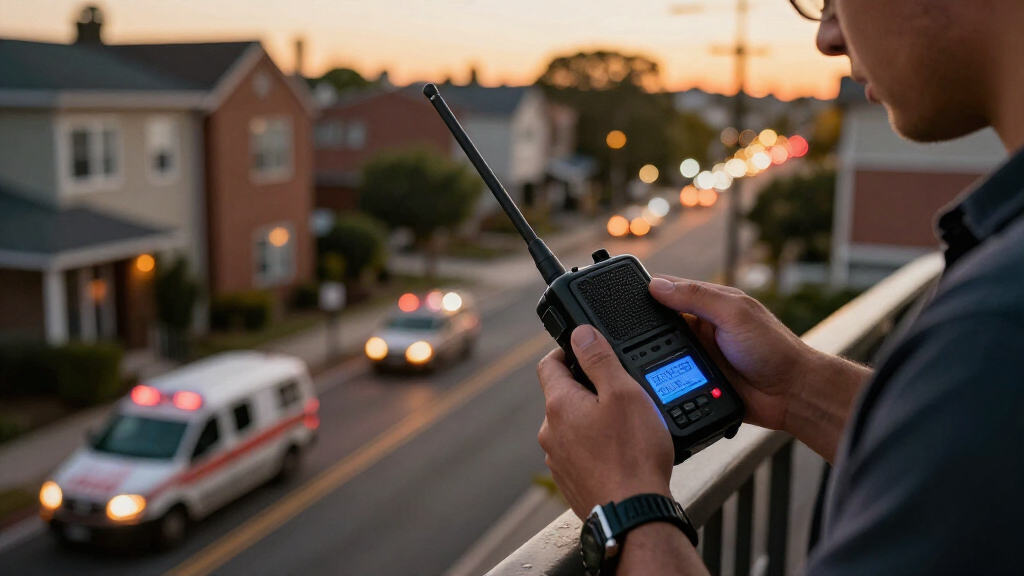
For most listeners, I’d start with the Uniden BCD436HP: its digital scanning and HomePatrol-style setup make it a strong all-around choice for following local public-safety traffic. The Uniden BCD160DN is a more portable digital option, while the Whistler WS1065 suits buyers who prefer a desktop scanner with digital trunking. The main tradeoff is that many budget-friendly models are analog-only and cannot follow agencies that use digital systems; coverage also depends on local frequencies, system compatibility, and reception conditions. Read on for a ranked comparison of all 10 scanners and guidance on matching one to your area and listening habits.

Get everyday essentials delivered free with Prime
- Fast, free delivery on millions of items
- Prime Video, Amazon Music and more included
- Member-only deals all year
Key Takeaways
- Digital compatibility separates the strongest emergency-news picks: the BCD436HP, BCD160DN, WS1065, and BCD996P2 are better starting points for areas using supported digital trunked systems than the analog-only models.
- The BCD436HP leads for flexible everyday listening because its handheld format and simplified system setup offer a useful balance of portability and capability.
- Analog scanners remain useful only where relevant local traffic is still analog: the BC355N, BC365CRS, BCT15X, WS1010, BC350C, and BC125AT should not be treated as universal public-safety receivers.
- Form factor changes how a scanner fits emergency monitoring: handheld units suit portable listening, while the WS1065 and BCD996P2 are better suited to a fixed desk or vehicle installation.
- Feature-rich models ask more of the buyer: system compatibility, programming, and local reception matter as much as channel capacity, so a large channel count alone does not predict useful coverage.
| Uniden BC355N 300-Channel Analog Base/Mobile Scanner |  | Best for Straightforward Analog Monitoring | Scanner type: Conventional analog | Frequency storage: 300 storable frequencies | Digital support: No | VIEW LATEST PRICE | See Our Full Breakdown |
| Whistler WS1065 Digital Trunking Desktop Scanner |  | Best for Digital Trunked Systems | Scanner type: Digital trunking | Memory capacity: 1,800 frequencies | Object storage: Over 37,800 objects | VIEW LATEST PRICE | See Our Full Breakdown |
| Uniden BC365CRS 500-Channel Analog Scanner with Alarm Clock and FM Radio |  | Best Tabletop Companion for Weather and Local News | Scanner type: Conventional analog | Channel capacity: 500 channels across 10 banks | Frequency ranges: 25–54 MHz, 530–1700 kHz, 88–108 MHz, 108–174 MHz, 225–380 MHz, 406–512 MHz | VIEW LATEST PRICE | See Our Full Breakdown |
| Uniden BCT15X Mobile Analog Police Scanner, 9,000 Channels |  | Best High-Capacity Analog Mobile Scanner | Model: Uniden BCT15X | Reception type: Analog | Channel capacity: 9,000 channels | VIEW LATEST PRICE | See Our Full Breakdown |
| Uniden Bearcat BCD160DN Handheld Digital Scanner |  | Best Handheld for DMR and NXDN | Scanner type: Handheld digital scanner | Supported decoding: DMR and NXDN; APCO P25 Phase 1 and 2 via firmware update | Channel capacity: 1,000 alpha-tagged channels | VIEW LATEST PRICE | See Our Full Breakdown |
| Whistler WS1010 Analog Handheld Scanner, 400 Channels, Black |  | Best for County-Specific Weather Alerts | Channels: 400 | Memory banks: 10 | Reception: Analog scanning | VIEW LATEST PRICE | See Our Full Breakdown |
| Uniden BCD996P2 Digital Mobile TrunkTracker V Scanner |  | Best for Digital Vehicle Monitoring | Channels: 25,000 dynamically allocated | Supported systems: APCO 25 Phase 1 and Phase 2, X2-TDMA, Motorola, EDACS, LTR, conventional analog, and P25 digital | Scanning features: Close Call RF Capture, TrunkTracker V, S.A.M.E. alerts, and GPS-based scanning | VIEW LATEST PRICE | See Our Full Breakdown |
| Uniden BC350C 800 MHz Mobile Radio Scanner |  | Best for Simple Vehicle Scanning | Programmable memories: 100 | Preset search bands: 13 | Preprogrammed service bands: 6 | VIEW LATEST PRICE | See Our Full Breakdown |
| Uniden Bearcat BC125AT Analog Handheld Scanner, 500 Channels | 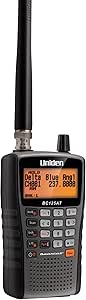 | Best Analog Handheld for Organized Listening | Channels: 500 across 10 storage banks | Frequency range: 25–54 MHz, 108–174 MHz, 225–380 MHz, and 400–512 MHz | Radio type: Analog receiver; no digital or trunked system support | VIEW LATEST PRICE | See Our Full Breakdown |
| Uniden BCD436HP HomePatrol Digital Handheld Scanner |  | Best for Easy Digital Handheld Setup | Channels: 85 | Scan speed: 85 channels per second | Frequency range: 25–512 MHz, 758–824 MHz, 849–869 MHz, 894–960 MHz, and 1240–1300 MHz | VIEW LATEST PRICE | See Our Full Breakdown |
| radio scanners for emergency new | Display | Power |
|---|---|---|
| Uniden BC355N 300-Channel Anal | Backlit LCD | — |
| Whistler WS1065 Digital Trunki | Backlit display | — |
| Uniden BC365CRS 500-Channel An | — | Corded electric; requires 3 AA batteries |
| Uniden BCT15X Mobile Analog Po | Orange backlit LCD | — |
| Uniden Bearcat BCD160DN Handhe | — | Two rechargeable AA Ni-MH batteries included, or two AA alkaline batteries not included |
| Whistler WS1010 Analog Handhel | — | 4 AA batteries, included |
| Uniden BCD996P2 Digital Mobile | Four-line alpha display | 12 V DC |
| Uniden BC350C 800 MHz Mobile R | Illuminated LCD | — |
| Uniden Bearcat BC125AT Analog | Digital display with orange backlight | — |
| Uniden BCD436HP HomePatrol Dig | — | 3 AAA batteries |
More Details on Our Top Picks
Uniden BC355N 300-Channel Analog Base/Mobile Scanner
The BC355N is a sensible entry point for emergency updates when the local police, fire, EMS, and weather services still use conventional analog frequencies. Its Close Call RF Capture can detect nearby transmissions, while the included power options let me set it up at home or in a vehicle. Compared with the digital-capable Whistler WS1065, it is simpler but cannot follow digital or trunked systems, a real limitation in areas that have moved to those networks. The 300-frequency memory is adequate for a focused list of local services, though the BC365CRS stores more and adds an alarm clock and FM radio for tabletop use. I would choose this model for basic analog coverage, not as a future-ready scanner.
Pros:- Close Call RF Capture can alert me to nearby transmissions
- Covers several service bands, including aircraft and weather
- AC and vehicle power options support home or mobile setup
- Stores up to 300 frequencies for a focused local channel list
Cons:- Cannot receive digital radio systems
- Does not support trunking
- Its 300-frequency capacity is lower than the BC365CRS and digital options in this roundup
Best for: Listeners in areas where key emergency services still broadcast on conventional analog frequencies who want one scanner for home or vehicle use.
Not ideal for: Buyers whose local agencies use digital or trunked radio systems, or anyone who needs a portable handheld scanner.
- Scanner type:Conventional analog
- Frequency storage:300 storable frequencies
- Digital support:No
- Trunking support:No
- Frequency ranges:25–54 MHz, 108–174 MHz, 225–380 MHz, 406–512 MHz, 806–956 MHz; cellular bands excluded
- Display:Backlit LCD
- Power options:AC adapter, DC power cable, automotive power outlet plug
- Dimensions and weight:5.75 × 5.18 × 1.63 in; 3.3 lb
Our verdict“Choose the BC355N for uncomplicated analog emergency and weather listening at home or in a vehicle, provided local services do not require digital or trunking support.”
Whistler WS1065 Digital Trunking Desktop Scanner
For areas where emergency traffic has moved to supported digital trunked systems, the WS1065 is the strongest fit in this group. It handles P25 Phase 1, Motorola, EDACS, and LTR, so it can follow more system types than the analog-only BC355N or BCT15X. Adaptive P25 tracking and digital audio gain control are aimed at keeping digital reception usable, while customizable sound and LED alerts can make activity easier to notice. Its 1,800-frequency memory and large object capacity leave room for a substantial channel setup. The tradeoff is setup: PC programming may take more effort than a simpler conventional scanner, and the listed software requirement is Windows 7 or later. It is a desktop/mobile unit rather than a handheld, and the stated Wi-Fi feature has no explained use.
Pros:- Supports P25 Phase 1 and several other digital trunking system types
- Adaptive P25 tracking and digital audio gain control aid digital monitoring
- Customizable audible and multicolor LED alerts can flag activity
- Includes a USB programming cable and desktop/mobile mounting accessories
Cons:- PC programming requires a compatible Windows 7-or-later setup
- Does not list P25 Phase 2 support
- The stated Wi-Fi connectivity has no described function
Best for: Home listeners and vehicle users whose local emergency agencies use supported P25 Phase 1 or other listed trunked systems and who are comfortable programming a scanner by computer.
Not ideal for: Buyers seeking a pocketable scanner, plug-and-play setup, or reception of P25 Phase 2 and systems not listed among its supported formats.
- Scanner type:Digital trunking
- Memory capacity:1,800 frequencies
- Object storage:Over 37,800 objects
- Supported systems:Motorola, EDACS, LTR, P25 Phase 1
- Display:Backlit display
- Programming:PC programming; Windows 7 or later listed as minimum system requirement
- Dimensions and weight:5.3 × 7.3 × 2.2 in; 1.2 kg
- Included accessories:USB programming cable, DIN E adapter, AC adapter, DC cable, telescopic antenna, mobile mounting bracket
Our verdict“Pick the WS1065 when supported digital trunked emergency systems matter more than handheld portability or simple setup.”
Uniden BC365CRS 500-Channel Analog Scanner with Alarm Clock and FM Radio
The BC365CRS suits a bedside or desk where emergency monitoring shares space with everyday radio listening. It stores 500 conventional analog channels across ten banks and adds NOAA weather broadcasts, priority scanning, an FM tuner, and an alarm clock. That makes it a more useful all-in-one tabletop choice than the basic BC355N, which has fewer stored frequencies and lacks the clock and FM features. But those extras do not expand the kinds of emergency systems it can receive: like the BC355N, it cannot monitor digital or trunked communications. Its corded tabletop design also makes it less suited to vehicle use or listening away from a power outlet. I would pick it for a fixed listening spot and skip it if local agencies require digital reception.
Pros:- Combines analog scanning, FM radio, and an alarm clock in one tabletop unit
- Stores 500 channels across ten banks, more than the BC355N
- NOAA weather broadcasts and priority channels support routine alert listening
- Backlit display is suited to a bedside or desk setup
Cons:- Cannot receive digital or trunked communications
- Corded tabletop design limits use away from an outlet
- Extra clock and FM features do not solve the digital-system limitation
Best for: Home listeners who want analog emergency and NOAA weather monitoring alongside FM radio and an alarm clock on a bedside table or desk.
Not ideal for: People who need a portable or vehicle-first scanner, or whose local emergency services use digital or trunked systems.
- Scanner type:Conventional analog
- Channel capacity:500 channels across 10 banks
- Frequency ranges:25–54 MHz, 530–1700 kHz, 88–108 MHz, 108–174 MHz, 225–380 MHz, 406–512 MHz
- FM radio:30 station presets
- Additional features:Alarm, snooze, sleep timer, NOAA weather broadcasts, priority channels
- Power:Corded electric; requires 3 AA batteries
- Mounting:Tabletop
- Dimensions:5.7 × 5.2 × 1.6 in
Our verdict“Choose the BC365CRS for a fixed home listening spot where analog emergency scanning, NOAA weather, FM radio, and an alarm clock belong together.”
Uniden BCT15X Mobile Analog Police Scanner, 9,000 Channels
The BCT15X is the analog choice for drivers who need far more channel storage than the BC355N offers. Its 9,000 channels and trunking support make it better suited to organizing a broad set of conventional and analog trunked frequencies for a mobile setup. BearTracker adds a warning feature aimed at drivers, and the included harness and mounting hardware help with installation. The major boundary is its analog reception: unlike the Whistler WS1065, it cannot decode supported digital systems, so a large channel count will not help if local emergency traffic is digital. It is also a mobile-oriented unit, not a handheld to carry around. I would favor it over the BC355N for a complex analog vehicle setup, but not for digital coverage.
Pros:- Stores up to 9,000 channels for a broad mobile channel plan
- Trunking support extends beyond the conventional-only BC355N
- BearTracker warning system adds a driver-focused feature
- Includes a three-wire harness, mounting bracket, and hardware
Cons:- Analog reception only, unlike the digital-capable WS1065
- Mobile-focused installation is less suitable for portable listening
- Its large channel capacity does not help with unsupported digital systems
Best for: Drivers monitoring many conventional and analog trunked channels who want a permanently mounted scanner and BearTracker warnings.
Not ideal for: Listeners in areas where emergency services rely on digital systems, or buyers who want a handheld scanner for use away from a vehicle.
- Model:Uniden BCT15X
- Reception type:Analog
- Channel capacity:9,000 channels
- Trunking:Supported
- Frequency ranges:25–512 MHz, 758–823 MHz, 849–868 MHz, 984–960 MHz, 1240–1300 MHz
- Display:Orange backlit LCD
- Power source:AC adapter
- Dimensions and weight:6 × 7 × 2 in; 2.5 kg
Our verdict“Choose the BCT15X for a vehicle-based, high-capacity analog setup, but select a digital scanner if local emergency traffic uses digital systems.”
Uniden Bearcat BCD160DN Handheld Digital Scanner
The BCD160DN is the most flexible handheld in this batch for listeners who need digital decoding without a desktop or vehicle-only setup. It supports DMR and NXDN out of the box, with P25 Phase 1 and 2 available through a free firmware update. That gives it a wider digital profile than the analog BC355N and BCT15X, while its rechargeable AA batteries support portable use. The limits are just as important: it has no trunking support, cannot decode encrypted signals, and P25 reception requires updating the firmware. Its 1,000 alpha-tagged channels help identify stored entries, but buyers relying on trunked emergency systems should look at the WS1065 instead. I would choose this for portable conventional digital monitoring, not as a universal scanner.
Pros:- Decodes conventional DMR and NXDN out of the box
- P25 Phase 1 and 2 decoding is available through a free firmware update
- Handheld design uses rechargeable AA batteries, with alkaline AA compatibility
- Alpha tags, Band Scope, and rapid tone and code decoding support channel identification
Cons:- Does not support trunking, unlike the WS1065
- Cannot decode encrypted signals
- P25 Phase 1 and 2 support requires a firmware update
Best for: Portable listeners who need conventional DMR or NXDN monitoring, or P25 Phase 1 and 2 after a firmware update, and whose target channels are not trunked or encrypted.
Not ideal for: Buyers who need trunked-system tracking, encrypted communications, or P25 support without performing a firmware update.
- Scanner type:Handheld digital scanner
- Supported decoding:DMR and NXDN; APCO P25 Phase 1 and 2 via firmware update
- Channel capacity:1,000 alpha-tagged channels
- Trunking:Not supported
- Encrypted signals:Cannot be decoded
- Power:Two rechargeable AA Ni-MH batteries included, or two AA alkaline batteries not included
- Charging:USB charging for installed Ni-MH batteries while scanner is turned off
- Included accessories:Antenna, USB cable, hand strap, owner’s manual
Our verdict“Pick the BCD160DN for portable, conventional digital monitoring when your target traffic is not trunked or encrypted.”
Whistler WS1010 Analog Handheld Scanner, 400 Channels, Black
For emergency news listening that leans on local weather and familiar analog services, the WS1010 balances straightforward portable scanning with county-specific SAME alerts. Its preprogrammed service banks cover weather, fire, police, marine, aircraft, and ham frequencies, giving a new owner useful starting points without filling all 400 channel slots by hand. Compared with the Uniden BC125AT, it stores fewer channels and lacks Close Call RF capture, but its SAME alerts add a more targeted severe-weather cue. The tradeoff is its analog-only reception: it will not follow digital or trunked systems, which can rule it out where emergency agencies use those formats. PC programming also calls for a separate PCIF cable and third-party software. I’d choose it for local analog monitoring and weather alerts, not as a future-proof scanner.
Pros:- SAME weather alerts can target warnings to a selected county.
- Preprogrammed service banks offer a practical starting point for common radio services.
- 400 channels across 10 memory banks leave room to organize local frequencies.
- Portable design runs on four included AA batteries.
Cons:- Analog-only reception excludes digital and trunked systems.
- Computer programming requires a separate PCIF cable and third-party software.
- Stores fewer channels and lacks Close Call RF capture found on the Uniden BC125AT.
Best for: Listeners in areas where useful emergency and weather broadcasts remain on analog frequencies, especially those who want county-specific weather alerts in a handheld.
Not ideal for: Buyers who need digital or trunked public-safety reception, or who want to program a large frequency list from a computer without buying extra equipment.
- Channels:400
- Memory banks:10
- Reception:Analog scanning
- Weather alerts:County-specific SAME alerts
- Power:4 AA batteries, included
- Dimensions:1.56 × 2.37 × 5.68 inches
- Weight:7.7 ounces
- PC programming:Requires a PCIF cable and third-party software
Our verdict“Choose the WS1010 for portable analog monitoring with county-specific weather alerts, but skip it if your local emergency traffic is digital or trunked.”
Uniden BCD996P2 Digital Mobile TrunkTracker V Scanner
The BCD996P2 is the strongest fit here for a vehicle-based emergency-news setup that must handle both conventional analog traffic and a broad range of digital and trunked systems. Its support for P25 Phase 1 and Phase 2, along with Motorola, EDACS, LTR, and X2-TDMA, makes it more capable across system types than the analog Uniden BC350C. A large pool of 25,000 dynamically allocated channels gives room for extensive programming, while S.A.M.E. alerts add a weather-warning function. Location-based scanning can focus on systems near the current position, but that feature requires a compatible GPS receiver. Unlike the handheld BCD436HP, this is a 12-volt mobile unit rather than a portable scanner. It also is not water resistant, so it belongs in a protected vehicle installation, not exposed outdoor use.
Pros:- Supports conventional analog, P25 digital, and multiple trunked radio systems.
- 25,000 dynamically allocated channels accommodate extensive system programming.
- S.A.M.E. weather alerts provide location-specific severe-weather warnings.
- Close Call RF Capture can detect nearby radio transmissions.
Cons:- Location-based scanning requires a compatible GPS receiver.
- 12 V DC power and mobile form factor are less suited to handheld use.
- Not water resistant.
Best for: Drivers and mobile monitoring enthusiasts who need digital and trunked system support, substantial channel capacity, and the option to scan by GPS location.
Not ideal for: People seeking a grab-and-go handheld, buyers who do not want to add a compatible GPS receiver for location-based scanning, or anyone needing a water-resistant scanner.
- Channels:25,000 dynamically allocated
- Supported systems:APCO 25 Phase 1 and Phase 2, X2-TDMA, Motorola, EDACS, LTR, conventional analog, and P25 digital
- Scanning features:Close Call RF Capture, TrunkTracker V, S.A.M.E. alerts, and GPS-based scanning
- Power:12 V DC
- Display:Four-line alpha display
- Dimensions:7 × 8 × 2 inches
- Weight:3.5 pounds
- Water resistance:Not water resistant
Our verdict“Pick the BCD996P2 for a protected vehicle setup that needs broad digital and trunked coverage; choose the handheld BCD436HP for portable listening instead.”
Uniden BC350C 800 MHz Mobile Radio Scanner
The BC350C keeps vehicle scanning simple: it searches 13 preset bands, stores 100 programmed channels, and includes power accessories for vehicle or indoor use. Its scan speed of up to 100 channels per second helps move through a saved list quickly, while turbo search can reach 300 frequencies per second in supported bands. Compared with the digital-capable BCD996P2, it is much more limited: this is an analog-focused choice, not a scanner for digital or trunked emergency systems. The 100-channel memory also asks for more careful prioritizing than the WS1010 or BC125AT, both of which offer larger channel stores. Cellular frequencies are excluded, and buyers should check local rules before using a scanner in a vehicle. Its appeal is convenience and included accessories, not broad system coverage.
Pros:- Includes a mobile antenna, cigarette lighter adapter, AC adapter, and DC power cord.
- Searches 13 preset bands and offers turbo search in supported bands.
- Illuminated LCD aids viewing in dim vehicle interiors.
- Frequency lockouts help skip unwanted signals.
Cons:- Only 100 programmable memories, fewer than the WS1010 and BC125AT.
- Cellular frequencies are excluded.
- Analog-focused scanning cannot follow digital or trunked emergency systems.
Best for: Drivers or home listeners who want a basic analog scanner with included vehicle and indoor power accessories and a manageable list of local frequencies.
Not ideal for: Listeners whose local agencies use digital or trunked systems, or anyone who needs a large memory capacity or cellular-band reception.
- Programmable memories:100
- Preset search bands:13
- Preprogrammed service bands:6
- Scan speed:Up to 100 channels per second
- Turbo search speed:Up to 300 frequencies per second in bands with 5 kHz steps
- Frequency coverage:25–54 MHz, 108–174 MHz, 406–512 MHz, and 806–956 MHz; cellular frequencies excluded
- Display:Illuminated LCD
- Weight:2.9 pounds
- Included accessories:Telescoping antenna, mobile antenna, AC adapter, cigarette lighter adapter, and DC power cord
Our verdict“Choose the BC350C for straightforward analog scanning in a vehicle or at home, but move to the BCD996P2 if local emergency traffic is digital or trunked.”
Uniden Bearcat BC125AT Analog Handheld Scanner, 500 Channels
For buyers who have confirmed that local emergency broadcasts are analog, the BC125AT makes frequent handheld listening easier to organize. It stores 500 alpha-tagged channels in 10 banks, so labels can make a saved list more readable than a bare frequency list. Close Call RF capture and preset search bands help locate nearby or unfamiliar signals; the orange-backlit display is useful when checking the scanner in low light. Compared with the Whistler WS1010, it offers 100 more channels and Close Call, while the WS1010 has county-specific SAME weather alerts. Neither model handles digital or trunked systems, so the BCD436HP is the better direction if local agencies use those formats. This scanner is also receive-only and not water resistant, which limits its role to monitoring in suitable conditions.
Pros:- 500 alpha-tagged channels across 10 banks help organize local frequencies.
- Close Call RF capture can detect nearby transmissions.
- Preset search bands cover several common radio services.
- Compact handheld form and backlit display suit portable listening.
Cons:- Does not receive digital or trunked radio systems.
- Receive-only; it cannot transmit or support two-way communication.
- Not water resistant.
Best for: Analog-only listeners who want an organized handheld channel list, alpha labels, and Close Call signal detection for local monitoring.
Not ideal for: Buyers who need digital or trunked reception, two-way communication, county-specific SAME alerts, or a water-resistant scanner.
- Channels:500 across 10 storage banks
- Frequency range:25–54 MHz, 108–174 MHz, 225–380 MHz, and 400–512 MHz
- Radio type:Analog receiver; no digital or trunked system support
- Display:Digital display with orange backlight
- Battery:2 AA batteries, included
- Battery life:Up to 10 hours
- Dimensions:2.17 × 4.33 × 7.28 inches
- Weight:14.4 ounces
- Communication:Receive only; no two-way communication
Our verdict“Choose the BC125AT for well-organized analog emergency listening on the go, but opt for the BCD436HP when digital or trunked coverage is needed.”
Uniden BCD436HP HomePatrol Digital Handheld Scanner
The BCD436HP suits listeners who want digital handheld coverage without building every system list from scratch. Its zip-code-based setup and USA-and-Canada database give it a more accessible starting point than the BCD996P2, whose location-based scanning requires a compatible GPS receiver. It supports P25 Phase I and II and X2-TDMA, so it reaches beyond the analog-only BC125AT when local agencies use digital or trunked systems. For emergency news, the standout extra is instant replay of up to 240 seconds, which can help recover a brief transmission heard while attention was elsewhere. That convenience comes with limits: it uses three AAA batteries, is not water resistant, and its stated battery life is eight hours. Choose it for portable digital flexibility, not harsh-weather field use.
Pros:- Zip-code-based setup and a USA-and-Canada database simplify finding nearby systems.
- Supports P25 Phase I and II and X2-TDMA digital modes.
- Instant replay can recover up to four minutes of recent transmissions.
- Weather alerts, GPS connectivity, and Close Call RF Capture add monitoring options.
Cons:- Not water resistant, limiting use in wet or exposed conditions.
- Three AAA batteries provide a stated battery life of up to eight hours.
- Less suited to fixed vehicle use than the 12 V BCD996P2.
Best for: Listeners who want a handheld digital scanner with a broad US-and-Canada database, simpler location-based setup, and recent-transmission replay.
Not ideal for: Buyers who need a water-resistant unit, long stretches away from spare batteries, or a mobile scanner designed for a vehicle installation.
- Channels:85
- Scan speed:85 channels per second
- Frequency range:25–512 MHz, 758–824 MHz, 849–869 MHz, 894–960 MHz, and 1240–1300 MHz
- Supported digital modes:APCO P25 Phase I and II, X2-TDMA
- Power:3 AAA batteries
- Battery life:Up to 8 hours
- Instant replay:Up to 240 seconds
- Coverage:USA and Canada
- Water resistance:Not water resistant
Our verdict“Pick the BCD436HP for easier portable digital monitoring and transmission replay, but choose a mobile unit if most listening will happen in a vehicle.”

How We Picked
I ranked these scanners by how well their supported radio formats, usability, and form factor fit the goal of following local emergency-related broadcasts. Digital and trunking support earned a higher place because many public-safety systems use digital formats; an analog-only scanner cannot follow traffic on an incompatible system. I also weighed setup demands, portability, channel organization, and whether a model makes sense as a home, vehicle, or handheld receiver.
The ranking favors useful capability over headline channel counts or extra features unrelated to emergency listening. The BCD436HP takes the lead for its mix of digital capability and more approachable setup, while the BCD160DN and WS1065 offer distinct portable and desktop alternatives. Analog models rank lower for broad emergency-news use, but can still make sense where local agencies broadcast on supported analog frequencies. No scanner can guarantee reception: local system design, encryption, terrain, antenna placement, and legal restrictions all affect what a buyer can hear.
| radio scanners for emergency new | Display |
|---|---|
| Uniden BC355N 300-Channel Anal | Backlit LCD |
| Whistler WS1065 Digital Trunki | Backlit display |
| Uniden BC365CRS 500-Channel An | — |
| Uniden BCT15X Mobile Analog Po | Orange backlit LCD |
| Uniden Bearcat BCD160DN Handhe | — |
| Whistler WS1010 Analog Handhel | — |
| Uniden BCD996P2 Digital Mobile | Four-line alpha display |
| Uniden BC350C 800 MHz Mobile R | Illuminated LCD |
| Uniden Bearcat BC125AT Analog | Digital display with orange backlight |
| Uniden BCD436HP HomePatrol Dig | — |
Factors to Consider When Choosing Radio Scanners For Emergency News
Before choosing a model, I’d check what is actually broadcast in the area you want to monitor. A scanner’s features matter only when they match local radio systems and your listening setup.
Check Local Systems Before Choosing Analog or Digital
Start with the agencies and services you want to hear, then identify whether their traffic uses analog, digital, trunked, or encrypted systems. An analog scanner may still cover some local services, but it cannot decode an incompatible digital system. A digital-capable label is not a promise that every format or trunking system is supported, so verify the scanner’s specific capabilities against local system information. Encryption is a separate limit: scanners cannot make encrypted traffic intelligible. A common mistake is buying based on a familiar brand or a high channel count before checking system type. If local information is unclear, favor a model with broader supported formats, but treat that as flexibility rather than guaranteed coverage.
Match the Scanner to Where You Will Listen
A handheld is easier to carry around a home or take on the road, but portability brings compromises in antenna size, battery management, and speaker volume. Desktop and mobile units can be more convenient for a fixed listening station or vehicle, especially when paired with an appropriate external antenna. Decide whether you need to monitor from one room, move between locations, or listen while traveling before focusing on individual features. Vehicle use also calls for attention to mounting, power, antenna placement, and safe operation. A handheld on a desk may work, but it does not automatically offer the same reception setup as a dedicated base or mobile installation. Pick the form factor around your routine, not the assumption that one style is universally better.
Treat Setup and Programming as Part of the Purchase
Scanners vary in how much effort they ask from a new owner. Some offer a more guided way to configure systems, while others expect you to understand channels, talkgroups, and programming tools. That difference affects how quickly you can get from opening the box to listening to relevant traffic. Before buying, check what programming method and computer or accessory support the specific model requires. A large memory capacity is useful only if you can organize and maintain the information stored in it. If you prefer hands-on control, a more configurable unit may suit you; if setup time is a concern, favor simpler operation over a longer feature list.
Do Not Confuse Channel Count With Useful Coverage
Channel capacity describes how much information a scanner can store, not how many agencies it can receive or how far its signal will reach. Reception depends on the band, antenna, terrain, buildings, transmitter location, and whether the chosen system is compatible. A modest channel count can be enough for a focused local setup, while a larger memory can help if you monitor several areas or organize many services. Extra capacity also creates more work if the programming is poorly arranged. Buyers often assume that a high number guarantees wider coverage; it does not overcome encryption or an unsupported radio format. Prioritize system support and reception conditions first, then decide how much storage you need.
Plan for Antenna Placement and Local Reception
Reception can change substantially from one room, vehicle, or neighborhood to another. Walls, hills, distance from transmitters, and nearby electrical noise can weaken or disrupt signals, even when the scanner itself is capable. A suitable antenna and a better placement may help more than moving to a model with extra channels. For a fixed installation, consider whether you can place an antenna near a window or use an outside antenna where permitted. For handheld listening, expect the supplied antenna to be a compromise between portability and reception. Check local rules and installation requirements before adding an antenna, and avoid treating advertised capability as a guarantee of what you will hear at your location.
Account for Privacy, Law, and the Limits of Scanner News
Radio traffic is not a complete or official emergency news service. Agencies may move channels, use encryption, or share only limited information over radio, and a scanner can miss transmissions while scanning other channels. Rules on scanner use vary by location and can differ for vehicles, particular frequencies, or emergency scenes. Check the laws that apply where you live and travel before carrying or operating a scanner. Do not treat unconfirmed radio traffic as verified reporting, and never interfere with responders or use sensitive information to approach an incident. If your main need is reliable public alerts, pair radio listening with official local notification services rather than relying on a scanner alone.
Frequently Asked Questions
How can I tell whether an analog scanner will work for emergency traffic in my area?
Check the radio system used by the specific agencies you want to monitor, rather than assuming all local traffic is analog. If their relevant broadcasts use a digital or trunked format that the scanner does not support, the scanner will not follow those transmissions. Also check whether the traffic is encrypted, since no consumer scanner can decode encrypted communications. Local scanner databases and agency information can help identify system types, but confirm that entries are current. When the system type is uncertain, a compatible digital model offers more flexibility than an analog-only unit, though it still cannot overcome encryption or poor reception.
Is the BCD436HP a better choice than the BCD160DN for most buyers?
I’d favor the BCD436HP if you want a versatile handheld and value a setup approach designed to make system selection more approachable. The BCD160DN is a strong alternative if its specific digital capabilities and controls fit your local systems and preferences. Neither model should be chosen on the word “digital” alone; verify supported formats and trunking against the agencies you plan to hear. Also compare how you expect to carry, power, and program the scanner. The better fit is the one that matches your local radio system and your tolerance for setup, not simply the one with the longer feature list.
Should I buy a desktop scanner or a handheld for monitoring at home?
A handheld can do the job at home and gives you the option to move it between rooms or take it elsewhere. A desktop scanner is a more natural fit for a fixed listening station and may be easier to pair with a dedicated antenna and power setup. Reception depends heavily on antenna placement, so a desktop form does not guarantee better results by itself. Think about whether you need portability, a permanent display and controls, or a scanner that can also go in a vehicle. If you will listen from several places, portability may matter more; if the scanner will stay put, a base-oriented setup may be more convenient.
Can a radio scanner provide reliable emergency alerts on its own?
No scanner should be your only source for emergency notifications. It may miss traffic while scanning, fail to receive weak signals, or be unable to follow a system that changes format or uses encryption. Radio traffic can also be incomplete, delayed, or hard to interpret without context. I recommend pairing scanner listening with official local alerts, such as government notification services or emergency management updates. Use the scanner as a supplemental way to monitor accessible broadcasts, not as a substitute for verified instructions from authorities.
What should I check if the scanner powers on but receives little useful traffic?
First, confirm that the programmed frequencies and systems are current and compatible with the scanner. Then check whether the traffic you expect is encrypted, routed through a trunked system the unit cannot follow, or simply inactive at that time. Reception may also be limited by the supplied antenna, indoor placement, terrain, or distance from transmitters. Try a different location or antenna setup where lawful, and compare reception against known local information before assuming the scanner is defective. A scanner can work as designed and still provide little useful listening if its system support or reception conditions do not match your area.
Conclusion
For the broadest mix of handheld convenience and digital listening features, I’d choose the Uniden BCD436HP as best overall. The Uniden BC355N is a more straightforward value pick only for buyers who have confirmed that the local traffic they need is analog; it is not a substitute for digital-system support. For a fixed listening station with digital trunking, the Whistler WS1065 is my premium-style desktop choice, while the BCD160DN makes more sense for a buyer prioritizing a portable digital scanner. Beginners who want a simpler route into system setup should look first at the BCD436HP, then verify local compatibility before buying. For analog handheld listening, the BC125AT is a focused option, while the BC365CRS suits someone who also wants clock and FM-radio functions. Choose by local system compatibility first, then form factor and setup preference.
Halloween Picks
halloween
As an affiliate, we earn on qualifying purchases.