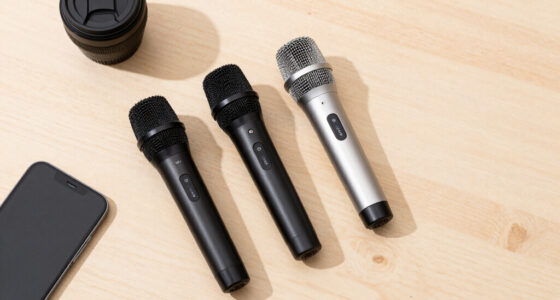
The best portable wireless microphone system for most two-person events is the JBL Wireless Two-Microphone System, which pairs two handheld mics with a dual-channel receiver. For a more flexible setup, the TONOR UHF System adds bodypack, lavalier, and headset options, while the Phenyx Pro PTU-71-2H suits users who want two UHF handheld microphones. The main tradeoffs are handheld convenience versus hands-free freedom, and simple plug-in operation versus greater control over channels and microphone types. I compared eight options for how well their design fits real portable use, from karaoke to presentations and small events. Read on for the full breakdown and help choosing the right system for your setup.

Get everyday essentials delivered free with Prime
- Fast, free delivery on millions of items
- Prime Video, Amazon Music and more included
- Member-only deals all year
Complete the kit



Key Takeaways
- JBL is the clearest all-purpose pick for two speakers: its dual-handheld format keeps setup straightforward, while the TONOR offers more microphone styles for presenters who need free hands.
- Microphone format matters as much as wireless range: handheld systems suit karaoke and shared speaking, while the Phenyx Pro PDP-1-1B and TONOR bodypack options better fit presenters and performers who move freely.
- UHF options serve different needs rather than guaranteeing better results: the TONOR and Phenyx Pro PTU-71-2H prioritize UHF handheld or bodypack configurations, while the GEARDON 2.4G set offers a different wireless approach.
- The Pyle VHF and Singing Machine options lean toward simple, casual use, whereas dual-channel and multi-mic systems make more sense when multiple speakers or microphone choices are part of the plan.
- Portability includes the whole setup: buyers should weigh receiver connections, the number of microphones, and whether the system needs a mixer or compatible speaker—not just how easy the microphones are to carry.
| JBL Wireless Two-Microphone System with Dual-Channel Receiver |  | Best for JBL PartyBox Owners | Channels: 2 | Frequency range: 65–15,000 Hz | Polar pattern: Unidirectional | VIEW LATEST PRICE | See Our Full Breakdown |
| Pyle Portable VHF Wireless Microphone System |  | Best Simple Single-Mic Pick | Model: PDWM91 | Transmission: VHF | Connector: 1/4-inch (6.3 mm) auxiliary | VIEW LATEST PRICE | See Our Full Breakdown |
| TONOR UHF Wireless Microphone System with Bodypack, Lavalier, and Headset Mics |  | Best for Hands-Free Presentations | Wireless type: UHF | Microphone types: Bodypack, headset, and lavalier | Range: Up to 200 ft (60 m), line of sight | VIEW LATEST PRICE | See Our Full Breakdown |
| GEARDON 2.4G Dual Wireless Microphone Set |  | Best for Longer Events | Wireless connectivity: 2.4 GHz | Microphones: 2 handheld microphones | Range: Up to 200 ft (60 m), line of sight | VIEW LATEST PRICE | See Our Full Breakdown |
| Wireless Dual Handheld Dynamic Microphone System |  | Best for Straightforward Dual-Mic Setup | Microphone type: Handheld dynamic | Polar pattern: Unidirectional | Operating range: Up to 200 ft, line of sight | VIEW LATEST PRICE | See Our Full Breakdown |
| Singing Machine Portable Wireless Microphone, Black |  | Best Simple Karaoke Add-On | Model: SMM107 | Microphone type: Handheld unidirectional dynamic | Wireless connection: UHF | VIEW LATEST PRICE | See Our Full Breakdown |
| Phenyx Pro PTU-71-2H Dual UHF Wireless Handheld Microphone System |  | Best for Two-Person Performances | Channels: 2 | Selectable frequencies: 100 per channel | Frequency range: Channel 1: 536.57–561.32 MHz; Channel 2: 562.37–587.12 MHz | VIEW LATEST PRICE | See Our Full Breakdown |
| Phenyx Pro PDP-1-1B Digital Wireless Headset and Lavalier Microphone System |  | Best Hands-Free Portable System | Frequency range: 902–928 MHz | Tunable channels: 15 | Audio resolution: 48 kHz/24-bit | VIEW LATEST PRICE | See Our Full Breakdown |
| portable wireless microphone system | Signal-to-noise ratio | Channels |
|---|---|---|
| JBL Wireless Two-Microphone Sy | — | 2 |
| Pyle Portable VHF Wireless Mic | 40 dB | 1 |
| TONOR UHF Wireless Microphone | — | — |
| GEARDON 2.4G Dual Wireless Mic | 80 dB | 2 |
| Wireless Dual Handheld Dynamic | 70 dB | — |
| Singing Machine Portable Wirel | 65 dB | 1 |
| Phenyx Pro PTU-71-2H Dual UHF | 98 dB | 2 |
| Phenyx Pro PDP-1-1B Digital Wi | 96 dB | — |
More Details on Our Top Picks
JBL Wireless Two-Microphone System with Dual-Channel Receiver
I’d put this JBL system first for buyers who already own a compatible JBL PartyBox and want two people to share one speaker without adding a separate mixer. Its dual-channel receiver and plug-and-play setup make it a more direct choice for duets and announcements than the single-microphone Pyle PDWM91. The receiver offers up to six hours of playback, while replaceable AA batteries let you swap batteries in the microphones instead of waiting to recharge them. That convenience comes with a firm compatibility limit: this system is designed for supported PartyBox models, not a general-purpose PA setup. I’d skip it if you need headset or lavalier options, as the TONOR system provides, or if your speaker lacks the right compatibility.
Pros:- Two microphones and a dual-channel receiver support two voices through a compatible PartyBox.
- Plug-and-play setup keeps use simple for casual karaoke and events.
- Receiver provides up to six hours of playback.
- Microphones use replaceable AA batteries.
Cons:- Compatibility is limited to supported JBL PartyBox models.
- Microphones require AA batteries, which are not specified as included.
Best for: Owners of compatible JBL PartyBox speakers who need two handheld mics for karaoke, parties, or announcements.
Not ideal for: Buyers with non-JBL speakers, or presenters who need hands-free headset or lavalier microphones.
- Channels:2
- Frequency range:65–15,000 Hz
- Polar pattern:Unidirectional
- Microphone power:Replaceable AA batteries
- Receiver battery:Rechargeable lithium polymer
- Receiver playback:Up to 6 hours
- Weight:1.2 lb
- Included items:2 wireless microphones, wireless receiver, USB-C cable
Our verdict“Choose this JBL system for simple two-person use with a compatible PartyBox; choose a more broadly compatible system if your speaker is from another brand.”
Pyle Portable VHF Wireless Microphone System
The Pyle PDWM91 is the straightforward pick when one speaker needs a handheld mic and the sound system has a 1/4-inch input. Its plug-in receiver avoids the separate receiver-and-cable setup used by many dual-mic kits, and the on/off switch offers a quick way to mute between turns. That simplicity also defines its limits: it is a single-channel VHF system, so it cannot cover a duet like the JBL two-microphone system or the GEARDON set. The built-in pop filter is useful for reducing breath bursts, but this is still a basic option rather than a flexible presentation kit. I’d choose it for simple classroom, karaoke, or PA use, and pass if you need two mics or hands-free operation like the TONOR provides.
Pros:- Plug-in 1/4-inch receiver makes connection to compatible equipment direct.
- On/off switch allows quick muting between speaking or singing turns.
- Built-in pop filter helps soften breath sounds.
- Suitable for compatible amplifiers, stereos, audio processors, and DJ mixers.
Cons:- Single-channel design supports only one microphone.
- Requires two AA batteries.
- VHF transmission offers fewer frequency-management options than the TONOR system’s adjustable UHF frequencies.
Best for: Teachers, karaoke hosts, or occasional performers who need one handheld mic for a sound system with a 1/4-inch input.
Not ideal for: Duets, multi-speaker events, or presenters who need a lavalier or headset mic instead of a handheld.
- Model:PDWM91
- Transmission:VHF
- Connector:1/4-inch (6.3 mm) auxiliary
- Channels:1
- Polar pattern:Unidirectional
- Power:2 AA batteries required
- Signal-to-noise ratio:40 dB
- Dimensions:10.43 x 1.97 x 1.97 inches
Our verdict“Pick the Pyle for basic one-person use with a compatible 1/4-inch input, but choose a dual-mic system for duets or shared events.”
TONOR UHF Wireless Microphone System with Bodypack, Lavalier, and Headset Mics
For a presenter who needs to move freely, I’d favor the TONOR over the handheld JBL and GEARDON kits. Its bodypack, lavalier, and headset microphones let the wearer choose a discreet clip-on or a more secure headset, while 15 adjustable UHF frequencies give more ways to work around interference than the Pyle’s VHF setup. The receiver is rechargeable and rated for six to eight hours of use, and the stated line-of-sight range reaches 200 feet. This flexibility requires a compatible speaker, mixer, amplifier, or PA system; it is not a standalone speaker and does not connect over Bluetooth. The bodypack also needs two AA batteries, not included. I’d pick TONOR for hands-free speaking, not for buyers who want two handheld mics in one kit.
Pros:- Includes both headset and lavalier microphones for different hands-free setups.
- 15 adjustable frequencies provide options for managing interference.
- Rechargeable receiver is rated for 6–8 hours of use.
- Up to 200-foot line-of-sight range suits larger speaking areas.
Cons:- Bodypack requires two AA batteries that are not included.
- Does not support Bluetooth or connections to TVs and soundbars.
- Requires a compatible speaker, mixer, amplifier, or PA system to produce sound.
Best for: Presenters, instructors, and event speakers who need hands-free mic choices and use a compatible PA, mixer, or amplifier.
Not ideal for: Karaoke duets or buyers seeking Bluetooth, TV, or soundbar connectivity; this kit uses a bodypack and requires compatible sound equipment.
- Wireless type:UHF
- Microphone types:Bodypack, headset, and lavalier
- Range:Up to 200 ft (60 m), line of sight
- Frequency options:15 adjustable frequencies
- Receiver usage time:6–8 hours
- Receiver charging time:2–3 hours
- Bodypack power:2 AA batteries, not included
- Connector:6.35 mm jack
Our verdict“Choose TONOR for hands-free presentations with compatible sound gear; choose the JBL or GEARDON systems for two handheld microphones.”
GEARDON 2.4G Dual Wireless Microphone Set
GEARDON makes the most sense for buyers who want two rechargeable handheld microphones and fewer battery changes during a long event. Its claimed battery life of over 10 hours is longer than the JBL receiver’s stated six-hour playback, and the included carrying bag and 3.5 mm adapter add practical flexibility for transport and compatible inputs. The 2.4 GHz connection and stated 200-foot line-of-sight range suit larger rooms, though that range is not a promise of equal performance through walls or interference. The main catch is input compatibility: this set is for microphone inputs, not AUX, phones, or laptops. Product details also conflict about battery information, so I’d verify the specific unit before relying on its charging setup. For a more clearly defined hands-free setup, TONOR is the better fit.
Pros:- Two handheld microphones support duets and two-person events.
- Claimed battery life exceeds 10 hours.
- Includes a carrying bag and 3.5 mm adapter.
- Mute function and noise reduction are included.
Cons:- Works with microphone inputs only, not AUX, phones, or laptops.
- Product information contains conflicting battery details.
- The stated 200-foot range is line of sight.
Best for: Event hosts and karaoke users who need two handheld mics, rechargeable operation, and a compatible microphone input.
Not ideal for: People connecting directly to phones, laptops, or AUX inputs, or buyers who need clear, consistent battery specifications before purchase.
- Wireless connectivity:2.4 GHz
- Microphones:2 handheld microphones
- Range:Up to 200 ft (60 m), line of sight
- Battery capacity:1200 mAh
- Claimed battery life:Over 10 hours
- Connector:1/4-inch TRS; 3.5 mm adapter included
- Channels:2
- Signal-to-noise ratio:80 dB
Our verdict“Choose GEARDON for two rechargeable handheld mics and long claimed runtime, provided your equipment has a compatible microphone input.”
Wireless Dual Handheld Dynamic Microphone System
This dual handheld system is a practical match for buyers who want automatic pairing and a familiar receiver connection for karaoke machines, speakers, amplifiers, or PA systems. Its stated range reaches 200 feet line of sight, and the included 6.35 mm plug plus 3.5 mm adapter can fit a range of compatible microphone inputs. Compared with the GEARDON set, it also specifies dynamic, unidirectional microphones and lists included lithium polymer batteries. But those connections do not make it a general-purpose phone or computer mic: it explicitly lacks support for phones, computers, and tablets, and AUX input is not supported. Receiver versions may vary, adding some uncertainty. I’d choose this for basic two-person use with known-compatible audio gear; for a single presenter who needs a headset or lavalier, TONOR is a better match.
Pros:- Two handheld dynamic microphones support duets and shared speaking duties.
- Automatic pairing helps simplify setup.
- Includes a 6.35 mm receiver plug and a 3.5 mm adapter.
- Metal enclosure and listed noise-reduction and anti-interference features.
Cons:- Not compatible with phones, computers, or tablets.
- Requires a microphone input; AUX is not supported.
- Receiver version shipped may vary.
Best for: Karaoke hosts and event organizers who need two handheld mics for a speaker, amplifier, karaoke machine, or PA with a microphone input.
Not ideal for: Buyers planning to record directly to a phone, computer, or tablet, or connect through an AUX input.
- Microphone type:Handheld dynamic
- Polar pattern:Unidirectional
- Operating range:Up to 200 ft, line of sight
- Impedance:600 ohm
- Signal-to-noise ratio:70 dB
- Distortion:<0.2%
- Power source:3 included lithium polymer batteries
- Included connections:Receiver with 6.35 mm plug and 3.5 mm adapter
Our verdict“Choose this set for easy two-mic use with compatible PA or karaoke equipment, but not for direct recording to a phone or computer.”
Singing Machine Portable Wireless Microphone, Black
The Singing Machine SMM107 is a straightforward choice when you want one handheld wireless mic for a compatible karaoke machine or PA system, without adding a separate full-size receiver unit. Its receiver connects through a 6.35 mm plug, and the unidirectional dynamic pickup favors the singer over sounds coming from other directions. Compared with the Phenyx Pro PTU-71-2H, this is a much simpler single-microphone setup, not a two-performer system with selectable frequencies and a dedicated receiver. That simplicity also limits flexibility: it supports one wireless mic connection, and compatibility depends on having the right input. Both the microphone and receiver need batteries, so plan for four AAA batteries, which are not included. Choose it for casual karaoke; skip it if you need multiple mics or rechargeable power.
Pros:- Wireless handheld design allows movement while singing
- Unidirectional dynamic pickup focuses on the performer
- Receiver plug works with compatible karaoke and PA equipment
- Compact receiver avoids adding a separate receiver box
Cons:- Microphone and receiver require four AAA batteries, not included
- Supports only one wireless microphone connection per machine
- Requires compatible 6.35 mm input and is not a Bluetooth microphone
Best for: Karaoke owners and casual performers who have a compatible 6.35 mm input and want one cordless handheld microphone.
Not ideal for: Hosts who need two microphones, rechargeable operation, or a receiver with frequency selection and interference controls.
- Model:SMM107
- Microphone type:Handheld unidirectional dynamic
- Wireless connection:UHF
- Receiver connection:6.35 mm plug
- Channels:1
- Signal-to-noise ratio:65 dB
- Power:4 AAA batteries required; not included
- Dimensions:2 x 2 x 9.7 inches
Our verdict“Pick the SMM107 for a basic single-singer karaoke setup with a compatible input, but choose the Phenyx Pro PTU-71-2H for two performers or more frequency control.”
Phenyx Pro PTU-71-2H Dual UHF Wireless Handheld Microphone System
For duets, events, and presentations where two people need microphones at once, the Phenyx Pro PTU-71-2H is the most capable handheld option in this batch. Its two channels, auto scan, and selectable UHF frequencies give buyers more room to manage competing signals than the single-channel Singing Machine SMM107. IR synchronization makes pairing the microphones to the receiver more direct, while the cardioid pickup is aimed at capturing the person holding each mic. The stated 328-foot line-of-sight range suits larger spaces, though walls and obstacles can reduce practical coverage. This is also a less compact choice: the receiver measures 11.81 x 17.72 x 3.15 inches, and the full system weighs 2.7 kg. It includes AA batteries, but needs eight in total, so it trades portability and battery simplicity for two-mic flexibility.
Pros:- Two handheld microphones support duets and two-person presentations
- Auto scan and 100 selectable frequencies per channel help with frequency choice
- IR synchronization simplifies pairing microphones with the receiver
- Metal construction and up to 16 hours of stated battery life
Cons:- The receiver and full system are bulkier and heavier than compact plug-in options
- The 328-foot range is specified for line-of-sight use
- Requires eight AA batteries, so ongoing battery replacement is part of the setup
Best for: Event hosts, community groups, and presenters who need two handheld microphones with frequency selection and a receiver for compatible audio equipment.
Not ideal for: Traveling solo performers who want a compact, rechargeable system or buyers who only need a simple mic and plug-in receiver.
- Channels:2
- Selectable frequencies:100 per channel
- Frequency range:Channel 1: 536.57–561.32 MHz; Channel 2: 562.37–587.12 MHz
- Wireless range:Up to 328 ft line of sight
- Microphone type:Handheld dynamic, cardioid pickup
- Signal-to-noise ratio:98 dB
- Battery life:Up to 16 hours
- Weight:2.7 kg
Our verdict“Choose the PTU-71-2H when two handheld mics and frequency controls matter more than a small footprint or minimal battery needs.”
Phenyx Pro PDP-1-1B Digital Wireless Headset and Lavalier Microphone System
The Phenyx Pro PDP-1-1B suits speakers and performers who need their hands free: it comes with both a headset and lavalier mic plus a bodypack transmitter and compact receiver. That makes it a better fit for a moving presenter or officiant than the handheld Phenyx Pro PTU-71-2H, which prioritizes two-person vocal use rather than hands-free wear. The system offers 15 tunable UHF frequencies and USB-C charging for the receiver and transmitter, avoiding the replaceable-battery routine of the PTU-71-2H and the AAA-powered Singing Machine SMM107. Its stated range is 160–200 feet line of sight, shorter than the PTU-71-2H’s stated maximum, and actual coverage depends on antenna placement and obstacles. Buyers also need compatible equipment with a suitable 6.35 mm or XLR input; it is not a self-contained sound system.
Pros:- Includes both headset and lavalier microphones for different hands-free setups
- USB-C charging for the receiver and transmitter
- 15 tunable UHF frequencies provide channel choices
- Compact receiver and a stated 160–200 ft line-of-sight range
Cons:- Range depends on line of sight and antenna placement
- Requires compatible audio equipment with a 6.35 mm or XLR input
- One bodypack setup is less suited to simultaneous two-person use than the dual-handheld PTU-71-2H
Best for: Presenters, instructors, officiants, and small-event performers who need a wearable mic and rechargeable wireless kit.
Not ideal for: Singers who prefer a handheld microphone, need two simultaneous mic channels, or lack compatible audio equipment with a suitable input.
- Frequency range:902–928 MHz
- Tunable channels:15
- Audio resolution:48 kHz/24-bit
- Frequency response:110 Hz–18 kHz
- Signal-to-noise ratio:96 dB
- Wireless range:160–200 ft line of sight
- Charging:USB Type-C
- Audio connections:6.35 mm jack and XLR
Our verdict“Choose the PDP-1-1B for rechargeable, hands-free speaking or performing, but favor the PTU-71-2H if you need two handheld microphones.”

How We Picked
I ranked these portable wireless microphone systems by how clearly each one serves a real use case, including presentations, karaoke, small events, and hands-free performance. I weighed the microphone formats, number of simultaneous microphones, wireless type, receiver setup, and how much flexibility the system offers. I also looked at portability as a complete setup: the receiver and its connection needs matter alongside the microphones, since a wireless mic still needs compatible audio equipment to be useful.
The JBL system ranks first for its direct two-handheld setup and broad fit for events with two speakers. The TONOR and Phenyx Pro systems follow for buyers who need more microphone options or a dedicated dual-handheld UHF setup. The remaining picks sit lower not because they lack a use, but because their described formats point to narrower needs, such as casual singing, basic handheld use, or a particular wireless band. I avoid treating wireless band alone as a performance guarantee; venue interference, receiver placement, and compatibility can affect any system.
Factors to Consider When Choosing Portable Wireless Microphone Systems
Before choosing among these systems, I would start with the job the microphone has to do and the audio gear it must connect to. A compact-looking set can still be a poor fit if it lacks the right microphone style, channel capacity, or receiver connection for your setup.
Choose the Microphone Format Around the User
A handheld mic is easy to pass between speakers and works naturally for karaoke, announcements, and audience participation. A lavalier clips near the speaker and keeps both hands free, but placement and clothing can affect how consistently it captures the voice. A headset stays close to the mouth during movement, which can help performers and instructors keep a steady mic position. Bodypacks add flexibility but introduce another item to attach and manage. A common mistake is buying a system for its advertised versatility without checking which mic types are actually included. If more than one person will use the system, think about who will hold, wear, or share each microphone.
Count Simultaneous Speakers, Not Just Microphones
A set with two microphones is useful only if both can operate at the same time through the included receiver. Dual-channel systems such as the JBL and Phenyx Pro PTU-71-2H are aimed at situations where two people need to speak or perform together. If microphones will be used one at a time, a second included mic may be less valuable than a headset or lavalier that suits your presentation style. Check whether the receiver provides separate channel controls or outputs if you need to adjust voices independently. Do not assume that separate microphones can be added later; confirm the system’s supported channels and compatible transmitters. Matching capacity to the actual event avoids carrying gear that does not improve the setup.
Treat Wireless Band as One Part of Reliability
VHF, UHF, and 2.4 GHz systems use different approaches, but the label alone cannot predict how well a system will behave in a particular room. Nearby wireless equipment, venue layout, walls, and receiver placement can all affect the signal. UHF models may appeal to buyers who want a traditional microphone system with multiple mic formats or handheld channels, while a 2.4 GHz system may suit a compact, simpler setup. For any band, place the receiver where it has a clear path to the microphones and away from avoidable sources of interference. If you plan to use the system in several venues, check the manufacturer’s channel-selection and operating guidance before buying. Prioritize documented compatibility and practical controls over assumptions based on the band name.
Check the Receiver and Audio Connection Before You Buy
Wireless describes the link between microphone and receiver; it does not mean the receiver can connect to every speaker. Check what output the receiver uses and compare it with the inputs on your powered speaker, mixer, amplifier, or karaoke system. Some setups may need an adapter or mixer, which adds pieces to carry and another connection to troubleshoot. If you need separate control for two voices, confirm whether the receiver provides independent outputs or channel-level controls. Buyers sometimes focus on microphone count and discover too late that their existing speaker cannot accept the receiver’s output. Make the connection plan first, especially when portability means moving between rooms or venues.
Plan for Power, Setup, and Replacement Parts
Portable use depends on how the microphones and receiver are powered, how quickly they can be set up, and what happens when batteries run low. Check each product’s power requirements and confirm whether batteries or charging accessories are included before relying on the system for an event. A set that uses several separate power sources may call for spares and a simple pre-event checklist. Also check whether the manufacturer offers compatible replacement microphones, bodypacks, or other parts if one component is lost or damaged. For occasional home karaoke, a simple setup may be more useful than extra controls; for recurring events, serviceability and predictable setup can matter more. Test connections and battery status before leaving for a venue, rather than making the first setup during the event.
Pay for Flexibility Only When You Will Use It
Multiple mic formats and extra channels are valuable when different speakers need different ways to wear or hold a microphone. They add less value if one person will use a handheld mic for every event. A presenter who moves around may benefit more from a headset or lavalier than from a second handheld microphone. By contrast, karaoke hosts and event organizers may value two handhelds for quick handoffs and shared performances. Consider how often the system will leave home, since a more elaborate kit can mean more components to pack, connect, and track. Choose the least complicated system that covers your regular use, then pay for added flexibility when it solves a specific problem.
Frequently Asked Questions
Can I connect these wireless microphone systems to any speaker?
No. The microphone sends its signal to a receiver, and the receiver must connect to a compatible speaker, amplifier, or mixer. Check the receiver’s output and your equipment’s available inputs before purchasing. You may need an adapter or mixer if the connections do not match directly. A portable powered speaker with a suitable input can make the full setup easier to move, but confirm compatibility rather than relying on the word wireless.
Should I choose a handheld microphone or a headset for presentations?
Choose a handheld if you want a familiar format, need to pass the mic between speakers, or expect to use it for singing and audience interaction. A headset is usually a better fit when you need both hands free or move around while speaking. Lavalier microphones offer a less visible clip-on option, though their position can shift or pick up clothing noise. For a presenter who alternates between speaking and singing, a system that supports more than one format may be worth the extra setup complexity.
Is a dual-microphone system useful if only one person usually speaks?
It can be, but the extra microphone is most useful when you regularly host guests, share performances, or want a ready backup. If a single person is the only user, a second handheld may add little compared with a headset or lavalier that better fits how that person presents. Check whether both microphones can run simultaneously, since included microphone count does not always tell the whole story. The JBL and Phenyx Pro PTU-71-2H are the lineup’s clearer choices for two handheld users, while the TONOR adds more format variety.
Will a UHF system always have fewer interference problems than a 2.4 GHz system?
No wireless band is immune to interference, and performance depends on the location, nearby devices, receiver placement, and system design. UHF and 2.4 GHz refer to different operating bands, not a guarantee that one will work better in every room. Check whether the system offers channel selection and follow its instructions for avoiding crowded frequencies. If you use microphones at different venues, test the setup in each location and keep the receiver away from obstructions and other electronics where practical.
What should I check before taking a portable microphone system to an event?
Confirm that the receiver connects to the event’s speaker or mixer, and bring any required cables or adapters. Check the power requirements for every component and pack spare batteries or charging gear as needed. Test each microphone separately and, for dual systems, test both at once so you can catch channel or connection issues early. Place the receiver where it has a clear path to the microphones, then walk the expected speaking area to check for dropouts. A short setup rehearsal can also reveal handling noise or feedback before an audience arrives.
Conclusion
For the broadest fit among these picks, I recommend the JBL Wireless Two-Microphone System as best overall for events that need two handheld mics and a straightforward receiver setup. The Pyle Portable VHF Wireless Microphone System is the best value-minded choice for buyers whose needs are simple and who have confirmed it fits their audio gear; check its connection and operating details before committing. For a premium-style feature set focused on flexibility, the TONOR UHF System is the stronger match when bodypack, lavalier, and headset options matter more than keeping the kit minimal. Beginners who want casual singing or a simple entry point can look at the Singing Machine Portable Wireless Microphone, while presenters who need hands-free movement should focus on the Phenyx Pro PDP-1-1B. For two handheld performers who specifically want a UHF system, the Phenyx Pro PTU-71-2H is the targeted pick; choose the GEARDON or generic dual-handheld option only after confirming their included connections and compatibility suit your setup.
Halloween Picks
halloween
As an affiliate, we earn on qualifying purchases.