
TL;DR

Get everyday essentials delivered free with Prime
- Fast, free delivery on millions of items
- Prime Video, Amazon Music and more included
- Member-only deals all year
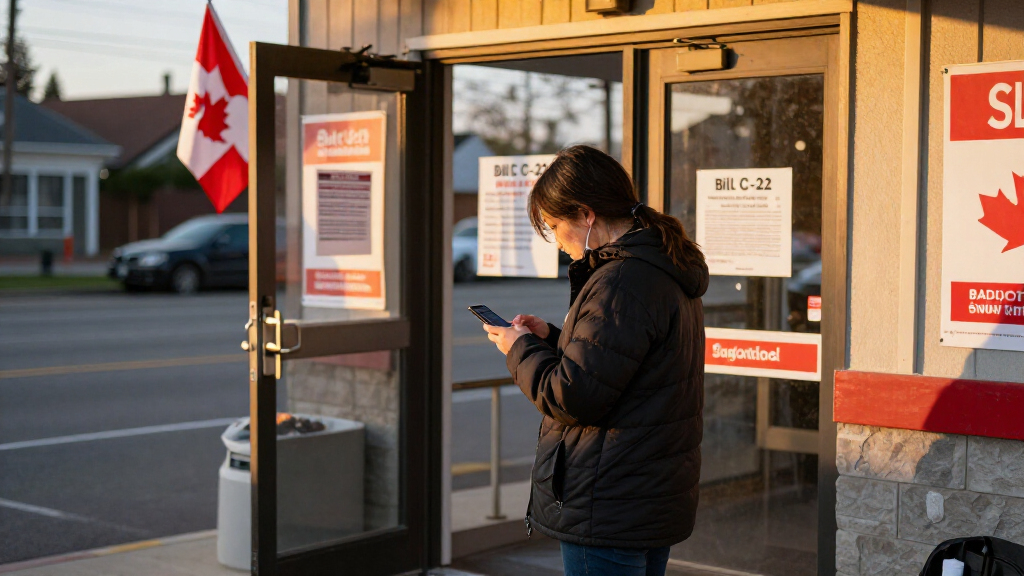
Bill C-22, also called the Lawful Access Act, has passed the House of Commons and is now before the Canadian Senate. The Electronic Frontier Foundation and the Canadian Civil Liberties Association are urging Canadians to contact senators, citing concerns about surveillance powers, metadata retention and encryption. The source report does not give a Senate vote date or confirm the bill’s final provisions.
Bill C-22, the proposed Lawful Access Act, has passed Canada’s House of Commons and is now before the Senate, prompting privacy groups to urge Canadians to contact senators before the bill advances. The Electronic Frontier Foundation (EFF) says the legislation could expand government access to digital services and user data; those concerns are advocacy groups’ assessment of the bill, not a final ruling on its effects.
The EFF’s October 2026 report points readers to a petition from the Canadian Civil Liberties Association (CCLA) opposing the bill. It says Canadians can still make their views known while the Senate considers the legislation. The report does not specify a deadline for submissions, the bill’s next scheduled Senate proceeding or when a vote may occur.
According to the EFF, Bill C-22 would give the government authority to require digital services—including telecom companies and messaging apps—to assist with surveillance. The organization says the bill would also let the minister of public safety order companies to build access mechanisms for law enforcement, subject to a provision that the order must not cause “systemic insecurity.” The EFF argues that this could weaken encryption, but the report does not provide the government’s response to that interpretation.
The EFF also says the bill would require services to retain metadata for up to one year. Metadata can show details such as who communicated, where a person went or which services were used, even without revealing message contents. The report describes concerns raised by researchers at the CCLA and the University of Toronto’s Citizen Lab, who argue that the proposal raises constitutional and cybersecurity issues.
How the Proposal Could Affect Privacy
The debate matters because the bill concerns the rules governing government demands to digital companies and the storage of information about people’s online activity. If enacted as described by the EFF, service providers could face new surveillance-assistance duties, while retention requirements could make metadata available for later access. Metadata is not the content of a message, but records about communications and service use can still reveal patterns of a person’s life.
There is also a security dimension. The EFF argues that requiring companies to create a means of access could create weaknesses that extend beyond the intended law-enforcement use. That is a risk asserted by critics; the source material does not establish that a particular vulnerability has been created or that every service would be affected in the same way. The Senate’s scrutiny is consequential because the legislation remains under parliamentary consideration, and senators may examine its scope and safeguards.
For Canadians, the immediate development is an opportunity for public advocacy, not a confirmed change to current surveillance rules. The petition campaign gives opponents a channel to express concerns, while the Senate process determines whether and in what form the bill proceeds.
hardware security key FIDO2 USB-C NFC
As an affiliate, we earn on qualifying purchases.
As an affiliate, we earn on qualifying purchases.
From House Passage to Senate Review
Bill C-22 has already passed the House of Commons, according to the EFF, and is now before the Senate. The organization describes it as a significant expansion of surveillance powers and directs readers to earlier reporting on the bill. The source does not provide the date of House passage, the bill’s clause-by-clause history or a detailed account of amendments made before it reached the Senate.
CCLA and Citizen Lab researchers have published an analysis of the legislation, the EFF reports. That analysis calls for withdrawing Part 2, which the organizations say establishes the surveillance and data-retention regime, rather than making only limited revisions. The EFF also reports that some senators have voiced concerns about whether the bill is compatible with constitutional privacy protections. It does not name those senators or quote their remarks, so the extent of Senate opposition is not clear from the report.
The EFF further connects the debate to negotiations between Canada and the United States over cross-border data sharing. It says a proposed agreement could allow U.S. law enforcement to obtain information about Canadian internet users without Canadian court oversight. The report does not provide the agreement’s text, its status or details on how it would interact with Bill C-22; the two issues should not be treated as a single confirmed measure.
““systemic insecurity””
— Electronic Frontier Foundation
privacy screen protector laptop anti-glare
As an affiliate, we earn on qualifying purchases.
As an affiliate, we earn on qualifying purchases.
Senate Timetable and Safeguards Remain Open
The available report does not say when the Senate will next debate or vote on Bill C-22, whether senators have proposed amendments, or when Canadians must submit comments or petitions. Although the EFF says the bill is before the Senate, the precise stage of review is not provided.
The legislation’s final wording and practical effects are also unresolved. The source presents the EFF’s and civil-liberties researchers’ concerns, but does not include the government’s explanation of the bill, its account of the safeguards, or responses from affected technology companies. The cross-border data-sharing agreement mentioned by the EFF is described as under negotiation; its terms and outcome are not established in the material.
encrypted external SSD hardware encryption
As an affiliate, we earn on qualifying purchases.
As an affiliate, we earn on qualifying purchases.
Watch for Senate Debate and Changes
The next steps to watch are further Senate consideration, any proposed amendments and whether the bill proceeds to a vote. The source material gives no confirmed schedule, so a specific date or outcome cannot be reported. Canadians who want to oppose the bill can review the CCLA petition cited by the EFF and follow Senate proceedings for opportunities to make their views known.
Any later assessment should distinguish the bill’s enacted text, if it passes, from predictions about how agencies or service providers might use it. Senate changes, the government’s response to criticism and the status of the separate Canada-U.S. data-sharing negotiations could clarify the scope of the privacy and security concerns.
As an affiliate, we earn on qualifying purchases.
Key Questions
Has Bill C-22 become law?
No. The EFF report says it has passed the House of Commons and is before the Senate. It does not report that the bill has completed Parliament or become law.
What does the EFF say the bill would require?
The EFF says it could require digital services to assist with government surveillance, allow orders for access mechanisms subject to a “systemic insecurity” limit, and require metadata retention for up to one year. These are the EFF’s descriptions and concerns about the proposal.
Why are privacy groups opposing Part 2?
According to the EFF, researchers from the CCLA and Citizen Lab say Part 2 establishes the surveillance and data-retention regime and raises constitutional and cybersecurity concerns. They call for the section to be withdrawn.
When will the Senate vote?
The source report does not give a Senate vote date or the next scheduled proceeding. The bill’s timetable remains unclear based on the information available here.
How can Canadians oppose the bill?
The EFF urges Canadians to read and sign the CCLA petition opposing Bill C-22 and to contact the Senate. Readers should check the CCLA’s site and official Senate information for current instructions and deadlines.
Source: hn
Fall Picks
fall essentials
As an affiliate, we earn on qualifying purchases.