TL;DR

Get everyday essentials delivered free — and shop member deals
- Fast, free delivery on millions of items
- Access to Prime Big Deal Days deals on October 6–7
- Prime Video, Amazon Music and more included
Russia plans to allocate nearly 60 billion rubles over the next three years to operate its internet traffic filtering and blocking system, according to a draft budget appendix reviewed by Forbes Russia. The previous plan set aside 32 billion rubles for the same period; officials have not explained the increase.
Russia plans to spend nearly 60 billion rubles over the next three years on its system for filtering and blocking internet traffic, according to an appendix to the draft budget reviewed by Forbes Russia. The proposed allocation is almost double the 32 billion rubles set out for the same period in a plan made two years earlier, and the reason for the increase has not been officially explained.
The money is designated for the Chief Radio Frequency Center (GRChTs), an entity under Roskomnadzor, Russia’s federal media regulator. The center operates the Automated System for Ensuring Internet Security (ASBI), which supports filtering and blocking across the Russian segment of the internet. The amount comes from a draft budget appendix; the source material does not establish that the spending has been finally approved.
The Finance Ministry and Digital Development Ministry did not respond to Forbes Russia’s requests for comment, according to the publication. A source close to the Digital Development Ministry said explanations had not yet been written into the bill and should be expected by the end of the year. No official explanation for the near doubling was available in the report.
Experts cited by Forbes Russia pointed to rising equipment costs and growing traffic volumes. Filtering larger amounts of data can require more powerful processors, memory and storage, while sanctions have made imported components harder for Russia to obtain. The report also says the filtering system’s geographic reach is expanding, though it does not provide a schedule or cost breakdown for that expansion.
Higher Costs for Traffic Controls
The proposed increase would direct substantially more public funding toward infrastructure used to filter, slow or block internet traffic. That makes the budget line relevant to internet users and telecom operators, since the system is operated by a regulator and relies on equipment installed within networks.
The higher figure also points to the financial and technical demands of maintaining such controls as data traffic grows and equipment becomes more expensive. The report identifies possible cost pressures, but without a published breakdown it is not possible to determine how much of the increase would pay for routine operations, new equipment or a broader rollout.
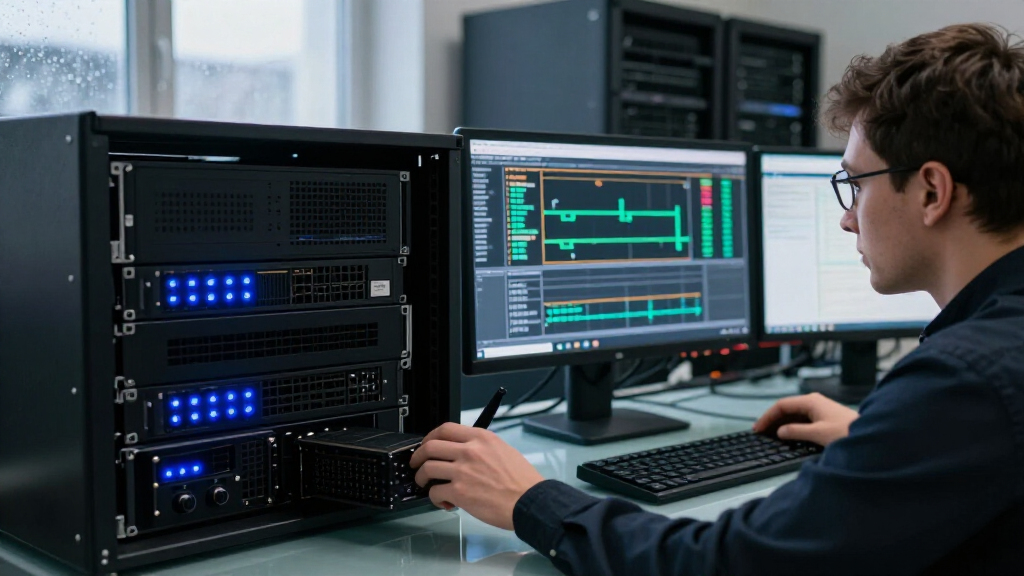
internet traffic filtering equipment
As an affiliate, we earn on qualifying purchases.
As an affiliate, we earn on qualifying purchases.
How Russia’s Filtering System Works
Under Russia’s “sovereign Runet” law, telecom operators are required to install traffic-filtering equipment known as TSPU on their networks. The equipment enables Roskomnadzor to filter, slow and block internet traffic. The ASBI, operated by the GRChTs, is the wider system associated with those controls.
Alexey Amelkin, president of the Association of Telecom Operators Makatel, said TSPU equipment had not yet been installed on operator networks in the occupied territories of Ukraine. He also cited sanctions and higher prices for components such as RAM as factors that could raise the cost of new equipment. The report does not say whether the proposed budget specifically includes installation there.
““Explanations haven’t been written into the bill yet — they should be expected by the end of the year.””
— A source close to Russia’s Digital Development Ministry, as quoted by Forbes Russia
As an affiliate, we earn on qualifying purchases.
Budget Rationale Still Pending
The draft appendix gives a planned total, but the available reporting does not clarify why the allocation nearly doubled or how it would be divided among operating costs, equipment purchases and any expansion. The two ministries had not responded to Forbes Russia by the time of its report, and the ministry source said an explanation was still to come.
It is also unclear whether the full amount will be approved, when particular purchases or installations would take place, and whether AI features are part of any current plan. Amelkin’s comment about AI describes a possible source of future expense, not a confirmed deployment.
As an affiliate, we earn on qualifying purchases.
Awaiting Budget Details
The next expected clarification is an explanation in the budget bill, which the source close to the Digital Development Ministry said should be available by the end of 2026. Further details would be needed to show how the planned funding compares with the earlier allocation and which costs account for the increase.
As the budget process continues, the proposed figure may be revised or approved. The report does not specify a date for a final decision or for any additional TSPU installations.
As an affiliate, we earn on qualifying purchases.
Key Questions
How much does Russia plan to spend on internet filtering?
The draft budget appendix reviewed by Forbes Russia sets out nearly 60 billion rubles over the next three years.
How does that compare with the earlier plan?
A plan made two years earlier allocated 32 billion rubles for ASBI’s operation over the same period. The reason for the higher proposed amount has not yet been officially explained.
Which organization would receive the funding?
The proposed funding is for the Chief Radio Frequency Center, a body under Roskomnadzor that operates the automated system associated with filtering and blocking internet resources.
Why might the costs be increasing?
Experts cited in the report point to growing traffic, rising prices for processors, memory and storage, and difficulty obtaining imported components because of sanctions. The budget has not yet published a cost breakdown confirming how these factors affect the proposed total.
Has Russia confirmed that the system will use artificial intelligence?
No. Amelkin said AI capabilities could require additional funding if introduced, but the report does not confirm that AI is currently being deployed in the filtering system.
Source: rss
Fall Picks
fall essentials
As an affiliate, we earn on qualifying purchases.