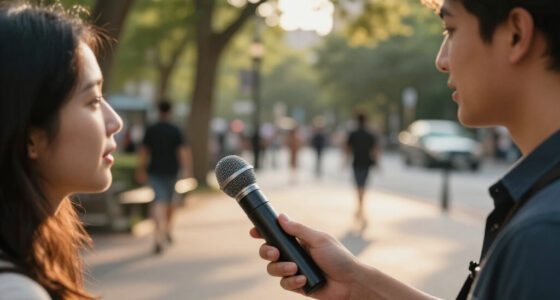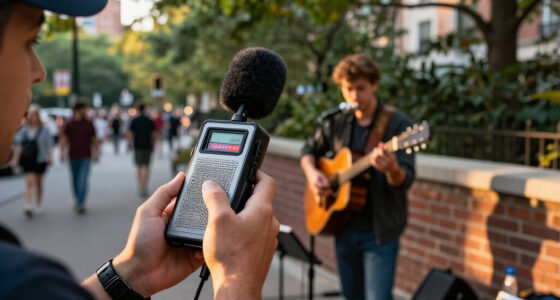


The best portable podcast microphones balance clear speech, easy setup, and a recording format that suits where you work. My best overall pick is the DJI Mic Mini Wireless Microphone System with Charging Case, a flexible choice for two-person recordings on the move. The MAONO PD200W stands out for podcasters who want wireless and desk-based recording options, while the FIFINE AmpliGame AM8 offers a USB/XLR route for a more permanent setup. The main tradeoff is between the hands-free convenience of lavaliers and the fuller desk-mic workflow of larger microphones. Read on for the full breakdown, plus guidance on choosing the right connection, format, and number of microphones.

Get everyday essentials delivered free with Prime
- Fast, free delivery on millions of items
- Prime Video, Amazon Music and more included
- Member-only deals all year
Complete the kit


Key Takeaways
The lineup splits into two clear groups: wireless lavaliers favor phone-first, on-location recording, while USB and hybrid microphones suit desk-based podcasting or a more deliberate recording setup.
The DJI Mic Mini with charging case leads for portability and two-person recording: its two transmitters and case make it a stronger all-around travel kit than single-mic phone lavaliers.
The MAONO PD200W and FIFINE AM8 offer different paths to a fuller podcast setup: MAONO combines wireless and desk use, while the AM8 pairs USB convenience with an XLR connection for future gear changes.
Receiver compatibility matters as much as the microphone: USB-C, Lightning, mobile receivers, and camera connections are not interchangeable, so buyers should match the kit to the device they will record with most.
Low-cost multi-mic kits trade refinement for flexibility: four-pack and dual-lavalier options can cover more speakers, but buyers should check how each microphone connects, how the kit handles separate voices, and what accessories are included.
| wedaniya WM189 Wireless Mini Lavalier Microphone, 2-Pack with USB-C and Lightning Receivers |  | Best for Two-Person Phone Interviews | Microphone count: 2 | Connectivity: Wireless | Connectors: USB-C and Lightning | VIEW LATEST PRICE | See Our Full Breakdown |
| DJI Mic Mini Wireless Microphone System (2 Transmitters, 1 Receiver, Charging Case) | 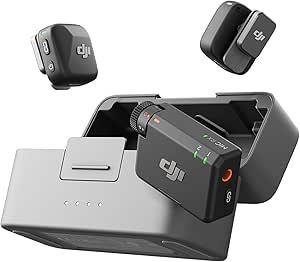 | Best for Long-Range Mobile Recording | Included components: 2 transmitters, 1 receiver, charging case, accessories | Transmitter weight: 10 g | Maximum transmission range: 400 m | VIEW LATEST PRICE | See Our Full Breakdown |
| MAONO PD200W Hybrid Wireless Podcast Microphone |  | Best Hybrid Mic for a Portable-to-Desk Setup | Microphone type: Dynamic | Connectivity: Wireless, USB-C, XLR | Pickup pattern: Unidirectional cardioid | VIEW LATEST PRICE | See Our Full Breakdown |
| FIFINE AmpliGame AM8 USB/XLR Dynamic Microphone |  | Best for a Portable USB/XLR Desk Kit | Connectivity: USB, XLR | Polar pattern: Cardioid, unidirectional | Frequency response: 50 Hz–16 kHz | VIEW LATEST PRICE | See Our Full Breakdown |
| Mini Mic Pro Wireless Lavalier Microphone for iPhone and Android | 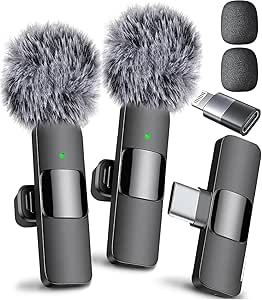 | Best Compact Phone Lavalier Kit | Connectivity: Wireless | Connectors: USB-C and Lightning | Compatibility: Android, iPhone, smartphones, tablets, iPad, laptops | VIEW LATEST PRICE | See Our Full Breakdown |
| Logitech Blue Yeti USB Microphone with Blue VO!CE, Four Pickup Patterns, and Desktop Stand | 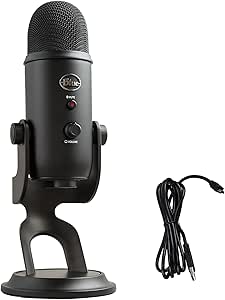 | Best for a Portable Desktop Podcast Setup | Connectivity: USB | Microphone type: Condenser | Capsule array: Three-capsule | VIEW LATEST PRICE | See Our Full Breakdown |
| DJI Mic Mini Wireless Microphone System (2 Transmitters, Mobile Receiver) |  | Best Lightweight Wireless Pick | Transmitters: 2 | Transmitter weight: 10 g each | Maximum transmission range: 300 m | VIEW LATEST PRICE | See Our Full Breakdown |
| NPTCL Wireless Lavalier Microphones for USB-C and Lightning Devices |  | Best for Simple Phone Interviews | Microphone type: Lavalier | Microphones included: 2 | Connectors: USB Type-C and Lightning | VIEW LATEST PRICE | See Our Full Breakdown |
| GoorDik Wireless USB-C Lavalier Microphone with Noise Reduction |  | Best Two-Person Kit with Recording Accessories | Microphone type: Lavalier | Transmitters: 2 | Connectors: USB Type-C; USB Type-A adapter; Lightning adapter included | VIEW LATEST PRICE | See Our Full Breakdown |
| 4-Pack Wireless Lavalier Microphone Kit for iPhone, Android, and Cameras |  | Best for Four-Person Roundtables | Microphones: 4 | Wireless technology: 2.4 GHz | Maximum range: 164 ft | VIEW LATEST PRICE | See Our Full Breakdown |
| Labstandard Dual Wireless Lavalier Microphone for iPhone and iPad |  | Best for Two-Person Mobile Interviews | Microphone type: Wireless lavalier | Number of microphones: 2 | Polar pattern: Omnidirectional | VIEW LATEST PRICE | See Our Full Breakdown |
| Movo PodPro Portable Podcast Equipment Bundle for iPhone and Android |  | Best Complete Two-Person Podcast Kit | Model: PodPro-TH | Channels: 2 | Microphones: 2 CastMic XLR dynamic microphones | VIEW LATEST PRICE | See Our Full Breakdown |
| ZealSound K66 USB Condenser Podcast Microphone with Noise Reduction, Gain and Mute Controls |  | Best for a Simple Desk-to-Mobile Setup | Microphone type: USB condenser | Pickup pattern: Cardioid | Frequency response: 40 Hz–18 kHz | VIEW LATEST PRICE | See Our Full Breakdown |
| DJI Mic 3 Wireless Microphone (2 Transmitters, 1 Receiver, Charging Case) |  | Best Premium Wireless System | Transmitters: 2 | Receiver: 1 | Audio output: Four-channel | VIEW LATEST PRICE | See Our Full Breakdown |
| MAYBESTA Wireless Lavalier Microphone for iPhone and Android |  | Best for Quick Phone Recording | Microphone type: Mini lavalier | Microphones included: 2 | Polar pattern: Omnidirectional | VIEW LATEST PRICE | See Our Full Breakdown |
| portable podcast microphone | Connectivity |
|---|---|
| wedaniya WM189 Wireless Mini L | Wireless |
| DJI Mic Mini Wireless Micropho | Bluetooth, DJI OsmoAudio, USB Type-C |
| MAONO PD200W Hybrid Wireless P | Wireless, USB-C, XLR |
| FIFINE AmpliGame AM8 USB/XLR D | USB, XLR |
| Mini Mic Pro Wireless Lavalier | Wireless |
| Logitech Blue Yeti USB Microph | USB |
| DJI Mic Mini Wireless Micropho | Bluetooth, Wi-Fi, USB Type-C |
| NPTCL Wireless Lavalier Microp | — |
| GoorDik Wireless USB-C Lavalie | — |
| 4-Pack Wireless Lavalier Micro | — |
| Labstandard Dual Wireless Lava | — |
| Movo PodPro Portable Podcast E | — |
| ZealSound K66 USB Condenser Po | — |
| DJI Mic 3 Wireless Microphone | Dual-band wireless; direct connection to compatible DJI devices |
| MAYBESTA Wireless Lavalier Mic | — |
More Details on Our Top Picks
wedaniya WM189 Wireless Mini Lavalier Microphone, 2-Pack with USB-C and Lightning Receivers
The WM189 two-mic kit is a practical pick for recording a host and guest on compatible phones without carrying a desktop microphone. Its USB-C and Lightning receivers give it broader device flexibility than a phone-specific lavalier setup, while the included windshields and noise reduction can help tame outdoor and room sounds. I also value the real-time headphone monitoring for catching problems during a recording rather than afterward. Compared with the DJI Mic Mini, this set is lighter on documented transmission range and battery endurance, but offers simple phone-first operation and a compact two-person package. The tradeoffs are that compatibility details should be checked for the exact device, and its six-hour runtime is less suited to extended recording days. Its three modes add flexibility, though Reverb may not suit every spoken-word recording.
Pros:- Two microphones make host-and-guest recording straightforward.
- USB-C and Lightning receivers support a range of compatible devices.
- Windshields, DSP noise reduction, and headphone monitoring aid mobile recording.
- Up to six hours of recording time with a one-hour charging time.
Cons:- Device compatibility details may need checking before purchase.
- Six-hour runtime trails the DJI Mic Mini system’s stated case-supported endurance.
- The compact wireless lavalier format offers fewer stated range and recording specifications than the DJI system.
Best for: Phone-based podcasters who regularly record two people and want both USB-C and Lightning receiver options.
Not ideal for: Creators needing a documented long-range link, all-day battery life, or a microphone designed primarily for a desktop recording setup.
- Microphone count:2
- Connectivity:Wireless
- Connectors:USB-C and Lightning
- Audio modes:Standard, Reverb, Mute
- Recording time:Up to 6 hours
- Charging time:1 hour
- Weight:Under 1 oz
- Included accessories:Receiver, portable bag, 2 deadcat covers, 2 sponge covers
Our verdict“Choose the WM189 for convenient two-person phone interviews; pick the DJI Mic Mini if extended battery life and a stated long transmission range matter more.”
DJI Mic Mini Wireless Microphone System (2 Transmitters, 1 Receiver, Charging Case)
The DJI Mic Mini stands out for podcasters who need to move around while recording: its stated 400 m transmission range gives more room for outdoor interviews or separated speakers than the 60 m MAONO PD200W. The two transmitters are only 10 g each, and the charging case supports up to 48 hours of battery life, making this a stronger travel choice than the six-hour wedaniya WM189 for longer recording schedules. Two noise-cancellation levels and automatic audio limiting offer useful control when surroundings or vocal levels vary. The main compromise is that it is a wireless system rather than a USB/XLR desktop microphone like the FIFINE AmpliGame AM8, so it serves a different recording style. It is also not waterproof, and some Osmo Mobile connections require an additional module.
Pros:- Two lightweight 10 g transmitters suit discreet mobile recording.
- Charging case supports up to 48 hours of battery life.
- Stated transmission range reaches up to 400 m.
- Two noise-cancellation levels and automatic audio limiting provide recording controls.
Cons:- The system is not waterproof.
- Connecting to Osmo Mobile series products requires the first-generation DJI OM Multifunctional Module.
- It does not offer the direct USB/XLR desktop setup of the FIFINE AmpliGame AM8.
Best for: Mobile interviewers and video podcasters who need two discreet transmitters, long wireless reach, and a charging case for travel.
Not ideal for: Podcasters recording at a fixed desk who want direct USB/XLR microphone connections, or creators working in wet conditions.
- Included components:2 transmitters, 1 receiver, charging case, accessories
- Transmitter weight:10 g
- Maximum transmission range:400 m
- Sampling rate:48 kHz
- Maximum sound pressure level:120 dB SPL
- Battery life with charging case:Up to 48 hours
- Connectivity:Bluetooth, DJI OsmoAudio, USB Type-C
- Water resistance:Not waterproof
Our verdict“Pick the DJI Mic Mini for portable two-person recording where range and case-supported runtime matter more than desktop USB/XLR connectivity.”
MAONO PD200W Hybrid Wireless Podcast Microphone
The MAONO PD200W is the most adaptable recording mic here for someone who moves between a desk and a mobile setup. Its wireless, USB-C, and XLR connections cover more workflows than the wireless-only DJI Mic Mini, while the dynamic cardioid design is aimed at focusing on a nearby speaker. The stated 60-hour battery life with RGB off can support long stretches away from a charger, and the option to use two wireless microphones on one receiver with separate tracks suits interview recording. That flexibility comes with a substantial 1.32 kg weight; this is less convenient to carry than either lavalier kit. Some sound controls also depend on the companion app, and camera or Lightning accessories are sold separately. I’d choose it over the FIFINE AM8 for wireless freedom, but not for the lightest travel kit.
Pros:- Wireless, USB-C, and XLR connections support several recording setups.
- Cardioid pickup and three-stage noise cancellation are aimed at reducing unwanted background sound.
- Supports two wireless microphones on one receiver with separate tracks.
- Up to 60 hours of battery life with RGB lighting off.
Cons:- At 1.32 kg, it is much heavier to carry than the DJI Mic Mini transmitters or compact lavalier sets.
- Camera and Lightning accessories are sold separately.
- Some sound settings require the companion app.
Best for: Podcasters who want one dynamic microphone for desk recording and occasional wireless interviews, with USB and XLR options for changing setups.
Not ideal for: Travelers who prioritize a lightweight kit, or phone and camera users who need all required adapters included.
- Microphone type:Dynamic
- Connectivity:Wireless, USB-C, XLR
- Pickup pattern:Unidirectional cardioid
- Signal-to-noise ratio:82 dB
- Maximum SPL:128 dB
- Wireless range:60 m
- Battery life:Up to 60 hours with RGB off
- Weight:1.32 kg
Our verdict“Choose the PD200W if you want a flexible hybrid mic for desk and wireless podcasting, but skip it if compact carry weight is your main priority.”
FIFINE AmpliGame AM8 USB/XLR Dynamic Microphone
The FIFINE AmpliGame AM8 suits a podcaster who needs to pack a microphone between desk locations but records close to a computer or interface. Its USB and XLR connections let a setup start simply and later move to XLR equipment, while the cardioid pattern is intended to favor the speaker in front of the mic. USB mode adds headphone monitoring, gain controls, and tap-to-mute, useful when managing a solo show or livestream. Compared with the wireless MAONO PD200W, the AM8 avoids battery and wireless-range concerns but needs a cable and power connection, so it is not as free-moving as a lavalier kit such as the wedaniya WM189. A separate XLR cable is needed, and its onboard controls and RGB lighting stop working in XLR mode. The recommended 2–6 inch recording distance also favors a close, deliberate desk position.
Pros:- USB and XLR connectivity supports both computer recording and compatible audio equipment.
- USB mode includes headphone monitoring, tap-to-mute, gain, and volume controls.
- Cardioid pickup is suited to close, direct speech recording.
- Stand threads fit common 3/8-inch and 5/8-inch microphone stands.
Cons:- A separate XLR cable is required for XLR operation.
- RGB lighting and onboard controls are inactive in XLR mode.
- Corded operation and a 2–6 inch recommended recording distance limit mobile, walk-and-talk use.
Best for: Home and traveling desk podcasters who want a dynamic microphone that can connect by USB now and XLR later.
Not ideal for: Interviewers who need wireless mobility, or creators who expect USB controls and RGB features to remain active through XLR.
- Connectivity:USB, XLR
- Polar pattern:Cardioid, unidirectional
- Frequency response:50 Hz–16 kHz
- Signal-to-noise ratio:80 dB
- Headphone jack:Yes
- USB controls:Tap-to-mute, RGB, monitoring volume, microphone gain
- Stand threads:3/8 in and 5/8 in
- Recommended recording distance:2–6 in
Our verdict“Choose the AM8 for a portable desk-based setup with a future XLR path, not for recording while moving around.”
Mini Mic Pro Wireless Lavalier Microphone for iPhone and Android
The Mini Mic Pro is a phone-first lavalier option for podcasters who want a small kit with both USB-C and Lightning adapters. Its omnidirectional pickup can capture speech without precise mic aiming, while the included foam and deadcat covers give some protection against wind during outdoor recording. Like the wedaniya WM189, it offers up to six hours per charge; the wedaniya set, however, specifies real-time headphone monitoring and three audio modes, while the Mini Mic Pro listing emphasizes charging a connected device during recording. That pass-through charging is useful for longer phone sessions, but the product data does not specify a charging time or detailed compatibility limits. At 80 g, it is light enough for a mobile kit, though it is less feature-specific than the DJI Mic Mini, which states its range and noise-cancellation levels. Check device fit before relying on the adapters.
Pros:- USB-C and Lightning adapters support a broad range of listed phones, tablets, and laptops.
- Up to six hours of recording per charge.
- Foam and deadcat covers help with wind protection.
- Connected devices can charge while recording.
Cons:- Battery type and detailed compatibility information are unclear.
- The listed six-hour runtime is shorter than the DJI Mic Mini’s stated case-supported battery life.
- No transmission range or audio mode details are provided.
Best for: Phone-based solo podcasters who want a lightweight wireless lavalier with USB-C and Lightning options and wind covers for outdoor speech.
Not ideal for: Creators who need a clearly stated transmission range, detailed device compatibility, or longer runtime than six hours between charges.
- Connectivity:Wireless
- Connectors:USB-C and Lightning
- Compatibility:Android, iPhone, smartphones, tablets, iPad, laptops
- Microphone pattern:Omnidirectional
- Battery life:Up to 6 hours per charge
- Weight:80 g
- Dimensions:3 × 0.5 × 0.25 in
- Included items:2 lavalier microphones, 1 receiver, USB charging cable, 2 clips, 2 foam tips, 2 deadcat tips
Our verdict“Pick the Mini Mic Pro for a compact, adapter-equipped phone lavalier and pass-through charging, but choose the DJI Mic Mini for more clearly stated range and system details.”
Logitech Blue Yeti USB Microphone with Blue VO!CE, Four Pickup Patterns, and Desktop Stand
The Blue Yeti is the most studio-like option here: its three-capsule condenser and four pickup patterns handle solo narration, face-to-face interviews, and group recordings without swapping microphones. Onboard gain, mute, and headphone-volume controls also make adjustments quicker than with the DJI Mic Mini Wireless Microphone System, which is better suited to moving interviews and phone-first recording. The tradeoff is portability: this is a desktop mic with a stand, not a tiny clip-on system to carry around or wear while recording. USB setup and zero-latency headphone monitoring suit a laptop podcast station, while the full set of Blue VO!CE features depends on Logitech G HUB. Choose it for a flexible desk setup; skip it if your podcast is recorded on the move.
Pros:- Four pickup patterns adapt to solo voices, interviews, and broader room capture.
- Onboard mute, gain, and headphone-volume controls support quick adjustments.
- Zero-latency headphone monitoring helps catch audio issues while recording.
- Includes an adjustable desktop stand and also supports boom arms.
Cons:- Desktop stand and microphone are less convenient to pack than wireless lavalier systems.
- Full Blue VO!CE functionality requires Logitech G HUB.
- Specified compatibility is limited to PC and Mac.
Best for: Laptop-based podcasters who want one USB microphone for solo shows, in-person conversations, and video calls.
Not ideal for: Traveling hosts who need a wearable microphone or a compact system that connects directly to a phone.
- Connectivity:USB
- Microphone type:Condenser
- Capsule array:Three-capsule
- Pickup patterns:Cardioid, omnidirectional, bidirectional, stereo
- Frequency response:20 Hz–20 kHz
- Signal-to-noise ratio:100 dB
- Controls:Headphone volume, pickup pattern, mute, microphone gain
- Compatibility:PC and Mac
Our verdict“Choose the Blue Yeti for a flexible, control-rich laptop podcast station, not for wearable or travel-first recording.”
DJI Mic Mini Wireless Microphone System (2 Transmitters, Mobile Receiver)
At 10 g per transmitter, the DJI Mic Mini is the easiest choice here for hosts who need to move freely without a bulky mic on camera. Its two transmitters support two-person conversations, while adjustable noise cancellation and automatic limiting help manage changing surroundings and sudden loud speech. Compared with the NPTCL Wireless Lavalier Microphones, its stated range reaches farther, making it a stronger fit for roaming interviews; NPTCL, however, includes USB-C and Lightning compatibility in its described setup. The Mic Mini supports USB-C connections to compatible phones, computers, and tablets, plus supported OsmoAudio devices. Its stated 11.5-hour maximum operating time is useful for long recording days, but the system is not waterproof, and use with Osmo Mobile series products requires a first-generation DJI OM Multifunctional Module.
Pros:- Each 10 g transmitter is small and light enough for discreet on-camera use.
- Two transmitters support interviews and two-person recordings.
- Two noise-cancellation levels let users adjust for different environments.
- Automatic limiting helps reduce clipping from unexpectedly loud audio.
Cons:- Not waterproof.
- Using it with Osmo Mobile series products requires a first-generation DJI OM Multifunctional Module.
- The listed mobile receiver connects by USB-C, so Lightning users should check their device setup.
Best for: Mobile interviewers and video podcasters who want two discreet transmitters, long stated range, and a USB-C mobile receiver.
Not ideal for: Creators who need waterproof gear or a receiver-and-adapter setup explicitly suited to Lightning devices.
- Transmitters:2
- Transmitter weight:10 g each
- Maximum transmission range:300 m
- Maximum operating time:Up to 11.5 hours
- Noise cancellation:2 levels: Basic and Strong
- Microphone polar pattern:Omnidirectional
- Audio format with supported OsmoAudio devices:48 kHz, 24-bit
- Connectivity:Bluetooth, Wi-Fi, USB Type-C
Our verdict“Pick the DJI Mic Mini for lightweight, longer-range two-person recording when your devices support its USB-C receiver.”
NPTCL Wireless Lavalier Microphones for USB-C and Lightning Devices
The NPTCL set is a straightforward fit for phone-based interviews: it includes two clip-on microphones and connects to compatible phones and tablets without an app or Bluetooth pairing. That simplicity is a clear contrast with the Logitech Blue Yeti, which offers more pickup-pattern control but is built around a desktop USB setup. The included USB-C and Lightning compatibility gives this kit an advantage for mixed-device households, though older iPhones need the supplied Lightning adapter. A charging case raises total stated use to 24 hours, but each microphone runs for up to six hours per charge, so longer sessions may need a break to recharge. Its 70-foot range suits nearby interviews and presentations, not the longer-distance recording offered by the DJI Mic Mini.
Pros:- Two microphones support two-person interviews.
- Connects to compatible phones and tablets without an app or Bluetooth pairing.
- USB-C and Lightning compatibility serves a wider range of mobile devices.
- Charging case supports up to 24 hours of total use.
Cons:- Each microphone runs for up to six hours per charge.
- Older iPhones require the included Lightning adapter.
- Its stated 70-foot range is shorter than the DJI Mic Mini’s maximum range.
Best for: Phone-first interviewers who record two people and want a simple receiver setup that supports both USB-C and Lightning devices.
Not ideal for: Hosts recording extended sessions without charging breaks or working at distances beyond its stated 70-foot range.
- Microphone type:Lavalier
- Microphones included:2
- Connectors:USB Type-C and Lightning
- Battery life:Up to 6 hours per microphone; up to 24 hours with charging case
- Wireless range:Up to 70 feet
- Pickup pattern:Omnidirectional
- Features:Noise reduction, clip, mute function, battery indicator
- Compatible devices:Smartphones and tablets
Our verdict“Choose NPTCL for uncomplicated two-person phone recording across USB-C and Lightning devices, provided six-hour transmitter sessions are enough.”
GoorDik Wireless USB-C Lavalier Microphone with Noise Reduction
GoorDik makes a practical case for creators who want a two-transmitter lavalier kit with adapters and wind protection in one package. Its USB-C receiver, USB-A adapter, and included Lightning adapter offer more connection options than the NPTCL Wireless Lavalier Microphones, whose listed compatibility is centered on USB-C and Lightning mobile devices. Noise-reduction and original-sound modes provide a choice between processing and a less altered signal, while furry wind muffs can help when recording outdoors. The stated range reaches 30 meters, but is shorter than the DJI Mic Mini’s maximum. Battery life is listed as six to 12 hours per transmitter; setup may take extra steps on some Android phones, and computer users may need to select the microphone as their default input.
Pros:- Two transmitters support interviews and co-host recordings.
- Noise-reduction and original-sound modes offer different recording approaches.
- Includes USB-C, USB-A, and Lightning connection options.
- Furry wind muffs and foam covers add useful recording accessories.
Cons:- Some Android phones may require OTG activation.
- Computer users may need to set the microphone as the default input.
- Its stated 30-meter range is shorter than the DJI Mic Mini’s maximum.
Best for: Two-person creators who record across USB-C phones, USB-A computers, or Lightning devices and want wind covers included.
Not ideal for: Users who need a guaranteed plug-and-play setup on every Android phone or want the longest stated wireless range.
- Microphone type:Lavalier
- Transmitters:2
- Connectors:USB Type-C; USB Type-A adapter; Lightning adapter included
- Battery life:6–12 hours per transmitter
- Wireless range:Up to 30 meters
- Polar pattern:Omnidirectional
- Frequency response:20–20,000 Hz
- Included accessories:USB charging cable, USB adapter, Lightning adapter, 4 foam covers, 2 furry wind muffs
Our verdict“Choose GoorDik for an adaptable two-person kit with useful adapters and wind covers, as long as you can handle occasional device setup.”
4-Pack Wireless Lavalier Microphone Kit for iPhone, Android, and Cameras
When the podcast has more than two voices, this kit’s defining advantage is straightforward: four microphones can record at once. That gives it a clear role apart from the two-transmitter GoorDik Wireless USB-C Lavalier Microphone and the two-person DJI Mic Mini. Its 3-in-1 receiver and Lightning, USB-C, and 3.5 mm connections make it the most connection-flexible group option in this batch, including for cameras with a suitable input. The receiver can also support phone charging during recording. The tradeoff is session planning: transmitter use is rated for up to six hours per charge, and Android devices may require OTG to be enabled. Choose this for panel discussions and group interviews, not as the simplest or most compact pick for a solo host.
Pros:- Supports recording up to four people at once.
- Lightning, USB-C, and 3.5 mm connections suit a broad range of recording devices.
- Receiver supports phone charging during recording.
- Includes wind covers, wired headphones, and a storage case.
Cons:- Transmitter use is limited to up to six hours per charge.
- Android devices may require OTG to be enabled.
- The multi-microphone kit is more equipment than a solo host needs.
Best for: Podcast groups, panel hosts, and interviewers who need to capture as many as four people on compatible phones, computers, tablets, or cameras.
Not ideal for: Solo podcasters seeking a minimal setup or Android users who cannot enable OTG when needed.
- Microphones:4
- Wireless technology:2.4 GHz
- Maximum range:164 ft
- Battery life:Up to 6 hours
- Charging time:1.5 hours
- Pickup pattern:Omnidirectional
- Connections:Lightning, USB-C, 3.5 mm
- Included accessories:3-in-1 receiver, USB adapter, wind covers, charging cables, wired headphones, storage case
Our verdict“Pick this kit when four-person recording and broad device connections matter more than a compact solo setup.”
Labstandard Dual Wireless Lavalier Microphone for iPhone and iPad
For a two-person podcast recorded on phones or tablets, this set’s clearest advantage is having two wireless omnidirectional microphones in one kit. That makes it more practical for seated interviews than a single-phone mic, while remaining lighter and simpler to carry than the Movo PodPro-TH bundle with its interface, headphones, and XLR microphones. Noise reduction and low-latency synchronization are aimed at spoken recordings where distracting room sound or delayed monitoring can get in the way. The tradeoff is a stated battery life of about six hours, which leaves less room for long recording days than the DJI Mic 3’s quoted 28 hours. I’d also verify the connection before buying: the listing mentions Lightning and USB-C but gives inconsistent details about 3.5 mm compatibility.
Pros:- Includes two microphones for recording a host and guest
- Wireless format is easier to carry than an XLR interface bundle
- Noise reduction and low-latency synchronization are specified
- Supports Lightning and USB-C devices
Cons:- About six hours of battery life may not cover extended recording days
- The product details give inconsistent information about 3.5 mm compatibility
Best for: Two-person interviewers who record directly to Lightning- or USB-C-equipped phones and want a lightweight alternative to a full audio-interface kit.
Not ideal for: Podcast teams planning long sessions or using 3.5 mm-only gear, since runtime is limited and that compatibility is unclear.
- Microphone type:Wireless lavalier
- Number of microphones:2
- Polar pattern:Omnidirectional
- Channels:2
- Connectors:Lightning and USB Type-C
- Battery life:About 6 hours
- Weight:0.05 kg
- Dimensions:4.5 x 3.3 x 0.7 inches
Our verdict“Choose the Labstandard set for straightforward two-person phone interviews, but pick a longer-running system for all-day recording.”
Movo PodPro Portable Podcast Equipment Bundle for iPhone and Android
The Movo PodPro-TH is the most complete recording setup here: two CastMic XLR dynamic microphones, headphones for both speakers, stands, cables, and a battery-powered two-channel interface arrive together. That makes it a stronger fit for a pair who want a conventional podcast arrangement than the Labstandard dual lavalier set, which is easier to pack but offers a simpler phone-first workflow. The interface can connect to computers, phones, and tablets, so the kit can move between a home setup and a remote session. Its size is the price of that flexibility: at 5.76 kg, it is much less convenient to carry than the DJI Mic 3. Runtime also falls from up to eight hours to three when phantom power is on, a meaningful limit for some recording plans.
Pros:- Includes two XLR microphones and two pairs of headphones
- Two-channel interface supports recording with two speakers
- Battery-powered interface works with computers, phones, and tablets
- Includes stands, cables, and a travel case
Cons:- The 5.76 kg bundle is bulky compared with compact wireless systems
- Interface battery life drops to 3 hours with phantom power enabled
Best for: Two-person podcast hosts who want microphones, monitoring headphones, stands, and a portable interface in one ready-to-connect bundle.
Not ideal for: Solo creators or frequent light packers who need a small kit; this bundle is substantially heavier and more involved than wireless lavaliers.
- Model:PodPro-TH
- Channels:2
- Microphones:2 CastMic XLR dynamic microphones
- Microphone frequency response:40 Hz–16 kHz
- Interface battery life:Up to 8 hours; 3 hours with phantom power
- Phantom power:48 V
- Connections:2 XLR inputs, 2 headphone outputs, stereo 1/4-inch outputs
- Weight:5.76 kg
Our verdict“Pick the Movo PodPro-TH when a complete two-person podcast rig matters more than minimizing kit weight.”
ZealSound K66 USB Condenser Podcast Microphone with Noise Reduction, Gain and Mute Controls
The K66 suits a podcaster who prefers a single USB microphone and direct control over recording rather than wearing a wireless lavalier. Its cardioid pickup pattern focuses on sound in front of the mic, while the gain, monitoring, echo, and mute controls make quick adjustments easier during a session. A headphone jack provides zero-latency monitoring, and included USB-C and Lightning adapters broaden its usefulness beyond a computer. Compared with the Movo PodPro-TH, it is a far simpler, single-mic option rather than a complete two-person studio kit; compared with the DJI Mic 3, it avoids wireless transmitters but is less suited to moving interviews. The noise-reduction mode has a less direct control: it requires holding the mute button, so check the intended operation before recording.
Pros:- Cardioid pickup is suited to a speaker positioned in front of the mic
- Gain, monitoring volume, echo, and mute controls are built in
- Zero-latency headphone monitoring supports live listening
- USB-C and Lightning adapters are included
Cons:- Noise reduction requires holding the mute button
- Compatibility depends on the device and its connection
- A single wired USB microphone is less flexible for moving interviews
Best for: Solo podcasters who record at a desk but also want a USB mic that can connect to compatible phones or tablets.
Not ideal for: Hosts recording two people at once or walking interviews, since this is a single USB microphone rather than a dual wireless set.
- Microphone type:USB condenser
- Pickup pattern:Cardioid
- Frequency response:40 Hz–18 kHz
- Sampling rate:46 kHz
- Sensitivity:–45 dB ±3 dB
- Monitoring:3.5 mm headphone jack, zero-latency
- Controls:Mic gain, monitoring volume, echo, and mute
- Included adapters:USB-C and Lightning
Our verdict“Choose the K66 for controlled solo recordings at a desk, not for multi-person or highly mobile podcasting.”
DJI Mic 3 Wireless Microphone (2 Transmitters, 1 Receiver, Charging Case)
The DJI Mic 3 is the most feature-rich wireless pick in this group for creators who record interviews, podcasts, and video on the move. Its 32-bit float internal recording can preserve more usable audio detail when levels vary, while adaptive gain control and two noise-cancellation levels offer options for changing recording conditions. The case and quoted up to 28 hours of filming time also make it a better fit for long travel days than the Labstandard set’s roughly six-hour battery life. Its ability to pair with up to four transmitters and eight receivers is more capacity than many two-person podcasts need, and some direct-connection features only work with compatible DJI devices. Compared with the Movo PodPro-TH, it favors mobility and wireless flexibility over a full XLR-and-headphone kit.
Pros:- Two transmitters and a receiver suit two-person recordings
- 32-bit float dual-file internal recording can help preserve audio detail
- Adaptive gain control and two noise-cancellation levels add recording options
- Charging case supports up to 28 hours of filming time
Cons:- Pairing capacity may be excessive for a simple solo setup
- Direct connection features are limited to compatible DJI devices
Best for: Mobile interviewers and video podcasters who want two transmitters, internal recording, and a compact charging-case system.
Not ideal for: Buyers seeking a basic solo mic or a complete XLR podcast station; its expanded pairing features and DJI-specific connections may be unnecessary.
- Transmitters:2
- Receiver:1
- Audio output:Four-channel
- Internal recording:32-bit float, dual-file
- Noise cancellation:2 levels
- Voice tones:3
- Battery life:Up to 28 hours
- Pairing capability:Up to 4 transmitters and 8 receivers
- Connectivity:Dual-band wireless; direct connection to compatible DJI devices
Our verdict“Choose the DJI Mic 3 for a capable, travel-ready two-person wireless kit with internal recording and room to expand.”
MAYBESTA Wireless Lavalier Microphone for iPhone and Android
MAYBESTA emphasizes a simple phone workflow: the receiver offers Lightning and USB-C connectors, and automatic pairing is intended to reduce setup before a quick interview, call, or podcast clip. The package includes two lavalier microphones, clips, sponge tips, and a windscreen, giving it more two-speaker potential than a single USB mic such as the ZealSound K66. Noise reduction and a mute function add useful controls without the larger interface and accessories found in the Movo PodPro-TH. The main limitation is missing information: the listed specifications do not state battery runtime or wireless range, making it harder to plan longer sessions than with the Labstandard set, which quotes about six hours. It also depends on a compatible Lightning or USB-C connection, so it is not a universal plug-in option.
Pros:- Receiver includes Lightning and USB-C connectors
- Automatic pairing and plug-and-play setup simplify phone recording
- Includes two lavalier microphones, three clips, and sponge tips
- Noise reduction, a windscreen, and a mute function are specified
Cons:- Battery runtime is not specified
- Wireless range is not specified
- Requires a compatible Lightning or USB-C connection
Best for: Phone-first creators who want a quick-to-pair lavalier kit for short interviews, calls, and lightweight two-person recordings.
Not ideal for: Podcasters planning long sessions or recording on devices without a Lightning or USB-C connector, since runtime and range are not specified.
- Microphone type:Mini lavalier
- Microphones included:2
- Polar pattern:Omnidirectional
- Connectors:Lightning and USB Type-C
- Audio sensitivity:15 dB
- Impedance:2200 ohm
- Signal-to-noise ratio:80 dB
- Included components:Receiver, USB charging cable, 2 sponge tips, 2 lavalier microphones, 3 clips
Our verdict“Pick MAYBESTA for quick phone-based recordings with two lavaliers, but choose a system with stated runtime for longer sessions.”

How We Picked
I compared these microphones as tools for portable podcast recording, not as interchangeable audio accessories. The main criteria were speech-capture format, connection compatibility, ease of setup, number of speakers supported, portability, and whether a product could serve beyond one recording situation. I also weighed practical details such as charging arrangements, included receivers, physical controls, and the flexibility to connect to a computer, phone, or camera where the product supports it.
The ranking favors kits that combine dependable day-to-day usability with useful flexibility for mobile podcasters. The DJI Mic Mini with Charging Case ranks first for its two-transmitter setup and travel-friendly kit; the MAONO PD200W and FIFINE AM8 follow for buyers who value hybrid or upgrade-friendly desk use. Compact lavaliers rank well for phone-first creators, but their narrower connection options or lighter feature sets keep them below the more adaptable picks. Single-purpose desktop models remain useful, though they are less suited to recording away from a desk.
Factors to Consider When Choosing Portable Podcast Microphones
Before choosing a microphone, decide what “portable” means for your recording routine. A kit that fits in a pocket may be ideal for walking interviews but less comfortable for a long, controlled conversation; a desktop mic can travel, yet still needs a stable surface and the right cable. These factors help narrow the options beyond brand or feature lists.
Match the microphone format to how you record
A lavalier clips near the speaker and keeps hands free, making it a natural fit for interviews, field notes, and video-led podcasts. A desktop microphone usually stays closer to a consistent speaking position and can suit a seated show, but it occupies more space and calls for a stand or table. Hybrid designs can bridge both routines, though extra modes do not automatically mean a simpler setup. Think about whether you record while moving, seated, or alternating between the two. Buying a desk mic for mobile interviews—or a tiny lavalier for a fixed show with several seated speakers—can create more work than the portability saves.
Check every connection in your recording chain
Write down the exact device and port you plan to use: phone model, tablet, computer, or camera. A USB-C receiver will not solve a Lightning connection, and a mobile receiver may not serve the same purpose as a camera receiver or desktop USB connection. Adapters can add cost and another point of failure, and some phone cases can interfere with a receiver that plugs directly into the device. If you record across several devices, favor a kit whose included connections match the devices you use most often. Verify that your recording app recognizes the microphone input before a planned session.
Choose enough microphones for the voices you capture
A solo host may only need one microphone, while a co-host or guest interview requires a reliable way to capture multiple people. Two transmitters can simplify a two-person mobile recording, but a multi-microphone kit is useful only if its receiver and recording workflow support the number of voices you need. More microphones can also mean more charging, pairing, and placement checks before recording. Consider whether each speaker needs an independent track or whether a mixed recording is acceptable for your editing habits. Do not assume that a pack containing several microphones will provide separate, easy-to-edit audio channels.
Decide how much setup and editing you want
Plug-and-play kits can reduce setup steps, while wireless systems add transmitters, receivers, pairing, and battery checks. That extra equipment can be worthwhile when speakers move around or a cable would restrict placement. For a static recording, a USB mic may involve fewer parts and make it easier to begin a session quickly. Noise-reduction features can help with some background sound, but they cannot replace a quiet room, sensible mic placement, or careful listening. Choose the workflow you are likely to repeat consistently rather than the one with the longest feature list.
Treat portability as a whole-kit question
A compact microphone is only one part of a travel setup: receivers, charging cases, cables, clips, windscreens, and stands also take space. A charging case can simplify storage and keep a wireless kit together, while a desktop mic may need a separate stand and cable even if the body itself is small. Consider how you will secure the microphone, protect it in a bag, and recharge it between sessions. Outdoor recording calls for extra attention to wind protection and secure clips; a compact form alone does not make a microphone suitable for every location. Compare the packed kit, not just the microphone pictured on its own.
Pay for flexibility only when you will use it
USB/XLR or wireless-and-desktop designs can make sense if you expect your setup to change, but unused connection options add little value to a fixed, simple workflow. An XLR connection can support a more expandable audio chain, though it also calls for compatible equipment and extra setup knowledge. A phone-focused lavalier can be a more practical choice when recording directly to a mobile device is the main goal. Put your budget toward the limitation you actually face—speaker count, device compatibility, or recording location—rather than features that sound impressive in a listing. A modest, compatible kit can be more useful than a flexible one that stays in its case.
Frequently Asked Questions
Should I choose a wireless lavalier or a USB podcast microphone for recording on the go?
Choose a wireless lavalier if you record interviews, walk-and-talk segments, or conversations where the speaker needs to move freely. A USB microphone is better suited to a controlled setup at a table or desk, where its size and cable are less of a problem. Some hybrid options can cover both routines, but they may involve more parts and setup steps than a single-purpose mic. Start with the location and device you use most often, then check whether the microphone connects directly to them. If you rarely leave your desk, paying for wireless convenience may not improve your workflow.
Can one microphone kit handle both phone recordings and a computer podcast setup?
Some products in this roundup offer more than one way to record, but that capability varies by model. Check the included receiver and connection types rather than assuming a USB-C or wireless label means universal compatibility. A kit built around a phone receiver may not plug into a computer or camera in the way you expect. Hybrid microphones can reduce the need for separate gear, though you may still need different cables or accessories. Confirm the connection requirements for every device in your recording chain before buying.
Is a two-transmitter wireless system worthwhile if I usually record alone?
A second transmitter is useful if you sometimes host a guest, record a co-host, or want a spare microphone ready to go. If your show is consistently solo, the extra transmitter may add charging and storage tasks without helping your regular sessions. A single lavalier or a desk microphone can be simpler for a one-person format. Think about how often you record with another person and whether the receiver supports the workflow you want for both voices. Flexibility is valuable when it matches a real use, not just a possible future scenario.
Do noise-reduction features make a portable microphone suitable for recording anywhere?
No. Noise reduction can help with some unwanted background sound, but it cannot reliably remove every voice, traffic noise, wind, or room echo. A quiet location and close, stable microphone placement still have a large effect on speech clarity. For outdoor work, check whether the kit supports practical wind protection and whether the microphone can stay securely attached. Listen to a short test recording in the intended location before recording a full episode. Treat processing as a useful aid, not a substitute for managing the recording environment.
What should I verify before buying a lavalier kit for an interview?
Check that the receiver matches the phone or camera you will use and that the kit includes enough transmitters for the speakers. Find out whether the system records both voices in a way your editing workflow can handle, especially if you want to adjust each speaker separately. Also check how the microphones attach, how they recharge, and whether you need extra cables or adapters. For interviews outdoors, plan for wind and movement rather than relying on a noise-reduction setting alone. A short compatibility test before the first scheduled conversation can prevent a session from being lost to setup problems.
Conclusion
For most mobile podcasters, my best overall choice is the DJI Mic Mini Wireless Microphone System with Charging Case: its two-transmitter kit fits interviews and travel recording well. The best value for a flexible recording routine is the MAONO PD200W, especially for creators who want wireless and desk-based options in one microphone. For a more expandable computer setup, the FIFINE AM8 is my premium-style pick because USB and XLR connections give it a different path than phone-first lavaliers. Beginners who want a straightforward mobile setup should start with a compatible lavalier such as the Mini Mic Pro, after confirming its connector matches their device. For specific needs, choose the four-pack wireless kit when covering several speakers matters, or a desktop option such as the ZealSound K66 when a compact, stationary USB recording setup is the priority. Match the microphone to your device and recording style first; that choice matters more than carrying features you will rarely use.