For most listeners seeking portable radio scanners for news, my best overall pick is the Uniden SDS150, whose digital scanning and built-in GPS make it the strongest fit for changing locations and systems. The Uniden BCD436HP is a standout for buyers who want a handheld digital scanner with a simplified location-based setup, while the BC125AT suits listeners focused on conventional analog channels. The main tradeoff is between digital-system coverage and a simpler, less demanding analog scanner; shortwave receivers in this roundup serve a different listening purpose and are not substitutes for public-safety scanners. Read on for the full breakdown of who each option suits and where its limits matter.

Get everyday essentials delivered free with Prime
- Fast, free delivery on millions of items
- Prime Video, Amazon Music and more included
- Member-only deals all year
Key Takeaways
- The SDS150 leads for mobile listening: its SDR technology and built-in GPS give it a more location-aware role than the analog-only handhelds.
- The BCD436HP favors simpler digital setup: its HomePatrol approach is a useful contrast to the more feature-focused SDS150.
- Analog scanners remain relevant for conventional channels: the BC125AT offers a more focused handheld choice, but cannot replace a digital scanner where agencies use digital systems.
- Shortwave receivers are a separate category: the HRD-A330 and ZWS-A330 add SSB and broad-frequency listening, but they should not be mistaken for trunk-tracking public-safety scanners.
- Portable does not always mean handheld: the BC355N and BCD996P2 have base/mobile designs, making them better suited to a vehicle or fixed listening spot than everyday carry.
| Uniden SDS150 Digital Radio Scanner with SDR Technology and Built-In GPS |  | Best Overall for Digital News Monitoring | Receiver: Software-defined radio (SDR), True I/Q | Supported systems: TrunkTracker X, APCO P25 Phase I and II, Motorola, EDACS, LTR, DMR, NXDN, ProVoice | Radio bands: AM, NFM, FM, WFM, FMB | VIEW LATEST PRICE | See Our Full Breakdown |
| Uniden BCD436HP HomePatrol Series Digital Handheld Scanner |  | Best for Beginners | Scanner type: Digital handheld scanner | Channels: 85 | Scan speed: 85 channels per second | VIEW LATEST PRICE | See Our Full Breakdown |
| Uniden BC365CRS 500-Channel Analog Scanner, Alarm Clock, and FM Radio |  | Best for a Fixed News-Listening Station | Channels: 500 across 10 banks | Scanner type: Conventional analog | Frequency ranges: 530–1700 kHz, 25–54 MHz, 88–108 MHz, 108–174 MHz, 225–380 MHz, 406–512 MHz | VIEW LATEST PRICE | See Our Full Breakdown |
| Uniden BC355N 300-Channel Base/Mobile Analog Scanner |  | Best for Analog Vehicle Monitoring | Channels: 300 storable frequencies | Scanner type: Analog; not digital or trunking-capable | Frequency ranges: 25–54 MHz, 108–174 MHz, 225–380 MHz, 406–512 MHz, 806–956 MHz, excluding cellular bands | VIEW LATEST PRICE | See Our Full Breakdown |
| Uniden Bearcat BC125AT Analog Handheld Scanner, 500 Channels | 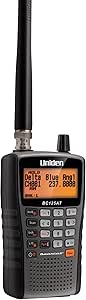 | Best Compact Analog Handheld | Scanner type: Analog handheld radio scanner | Channels: 500 alpha-tagged channels in 10 storage banks | Frequency range: 25–54 MHz, 108–174 MHz, 225–380 MHz, 400–512 MHz | VIEW LATEST PRICE | See Our Full Breakdown |
| HanRongDa HRD-A330 Portable SSB Shortwave Radio |  | Best for Shortwave and Broadcast Variety | Frequency coverage: FM 64–108 MHz; MW 520–1710 kHz; SW 2.3–30 MHz; AIR 118–138 MHz; CB 25–28 MHz; VHF 20–250 MHz; UHF 250–999 MHz; WB 162.4–162.55 MHz | Demodulation modes: AM, LSB, USB | Station memory: Up to 1,400 stations | VIEW LATEST PRICE | See Our Full Breakdown |
| Uniden BCD325P2 Handheld TrunkTracker V Scanner |  | Best for P25 Phase II Trunked Systems | Scanner type: Handheld TrunkTracker V radio scanner | Channel capacity: 25,000 channels | Supported systems: APCO Project 25 Phase II | VIEW LATEST PRICE | See Our Full Breakdown |
| ZHIWHIS ZWS-A330 Portable Wide-Frequency Radio Receiver with SSB |  | Best Rechargeable All-Band Receiver | Receiving bands: FM, MW, SW, AIR, CB, WB, VHF, UHF | Frequency coverage: FM 64/76/87–108 MHz; MW 520/522–1710 kHz; SW 2.30–30.00 MHz; AIR 118–138 MHz; CB 25–28 MHz; WB 162.400–162.550 MHz; VHF 20–250 MHz; UHF 250–999 MHz | Demodulation: AM, LSB, USB | VIEW LATEST PRICE | See Our Full Breakdown |
| Uniden Bearcat SR30C 500-Channel Compact Analog Handheld Scanner |  | Best Compact Analog Scanner | Channel capacity: 500 channels | Frequency support: Over 32,000 frequencies | Reception type: Analog; non-digital | VIEW LATEST PRICE | See Our Full Breakdown |
| Uniden Bearcat BCD160DN Handheld Digital Scanner |  | Best for Conventional Digital Decoding | Scanner type: Handheld digital scanner | Channel capacity: 1,000 alpha-tagged channels | Digital decoding: Conventional DMR and NXDN; APCO P25 Phase 1 and 2 via free firmware update | VIEW LATEST PRICE | See Our Full Breakdown |
| Uniden BCD996P2 Digital Mobile TrunkTracker V Scanner |  | Best for a Fixed News Monitoring Setup | Brand: Uniden | Model: BCD996P2 | Channels: 25,000 dynamically allocated | VIEW LATEST PRICE | See Our Full Breakdown |
| portable radio scanners for new | Scanner type |
|---|---|
| Uniden SDS150 Digital Radio Sc | — |
| Uniden BCD436HP HomePatrol Ser | Digital handheld scanner |
| Uniden BC365CRS 500-Channel An | Conventional analog |
| Uniden BC355N 300-Channel Base | Analog; not digital or trunking-capable |
| Uniden Bearcat BC125AT Analog | Analog handheld radio scanner |
| HanRongDa HRD-A330 Portable SS | — |
| Uniden BCD325P2 Handheld Trunk | Handheld TrunkTracker V radio scanner |
| ZHIWHIS ZWS-A330 Portable Wide | — |
| Uniden Bearcat SR30C 500-Chann | — |
| Uniden Bearcat BCD160DN Handhe | Handheld digital scanner |
| Uniden BCD996P2 Digital Mobile | — |
More Details on Our Top Picks
Uniden SDS150 Digital Radio Scanner with SDR Technology and Built-In GPS
For buyers who need to follow public-safety news across changing digital systems, the Uniden SDS150 is the most capable portable pick here. Its True I/Q SDR receiver is designed to handle weak signals and simulcast reception, situations where simpler receivers can struggle. It also supports P25 Phase I and II, DMR, NXDN, and other listed systems, giving it a wider digital reach than the analog-only BC125AT and BC355N. Built-in GPS can help adapt scanning to location, while Bluetooth adds a phone connection and the included cradle makes charging less fiddly. The tradeoff is complexity: this is a more involved choice than the zip-code setup of the BCD436HP. Its battery is included, but the cradle’s additional charging slot needs a separately purchased battery.
Pros:- True I/Q SDR receiver is designed for weak-signal and simulcast environments
- Supports P25 Phase I and II, DMR, NXDN, and several other listed systems
- Built-in GPS and Bluetooth add location-aware and phone-connected features
- Includes a charging cradle, battery pack, antenna, and other useful accessories
Cons:- More advanced capabilities can make setup less approachable than the BCD436HP’s zip-code-based approach
- The cradle’s second battery charging slot requires an additional battery purchase
- Water resistance does not make the scanner suitable for submersion
Best for: News monitors who travel between areas and need a portable scanner capable of following supported digital and simulcast systems.
Not ideal for: First-time scanner buyers seeking the simplest setup, or listeners who only need local analog channels and would not use its digital features.
- Receiver:Software-defined radio (SDR), True I/Q
- Supported systems:TrunkTracker X, APCO P25 Phase I and II, Motorola, EDACS, LTR, DMR, NXDN, ProVoice
- Radio bands:AM, NFM, FM, WFM, FMB
- Frequency:1300 MHz
- Connectivity:Bluetooth
- GPS:Built-in
- Water resistance:JIS4/IPX4
- Power:Battery powered; one lithium-ion battery pack included
- Included accessories:Charging cradle, AC adapter, USB cable, hand strap, microSD card, antenna, belt clip
Our verdict“Choose the SDS150 if broad digital coverage and reception in challenging simulcast areas matter more than beginner-friendly setup.”
Uniden BCD436HP HomePatrol Series Digital Handheld Scanner
The Uniden BCD436HP makes digital scanning less intimidating with zip-code-based setup and a database covering the USA and Canada. That is a practical advantage for a news listener who wants to start with nearby systems rather than program every channel manually. It supports P25 Phase I and II and X2-TDMA, and its replay function can retain up to four minutes of recent transmissions—useful when a brief dispatch is easy to miss. Compared with the more advanced SDS150, this model is more focused on guided setup than on a True I/Q receiver for difficult simulcast conditions. Its limits are tangible: it uses three AAA batteries, is listed for up to eight hours of battery life, and has no water resistance. Buyers also need to keep its database and firmware current through Sentinel PC software.
Pros:- Zip-code-based setup and a USA-and-Canada database ease initial configuration
- Receives P25 Phase I and II and X2-TDMA systems
- Replay stores up to 240 seconds of recent transmissions
- Includes Close Call RF Capture, GPS connectivity, and weather alerts
Cons:- Three AAA batteries provide a listed maximum battery life of up to eight hours
- Not water resistant, making it less suitable for wet outdoor monitoring than the SDS150
- Database and firmware updates rely on Sentinel PC software
Best for: New digital-scanner owners who want a handheld with location-based setup, broad North American database coverage, and transmission replay.
Not ideal for: Listeners working in difficult simulcast areas who want the SDS150’s True I/Q receiver, or anyone needing a water-resistant scanner.
- Scanner type:Digital handheld scanner
- Channels:85
- Scan speed:85 channels per second
- Frequency ranges:25–512 MHz, 758–824 MHz, 849–869 MHz, 894–960 MHz, 1240–1300 MHz
- Supported digital systems:APCO P25 Phase I and II, X2-TDMA
- Battery:Three AAA batteries required
- Battery life:Up to 8 hours
- Replay:Up to 240 seconds
- Coverage:USA and Canada
Our verdict“Pick the BCD436HP if guided setup and replay matter more than the SDS150’s stronger focus on challenging simulcast reception.”
Uniden BC365CRS 500-Channel Analog Scanner, Alarm Clock, and FM Radio
The Uniden BC365CRS is the most home-oriented option in this group: it combines a 500-channel analog scanner with FM radio, an alarm clock, and NOAA weather broadcasts. That mix suits a desk or bedside setup where local conventional transmissions are one part of a broader listening routine. Its tabletop design and clock functions set it apart from the handheld BCD436HP, which is the better fit for carrying coverage around town. The BC365CRS does not receive digital systems such as P25, DMR, or NXDN, so it cannot follow agencies that have moved to those formats; the SDS150 is the more capable choice for that task. It also depends on corded power for normal use, with three AA batteries listed as a battery requirement, so it is not a practical portable news scanner despite its scanner features.
Pros:- Stores up to 500 conventional analog channels across ten banks
- Combines scanning with FM radio, alarm clock, snooze, and sleep functions
- Receives NOAA weather broadcasts
- Tabletop display and priority scanning suit a stationary listening setup
Cons:- Cannot receive P25, DMR, NXDN, or other digital communications
- Corded-electric tabletop design is less portable than the BCD436HP or BC125AT
- Analog-only coverage can miss agencies using digital trunking
Best for: Home listeners who monitor local analog channels and want FM radio, NOAA weather, and an alarm clock in one tabletop unit.
Not ideal for: People seeking a truly portable scanner or listeners whose local news and public-safety agencies use digital or trunked systems.
- Channels:500 across 10 banks
- Scanner type:Conventional analog
- Frequency ranges:530–1700 kHz, 25–54 MHz, 88–108 MHz, 108–174 MHz, 225–380 MHz, 406–512 MHz
- FM presets:30
- Radio features:Alarm clock, snooze, sleep, NOAA weather broadcasts
- Power source:Corded electric
- Battery requirement:Three AA batteries
- Mounting type:Tabletop
- Digital support:Not supported
Our verdict“Choose the BC365CRS for a home analog listening station, not for portable monitoring or digital public-safety coverage.”
Uniden BC355N 300-Channel Base/Mobile Analog Scanner
The Uniden BC355N earns its place as a straightforward analog scanner for a vehicle or fixed base, rather than as a modern digital handheld. Its AC, DC, and automotive power options make it easier to move between a desk and a vehicle than the corded BC365CRS, while preprogrammed service searches and Close Call RF Capture give listeners ways to find conventional activity. It stores 300 frequencies, fewer than the BC125AT and BC365CRS, and it lacks their respective handheld design and 500-channel capacity. The larger limitation is system compatibility: the BC355N does not support digital radio or trunking, so a local agency using those systems will be outside its reach. Buyers who need portable digital news monitoring should look instead at the BCD436HP or SDS150.
Pros:- AC adapter, DC power cable, and automotive power plug support varied setups
- Close Call RF Capture can detect nearby transmissions
- Preprogrammed service searches help locate conventional activity
- Backlit LCD supports viewing in dim vehicle or room conditions
Cons:- Does not receive digital radio systems
- Does not support trunking
- Stores 300 frequencies, fewer than the 500-channel BC125AT and BC365CRS
Best for: Drivers and home listeners tracking known conventional analog frequencies who want one scanner with vehicle and AC power options.
Not ideal for: Portable digital-news listeners or anyone monitoring agencies that use trunked or digital systems.
- Channels:300 storable frequencies
- Scanner type:Analog; not digital or trunking-capable
- Frequency ranges:25–54 MHz, 108–174 MHz, 225–380 MHz, 406–512 MHz, 806–956 MHz, excluding cellular bands
- Features:Close Call RF Capture, preprogrammed service searches, program lock
- Display:Backlit LCD
- Power options:AC adapter, DC power cable, automotive power plug
- Dimensions:5.75 × 5.18 × 1.63 inches
- Weight:3.3 lb
Our verdict“Pick the BC355N for conventional analog listening from a vehicle or base, and skip it if digital or trunked coverage is needed.”
Uniden Bearcat BC125AT Analog Handheld Scanner, 500 Channels
If the news channels you want are conventional and analog, the Uniden Bearcat BC125AT offers a more carryable alternative to the desktop BC365CRS. Its 500 alpha-tagged channels make saved frequencies easier to identify at a glance, and Close Call RF capture can help locate nearby transmissions without first knowing their frequency. Preset search bands and PC programming add flexibility for listeners who want to organize local channels. Compared with the digital-capable BCD436HP, however, the BC125AT cannot follow P25 or trunked systems; that is a major limitation wherever agencies use digital radio. It is receive-only, runs on two AA batteries, and is not water resistant. For portable news monitoring, its size and listed ten-hour battery life are useful, but buyers should confirm that the local broadcasts they need are analog.
Pros:- Stores 500 alpha-tagged channels across ten banks
- Close Call RF capture can find nearby transmissions
- Preset search bands cover several radio services
- Runs on two AA batteries with a listed battery life of 10 hours
Cons:- Cannot monitor digital or trunked radio systems, unlike the BCD436HP
- Not water resistant
- Receive-only, with no two-way communication
Best for: Listeners who want a handheld for known local analog channels, with room to label and organize many frequencies.
Not ideal for: People who need digital or trunked public-safety reception, or who expect to use a scanner in wet conditions.
- Scanner type:Analog handheld radio scanner
- Channels:500 alpha-tagged channels in 10 storage banks
- Frequency range:25–54 MHz, 108–174 MHz, 225–380 MHz, 400–512 MHz
- Additional features:Close Call RF capture, Do Not Disturb mode, weather alerts, PC programming
- Battery:Two AA batteries included
- Battery life:10 hours
- Dimensions:2.17 × 4.33 × 7.28 inches
- Weight:14.4 ounces
- Water resistance:Not water resistant
Our verdict“Choose the BC125AT for portable, organized analog monitoring, but choose a digital model if local news channels use trunking or P25.”
HanRongDa HRD-A330 Portable SSB Shortwave Radio
The HRD-A330 suits news listeners who want more than a conventional scanner: its coverage spans shortwave, aviation, weather, CB, VHF, and UHF, while AM, LSB, and USB modes add options for shortwave broadcasts and single-sideband signals. The 1,400-station memory helps organize a wide mix of frequencies, and recording gives you a way to save broadcasts for later. Compared with the Uniden BCD325P2, this HanRongDa is broader as a general receiver but lacks that model’s stated support for APCO Project 25 Phase II trunked systems. Bluetooth, TF playback, and app control add flexibility, yet they are extras rather than substitutes for digital public-safety decoding. It is also not water resistant, and the included battery is a nonstandard type, so power planning matters for field use.
Pros:- Receives shortwave with AM, LSB, and USB modes plus BFO fine-tuning.
- Covers a broad mix of listed bands, including aviation and weather.
- Stores up to 1,400 stations and supports broadcast recording.
- Compact 4.8-ounce body includes Bluetooth, TF card playback, and app-based control.
Cons:- Does not list digital public-safety decoding or trunking support.
- Not water resistant, limiting confidence in wet outdoor conditions.
- Uses a nonstandard included battery, and the matching W3 repeater antenna for indoor use is sold separately.
Best for: Shortwave-focused news listeners who want a lightweight receiver for broadcasts, weather, aviation, and other listed bands, plus recording and app control.
Not ideal for: Listeners who need digital trunked public-safety scanning, water resistance, or a standard battery they can readily swap in the field.
- Frequency coverage:FM 64–108 MHz; MW 520–1710 kHz; SW 2.3–30 MHz; AIR 118–138 MHz; CB 25–28 MHz; VHF 20–250 MHz; UHF 250–999 MHz; WB 162.4–162.55 MHz
- Demodulation modes:AM, LSB, USB
- Station memory:Up to 1,400 stations
- Controls and functions:BFO fine-tuning, squelch, bandwidth and attenuation controls, recording, app-based remote control
- Connectivity:Bluetooth 5.2 and TF card
- Display:STN LCD with blue backlight
- Dimensions and weight:2.4 × 1.4 × 5.4 in; 4.8 oz
- Battery and durability:One nonstandard battery included; not water resistant
Our verdict“Choose the HRD-A330 if shortwave and broad-band listening matter more than digital trunked public-safety coverage.”
Uniden BCD325P2 Handheld TrunkTracker V Scanner
For news gathering centered on public-safety radio traffic, the BCD325P2 is the strongest fit here because it supports APCO Project 25 Phase II and can hold up to 25,000 channels. Close Call RF capture can help find nearby transmissions without starting from a known frequency, while quick keys let you switch among programmed systems quickly. That makes it a more purpose-built scanner than the HRD-A330, whose appeal is broad band coverage and shortwave rather than stated trunked digital decoding. The tradeoff is that this Uniden is less of an all-purpose broadcast receiver, and its GPS-based location scanning requires an optional receiver. S.A.M.E. weather alerts add a useful local warning function, but buyers should plan to program the systems they want to monitor; channel capacity alone does not make setup effortless.
Pros:- Supports APCO Project 25 Phase II systems.
- Holds up to 25,000 channels for extensive system programming.
- Close Call RF capture can locate nearby signals.
- Includes 100 quick keys and S.A.M.E. weather alerts.
Cons:- GPS location-based scanning requires a separate optional receiver.
- Less suited than the HRD-A330 to shortwave and broad general-band listening.
- A large channel capacity still requires buyers to program relevant systems.
Best for: News monitors who follow programmed P25 Phase II public-safety systems and want a handheld scanner with extensive channel capacity and quick system access.
Not ideal for: Shortwave listeners or buyers who want location-based scanning ready to use without purchasing an optional GPS receiver.
- Scanner type:Handheld TrunkTracker V radio scanner
- Channel capacity:25,000 channels
- Supported systems:APCO Project 25 Phase II
- Signal capture:Close Call RF capture
- Quick-key access:100 keys
- GPS scanning:Location-based scanning requires an optional GPS receiver
- Weather alerts:S.A.M.E.
- Weight and warranty:16 ounces; 1-year warranty
Our verdict“Pick the BCD325P2 if your priority is handheld monitoring of programmed P25 Phase II systems, not shortwave reception.”
ZHIWHIS ZWS-A330 Portable Wide-Frequency Radio Receiver with SSB
The ZWS-A330 covers much the same listening territory as the HanRongDa HRD-A330, including shortwave, aviation, weather, VHF, and UHF, with AM, LSB, and USB modes for varied shortwave reception. Its clearest practical distinction is the rechargeable BL5C battery and USB-C charging, giving it a defined charging setup rather than the HanRongDa’s nonstandard included battery. Both models offer 1,400 presets, recording, Bluetooth, TF playback, and app control, so the choice rests more on power preference and the specific listed details than on a different core listening role. The ZHIWHIS remains a receiver, not a substitute for the Uniden BCD325P2 when the goal is P25 Phase II trunked scanning. Its 1,000 mAh battery is modest, so long listening sessions may call for access to charging.
Pros:- Covers FM, MW, SW, aviation, CB, weather, VHF, and UHF bands.
- AM, LSB, and USB reception with adjustable BFO supports varied shortwave listening.
- USB-C rechargeable 1,000 mAh battery and compact 160 g body.
- Offers 1,400 presets, Bluetooth, TF playback, recording, and app control.
Cons:- Does not list digital public-safety decoding or trunking support.
- The 1,000 mAh battery may limit extended listening between charges.
- TF card capacity is limited to 256 GB.
Best for: Mobile shortwave and general-band listeners who want SSB modes, rechargeable USB-C power, and recording in a compact receiver.
Not ideal for: Buyers seeking digital trunked public-safety scanning or long sessions away from a charging source with no battery backup plan.
- Receiving bands:FM, MW, SW, AIR, CB, WB, VHF, UHF
- Frequency coverage:FM 64/76/87–108 MHz; MW 520/522–1710 kHz; SW 2.30–30.00 MHz; AIR 118–138 MHz; CB 25–28 MHz; WB 162.400–162.550 MHz; VHF 20–250 MHz; UHF 250–999 MHz
- Demodulation:AM, LSB, USB
- Station presets:1,400 total; up to 200 per band
- Battery and charging:BL5C lithium, 3.7 V, 1,000 mAh; USB-C port
- Audio and connectivity:3 W speaker; Bluetooth 5.2; 3.5 mm headphone jack
- TF card support:MP3, WMA, WAV, APE, FLAC; up to 256 GB
- Dimensions and weight:2.4 × 1.4 × 5.4 in; 0.35 lb (160 g)
Our verdict“Choose the ZWS-A330 over the HRD-A330 if rechargeable USB-C power is your priority for broad-band and shortwave listening.”
Uniden Bearcat SR30C 500-Channel Compact Analog Handheld Scanner
The SR30C is the straightforward portable pick for listeners focused on analog services and conventional frequencies. Its 500 channels, preset service banks, and support for more than 32,000 frequencies help newcomers start scanning without the wide-band shortwave setup offered by the HRD-A330 or ZWS-A330. Close Call RF capture and priority scanning add useful ways to find nearby activity and keep a chosen channel in focus, while PC programming suits buyers who prefer to arrange channels from a computer. The main limitation is firm: this scanner does not receive digital communications, so it is a poor fit wherever newsworthy traffic uses digital systems. It is also powered by USB or two AA batteries, but neither AA cells nor a USB charger are included. Compared with the BCD325P2, it is simpler and compact, but much less capable on digital trunked systems.
Pros:- Compact 2.7 × 1.3 × 5-inch handheld design.
- Preset service banks offer an accessible starting point for analog scanning.
- Close Call RF capture, priority scan, and Turbo Search support finding and following activity.
- Can be powered by USB or two AA alkaline or rechargeable Ni-MH batteries.
Cons:- Does not receive digital communications, unlike the BCD325P2 and BCD160DN.
- AA batteries and USB charger are not included.
- Mono audio output may be less flexible for listeners who want stereo playback.
Best for: Listeners who want a compact, relatively simple analog scanner for local conventional frequencies and preset service categories.
Not ideal for: Buyers whose local agencies use digital or trunked systems, or anyone expecting included batteries or a USB charger.
- Channel capacity:500 channels
- Frequency support:Over 32,000 frequencies
- Reception type:Analog; non-digital
- Scanning features:Preset service banks, Close Call RF capture, Turbo Search, priority scan, delay function
- Programming:PC programming
- Power options:USB, two AA alkaline batteries, or two AA rechargeable Ni-MH batteries
- Dimensions:2.7 × 1.3 × 5 in
- Audio and enclosure:Mono audio output; plastic enclosure
Our verdict“Choose the SR30C for compact analog monitoring, but skip it if local news traffic requires digital decoding.”
Uniden Bearcat BCD160DN Handheld Digital Scanner
The BCD160DN is a better match than the SR30C for buyers whose local news traffic uses digital formats: it decodes conventional DMR and NXDN, with APCO P25 Phase 1 and 2 decoding available through a free firmware update. Its 1,000 alpha-tagged channels make saved systems easier to identify than a list of unlabeled frequencies, and the included rechargeable AA batteries offer a practical field-power option. The tradeoff is that this model does not support trunking and cannot decode encrypted signals, which sharply limits its usefulness on systems that rely on either. That places it below the BCD325P2 for P25 Phase II trunked monitoring, even though the BCD160DN covers several conventional digital modes. Buyers should also account for the P25 firmware update before relying on that capability.
Pros:- Decodes conventional DMR and NXDN.
- P25 Phase 1 and 2 decoding is available through a free firmware update.
- Stores 1,000 alpha-tagged channels for easier system identification.
- Includes rechargeable AA batteries and a USB cable.
Cons:- Does not support trunking, unlike the BCD325P2.
- Cannot decode encrypted signals.
- P25 decoding requires a firmware update.
Best for: Listeners who need a handheld for conventional DMR or NXDN traffic, or conventional P25 after applying the firmware update.
Not ideal for: Buyers following trunked systems or encrypted communications, and those who want P25 decoding without handling a firmware update.
- Scanner type:Handheld digital scanner
- Channel capacity:1,000 alpha-tagged channels
- Digital decoding:Conventional DMR and NXDN; APCO P25 Phase 1 and 2 via free firmware update
- Trunking and encryption:Trunking not supported; encrypted signals cannot be decoded
- Battery options:Two rechargeable AA Ni-MH batteries included, or two AA alkaline batteries
- Included accessories:Antenna, USB cable, hand strap, and owner’s manual
- Connection:USB
- Warranty:1 year
Our verdict“Pick the BCD160DN for conventional digital systems, but choose the BCD325P2 instead if you need trunked P25 monitoring.”
Uniden BCD996P2 Digital Mobile TrunkTracker V Scanner
The BCD996P2 suits listeners building a home or vehicle monitoring station who need broad digital-system support rather than a pocketable radio. It handles P25 Phase 1 and Phase 2, several trunked formats, and conventional analog channels, giving it wider reach for public-safety monitoring than analog-only options such as the BC355N. Its 25,000 dynamically allocated channels also leave room for extensive programming, while S.A.M.E. weather alerts can target warnings to a selected area.
Compared with the handheld BCD436HP, this is a heavier, 12 V DC-powered base/mobile choice, not a grab-and-go scanner. GPS-based location scanning requires a compatible receiver, and the unit is not water resistant, so outdoor use needs protection. Choose it for a stationary news desk or vehicle installation; skip it if portability is your main priority.
Pros:- Supports P25 Phase 1 and Phase 2, X2-TDMA, Motorola, EDACS, LTR, and conventional analog systems.
- 25,000 dynamically allocated channels can accommodate extensive programming.
- Close Call RF Capture can help detect nearby transmissions.
- S.A.M.E. alerts and GPS-linked location scanning add useful local monitoring options.
Cons:- 12 V DC power and a 3.5 lb body make it less convenient for portable listening than handheld scanners.
- Location-based scanning requires a compatible GPS receiver.
- Not water resistant, so it needs shelter from rain and spills.
Best for: News listeners who want a permanently installed home or vehicle scanner with support for digital trunked systems and local weather alerts.
Not ideal for: Buyers who need a pocketable, self-contained scanner for walking or outdoor reporting, or who want GPS-based scanning without adding a compatible receiver.
- Brand:Uniden
- Model:BCD996P2
- Channels:25,000 dynamically allocated
- Supported systems:APCO P25 Phase 1 and Phase 2, X2-TDMA, Motorola, EDACS, LTR, conventional analog
- Features:Close Call RF Capture, TrunkTracker V, S.A.M.E. weather alerts, location-based scanning
- Power source:12 V DC
- Dimensions and weight:7 x 8 x 2 in; 3.5 lb
- Water resistance:Not water resistant
Our verdict“Choose the BCD996P2 for a fixed or vehicle-based news monitoring setup with broad digital-system support, not for pocket portability.”
How We Picked
I ranked these 11 products by how well their stated features match the needs of someone following news by radio: receiving relevant conventional or digital systems, handling channel or system complexity, and remaining usable in the setting where the buyer plans to listen. Digital capability, trunk-tracking support, location tools, setup demands, and the distinction between scanners and general shortwave receivers all shaped the order. I also weighed portability as a practical factor, separating true handheld models from base/mobile units.
The ranking favors options with broader utility for public-safety and local communications, then gives analog models credit when their simpler channel-focused design is a better fit. A lower position does not mean a product is poor; it reflects a narrower role, a different listening purpose, or less convenience for news monitoring. Radio reception depends on local frequencies, system types, signal conditions, and encryption, so no scanner can guarantee access to every agency or transmission.
| portable radio scanners for new | Scanner type |
|---|---|
| Uniden SDS150 Digital Radio Sc | — |
| Uniden BCD436HP HomePatrol Ser | Digital handheld scanner |
| Uniden BC365CRS 500-Channel An | Conventional analog |
| Uniden BC355N 300-Channel Base | Analog; not digital or trunking-capable |
| Uniden Bearcat BC125AT Analog | Analog handheld radio scanner |
| HanRongDa HRD-A330 Portable SS | — |
| Uniden BCD325P2 Handheld Trunk | Handheld TrunkTracker V radio scanner |
| ZHIWHIS ZWS-A330 Portable Wide | — |
| Uniden Bearcat SR30C 500-Chann | — |
| Uniden Bearcat BCD160DN Handhe | Handheld digital scanner |
| Uniden BCD996P2 Digital Mobile | — |
Factors to Consider When Choosing Portable Radio Scanners For News
Before choosing a scanner, match its technology and form factor to the broadcasts you can legally receive and the places you plan to listen. A few decisions made before purchase can prevent a common mismatch: buying an analog model for a digital system, or choosing a shortwave receiver when the goal is local public-safety traffic.
Match the Scanner to Local Radio Systems
Start by identifying the system types used by the agencies and services you want to monitor. A conventional analog channel, a digital channel, and a trunked system place different demands on a receiver, so a scanner that handles only one type may miss the broadcasts that matter to you. Check current local frequency and system information before choosing a model, since nearby jurisdictions can use different technologies. Also check whether the transmissions are encrypted: consumer scanners cannot make encrypted traffic intelligible. Paying for advanced digital or trunking features makes little sense if your intended channels are analog, while a basic analog scanner can be a poor fit where digital systems dominate.
Choose Between Digital Complexity and Simpler Analog Listening
Digital scanners can cover more modern system types, but their broader capabilities may bring more setup and configuration work. Analog models are often easier to approach when your listening list consists of known conventional channels. A frequent mistake is treating “more channels” as the same thing as “more useful coverage”; channel capacity does not by itself add digital decoding or trunk tracking. Think about whether you want to build and maintain a channel list or prefer tools that help organize systems by location. If you are new to scanning, weigh setup support and day-to-day controls alongside technical capability rather than buying the most advanced feature set by default.
Decide Where Portability Matters
A handheld scanner is suited to walking, travel, and listening away from a desk, but its small controls and screen can make programming less comfortable. Base/mobile units can be easier to operate from a vehicle or fixed station, yet they are less convenient to carry and may require a suitable power arrangement. “Portable” in a product name does not always mean pocketable or ready for all-day use. Consider how often you will change locations, whether you need a mount or external power, and whether you can comfortably manage the controls while stationary. Buying a larger unit for occasional handheld use can add friction, while choosing a compact model for a permanent vehicle setup may sacrifice convenience.
Separate Public-Safety Scanning from Shortwave Listening
Shortwave receivers with SSB are designed for a different listening landscape from scanners built for local public-safety systems. They can make sense if your news interests include shortwave broadcasts or other signals within their supported frequency coverage, but SSB capability does not mean a receiver can track trunked local communications. Confirm the intended bands and modes before treating a wide-frequency label as proof of scanner functionality. Buyers often get misled by broad frequency ranges that sound more capable than they are for a specific radio system. Choose by the actual broadcast type you want, not by the number of frequency bands listed.
Plan for Setup, Power, and Antenna Needs
Reception and ease of use depend on more than the scanner itself. Your location, nearby structures, antenna placement, and the strength of local signals can all affect what you hear. Handheld units trade a compact form for smaller batteries and controls, while a fixed installation may allow a more suitable antenna and steady power. Check how the model is powered and what programming process it expects before choosing; a scanner that is difficult to configure can sit unused even if its technical range suits your area. Leave room in your plan for learning the controls and keeping channel or system information current.
Frequently Asked Questions
Should I choose a digital scanner if I only want local news and emergency traffic?
Choose based on the radio systems used in your listening area, not on the general idea that digital is always better. If the agencies you want to hear use digital or trunked systems, an analog-only scanner may not be suitable. If the relevant channels are conventional analog, a simpler analog model may meet your needs with less setup. Check local system information and encryption status before buying. No scanner can decode encrypted transmissions.
Can a shortwave radio receiver replace a police or public-safety scanner?
Usually not for local public-safety monitoring. Shortwave receivers such as the HRD-A330 and ZWS-A330 are aimed at broad-frequency listening and SSB, while scanner models are designed around conventional channels or features such as digital decoding and trunk tracking. A wide frequency range alone does not provide those scanner functions. These receivers may suit someone interested in shortwave broadcasts, but buyers seeking local agency traffic should verify that a scanner supports the specific system type.
Is the most advanced handheld the right choice for a first-time buyer?
Not always. Advanced digital capability can be useful when local systems require it, but extra features may mean more setup and a steeper learning curve. A first-time listener whose area uses conventional analog channels may find the BC125AT or SR30C more approachable. If digital coverage is necessary, the BCD436HP’s HomePatrol approach may appeal to someone who values guided system selection. First confirm local system compatibility, then choose the simplest model that covers it.
Will a portable scanner work in a moving vehicle?
A handheld can be carried into a vehicle, but reception and usability depend on the antenna, signal conditions, power arrangement, and how the scanner is secured. A base/mobile unit such as the BC355N or BCD996P2 is designed for a more fixed vehicle or desk setup, while handheld options favor movement between locations. Do not operate or program a scanner while driving; set it up safely before travel. Check local laws and the unit’s power and mounting needs before planning a vehicle installation.
What should I check before buying a scanner for a specific agency?
Find out whether the agency uses conventional analog, digital, or trunked radio, and confirm the scanner supports that system. Then check whether its transmissions are encrypted, since encrypted traffic cannot be made intelligible by these consumer models. Confirm that the desired frequencies or system information are current and within the scanner’s supported coverage. If you move between areas, features such as GPS or location-based organization may help, but they do not overcome encryption or incompatible radio technology. These checks are more useful than relying on a broad claim of frequency coverage.
Conclusion
My best overall choice is the Uniden SDS150 for buyers who want a capable handheld with SDR technology and built-in GPS. For a best premium digital handheld alternative, I would shortlist the BCD436HP for its HomePatrol-oriented setup. The best value for conventional analog listening is the BC125AT, while the best beginner fit depends on local systems: the BC125AT suits analog channels, and the BCD436HP is the more relevant starting point when digital coverage is needed. For specific needs, choose the HRD-A330 or ZWS-A330 for shortwave and SSB listening, or the BC355N and BCD996P2 for a vehicle or fixed installation. Before deciding, verify local system type and encryption; those facts matter more than any feature list.