
TL;DR

Get everyday essentials delivered free — and shop member deals
- Fast, free delivery on millions of items
- Access to Prime Big Deal Days deals on October 6–7
- Prime Video, Amazon Music and more included
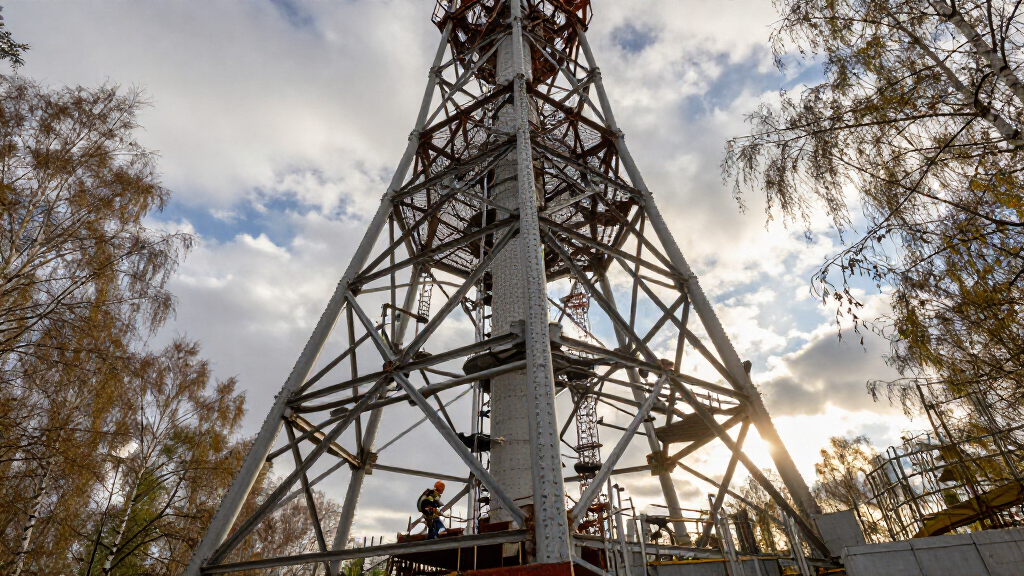
The Russian Television and Radio Broadcasting Network plans to dismantle almost all of Moscow’s 1922 Shukhov (Shabolovka) radio tower and replace it with a replica by 2028. Specialists say replacing the original steel would amount to destroying engineer Vladimir Shukhov’s work, since the historic metal matters as much as the structure’s shape.
Moscow’s landmark Shabolovka radio tower, the 1922 hyperboloid structure by engineer Vladimir Shukhov, is set to be almost entirely dismantled this fall and replaced with a replica by 2028, according to a Meduza report published September 30, 2026. The plan, put forward by the tower’s owner, the Russian Television and Radio Broadcasting Network (RTRS), has drawn objections from specialists who say replacing nearly all of the original steel would be tantamount to destroying Shukhov’s work.
The 144-meter (about 470-foot) tower on Shabolovka was once the Soviet Union’s main radio and television transmitter and is widely regarded as one of the great engineering achievements of its era. According to Meduza’s reporting, RTRS intends to take apart almost the entire structure and rebuild it as a replica, with completion targeted by 2028. Architecture specialists cited in the report argue that preserving the original metal matters as much as preserving the tower’s outward shape, meaning a near-total replacement of the steel would erase the substance of the historic structure.
The tower’s significance rests on Shukhov’s patented lattice hyperboloid design: straight metal rods set at an angle and secured by rings at top and bottom. The design distributed weight evenly — each of the tower’s 48 supports carried one forty-eighth of the total load — allowing thinner rods, less metal, and shallower foundations than conventional towers. Archival drawings suggest the supports extend only about three meters into the ground despite a base roughly 40 meters across.
Built between 1919 and 1922 with the personal backing of Vladimir Lenin, the tower originally opened as the Comintern Radio Tower. It transmitted the country’s first television signal in 1937, with regular television broadcasts beginning on March 10, 1939, and served as the Soviet Union’s main television tower until Ostankino was built.
Why the Original Steel Matters
The dispute turns on a core principle of heritage preservation: for an engineering landmark, the material is the monument. Specialists quoted by Meduza say a replica would preserve only the silhouette while discarding the 1922 metalwork that embodies Shukhov’s innovation — the precisely calculated thin rods and efficient use of steel that made the tower famous internationally.
The tower is also a cultural touchstone. Alexander Rodchenko photographed it in his celebrated series of the 1920s and 1930s, and it appeared on the cover of Vladimir Mayakovsky’s book “The Flying Proletarian.” Its loss as an authentic structure would remove a defining artifact of both Soviet engineering and the avant-garde era from Moscow’s built environment, leaving the Shabolovka neighborhood with a modern copy.
Top picks for "moscow about restore"
As an affiliate, we earn on qualifying purchases.
From Lenin’s Decree to Landmark
Lenin, who called radio a “newspaper without paper and without distance,” signed a decree in 1919 ordering a powerful radio station built in Moscow “with extraordinary urgency.” Shukhov originally designed the tower to reach 350 meters — taller than the Eiffel Tower’s 330 meters — using only about 2,200 metric tons of steel versus the Eiffel Tower’s roughly 7,000. Metal shortages during the Civil War forced the design down to six sections and 144 meters.
The tower was erected by telescopic assembly, with sections built at ground level and raised one after another. One contested episode from construction: some accounts say a cable snapped while the fourth section was lifted, killing a worker and earning Shukhov a “suspended death sentence.” Engineer Airat Bagautdinov, founder of the educational project Glazami Inzhenera, disputes this — he says a winch cable did break but official sources indicate no one died in that incident, though two workers died under other circumstances. The “suspended death sentence” account appears only in Shukhov’s diary, and no supporting document has been found in the Federal Security Service’s archives.
“Preserving the original metal matters as much as preserving the tower’s shape — dismantling almost all of it would be tantamount to destroying Shukhov’s work.”
— Architecture specialists cited by Meduza
Unanswered Questions About the Overhaul
Several details remain unclear. RTRS has not publicly specified, according to the reporting, exactly what share of the original steel will be retained versus replaced, or how the dismantling will be carried out. It is not yet clear whether any portion of the 1922 metalwork will be preserved or displayed. The report also leaves open whether preservation advocates can still influence the plan before work begins this fall.
Timeline for Dismantling and Rebuild
Dismantling is planned to begin this fall, according to Meduza, with the replica targeted for completion by 2028. Watchers of Moscow’s architectural heritage are likely to track whether RTRS revises its approach under public pressure, and whether any independent assessment of the tower’s structural condition is published to justify the near-total replacement.
Key Questions
What is happening to the Shukhov radio tower in Moscow?
Its owner, the Russian Television and Radio Broadcasting Network (RTRS), plans to dismantle almost the entire 1922 tower this fall and replace it with a replica by 2028, according to Meduza.
Why do specialists object to the plan?
They argue that preserving the original metal is as important as preserving the tower’s shape, and that replacing nearly all of the 1922 steel would effectively destroy Shukhov’s engineering work.
Who built the tower and when?
Engineer Vladimir Shukhov designed it; it was built between 1919 and 1922 with the backing of Vladimir Lenin, opening as the Comintern Radio Tower.
How tall is the tower?
It stands 144 meters (about 470 feet) and was Moscow’s tallest structure until 1953. Shukhov’s original design called for 350 meters, but Civil War metal shortages forced a smaller version.
Is the ‘suspended death sentence’ story about Shukhov true?
It is unverified. The account appears only in Shukhov’s diary, and engineer Airat Bagautdinov notes that no supporting document has been found in the FSB archives.
Source: rss
Fall Picks
fall essentials
As an affiliate, we earn on qualifying purchases.