
Portable external solid state drives have become the fastest way to carry large files, game libraries, and backups between devices — but the gap between the best and worst options is wider than the spec sheets suggest. The Samsung T9 earns my top spot because its USB 3.2 Gen 2×2 interface delivers real-world speeds around twice as fast as standard drives, while the Sandisk Extreme 2TB and Crucial X9 stand out for rugged IP65 durability and budget-friendly value respectively. The main tradeoff you’ll face in this category is speed versus compatibility: the fastest drives need a modern USB-C port to hit their rated numbers, and paying for 2,000 MB/s on an older laptop wastes money. Durability, capacity tiers, and encryption support further separate the field. Keep reading for the full breakdown of all 15 drives and which one fits your setup.

Get everyday essentials delivered free with Prime
- Fast, free delivery on millions of items
- Prime Video, Amazon Music and more included
- Member-only deals all year
Key Takeaways
- The Samsung T9’s Gen 2×2 interface only pays off if your computer has a matching port — on standard USB-C it performs nearly identically to the far cheaper Samsung T7, which is why both made the top tier for different buyers.
- The amazon.com/dp/B0BJV16HC6?tag=hourstodaylist-20&ascsubtag=dc-1102141″ target=”_blank” rel=”nofollow sponsored noopener”>SSK 128GB and the 500GB Orlian proved that ultra-low-capacity SSDs are a false economy: their cost per gigabyte is poor, and their slower controllers undercut the main reason to choose flash storage over a hard drive.
- Among rugged picks, the Sandisk Extreme 2TB beat the Samsung T7 Shield on value at high capacities, while the T7 Shield’s slimmer profile makes it the better everyday-carry choice.
- Older models like the Samsung T5 and the 800MB/s Sandisk remain solid buys at steep discounts, but only if you find them meaningfully cheaper than their successors — at similar prices, skip them.
- The Crucial X9 and Amazon Basics 1TB showed that the 1,050 MB/s speed tier has become commoditized: build quality, warranty length, and included software are now what justify paying more in this bracket.
| Orlian 500GB External Portable SSD |  | Best Budget Starter Pick | Capacity: 500 GB | Interface: USB 3.1 Gen 2 | Read Speed: Up to 500 MB/s | VIEW LATEST PRICE | See Our Full Breakdown |
| Western Digital 1TB My Passport SSD (WDBAGF0010BGY-WESN) |  | Best for Security-Minded Professionals | Capacity: 1 TB | Interface: USB 3.2 Gen 2 | Read Speed: Up to 1050 MB/s | VIEW LATEST PRICE | See Our Full Breakdown |
| Western Digital 1TB My Passport Go SSD |  | Best for Cable-Free Carry | Capacity: 1 TB | Interface: USB 3.0 | Read Speed: Up to 400 MB/s | VIEW LATEST PRICE | See Our Full Breakdown |
| Sandisk 2TB Extreme Portable SSD (SDSSDE61-2T00-G25) |  | Best Overall Rugged Performer | Capacity: 2 TB | Interface: USB 3.2 Gen 2, USB-C | Read Speed: Up to 1050 MB/s | VIEW LATEST PRICE | See Our Full Breakdown |
| SSK Portable SSD 250GB |  | Best for iPhone ProRes Recording | Capacity: 250 GB (shows ~232GB on Windows) | Interface: USB 3.2 Gen 2 (USB-C and USB-A) | Read Speed: Up to 1050 MB/s | VIEW LATEST PRICE | See Our Full Breakdown |
| Amazon Basics Portable External SSD, 1TB, USB 3.2 Gen 2, IP65 Water & Dust Resistant, Black |  | Best Budget Rugged Pick | Capacity: 1TB | Interface: USB 3.2 Gen 2 | Read/Write Speed: Up to 2000MB/s | VIEW LATEST PRICE | See Our Full Breakdown |
| SSK 128GB Portable SSD External Hard Drive |  | Best Ultra-Affordable Starter Drive | Capacity: 128GB | Interface: USB 3.2 Gen 2 | Max Read Speed: 550MB/s | VIEW LATEST PRICE | See Our Full Breakdown |
| Samsung T5 Portable SSD 2TB (MU-PA2T0B/AM) | 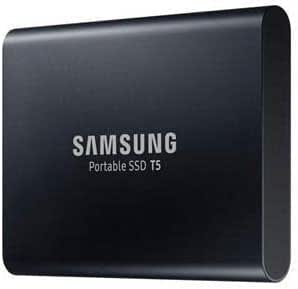 | Best High-Capacity Value on a Trusted Platform | Capacity: 2TB | Max Read/Write Speed: 540 MB/s | Interface: USB 3.1 | VIEW LATEST PRICE | See Our Full Breakdown |
| Samsung T9 Portable SSD 1TB, USB 3.2 Gen 2×2 External SSD, Up to 2,000 MB/s |  | Best for Creators Who Need Maximum Speed | Capacity: 1TB | Interface: USB 3.2 Gen 2×2 | Read/Write Speed: Up to 2,000 MB/s | VIEW LATEST PRICE | See Our Full Breakdown |
| Samsung T5 Portable SSD 500GB – USB 3.1 External Solid State Drive, Blue (MU-PA500B/AM) |  | Best Compact Everyday Carry Drive | Capacity: 500GB | Max Read Speed: Up to 540 MB/s | Interface: USB 3.1 | VIEW LATEST PRICE | See Our Full Breakdown |
| Crucial X10 1TB Portable SSD |  | Best Speed-to-Durability Value | Capacity: 1TB | Read Speed: Up to 2,100MB/s | Interface: USB 3.2 (Gen 2×2), USB-C and USB-A | VIEW LATEST PRICE | See Our Full Breakdown |
| Samsung T7 Portable SSD 1TB (Titan Gray) |  | Best Everyday All-Rounder | Capacity: 1TB | Read Speed: Up to 1,050 MB/s | Write Speed: Up to 1,000 MB/s | VIEW LATEST PRICE | See Our Full Breakdown |
| Samsung T7 Shield Portable SSD 2TB |  | Best Rugged Workhorse | Capacity: 2TB | Interface: USB 3.2 Gen 2 | Read Speed: Up to 1,050 MB/s | VIEW LATEST PRICE | See Our Full Breakdown |
| Crucial X9 2TB Portable SSD |  | Best Budget Big-Capacity Pick | Capacity: 2TB | Read Speed: Up to 1,050 MB/s | Interface: USB 3.2, USB-C (with USB-A compatibility) | VIEW LATEST PRICE | See Our Full Breakdown |
| Sandisk 1TB Portable SSD (Up to 800MB/s) |  | Best Entry-Level Pick | Capacity: 1TB | Read Speed: Up to 800 MB/s | Interface: USB 3.2 Gen 2, USB-C | VIEW LATEST PRICE | See Our Full Breakdown |
| portable external solid state drife | Capacity | Interface | Read Speed | Durability |
|---|---|---|---|---|
| Orlian 500GB External Portable | 500 GB | USB 3.1 Gen 2 | Up to 500 MB/s | — |
| Western Digital 1TB My Passpor | 1 TB | USB 3.2 Gen 2 | Up to 1050 MB/s | — |
| Western Digital 1TB My Passpor | 1 TB | USB 3.0 | Up to 400 MB/s | — |
| Sandisk 2TB Extreme Portable S | 2 TB | USB 3.2 Gen 2, USB-C | Up to 1050 MB/s | IP65 water/dust resistance, up to 3-meter drop protection |
| SSK Portable SSD 250GB | 250 GB (shows ~232GB on Windows) | USB 3.2 Gen 2 (USB-C and USB-A) | Up to 1050 MB/s | — |
| Amazon Basics Portable Externa | 1TB | USB 3.2 Gen 2 | — | IP65 water and dust resistant, metal casing |
| SSK 128GB Portable SSD Externa | 128GB | USB 3.2 Gen 2 | — | — |
| Samsung T5 Portable SSD 2TB | 2TB | USB 3.1 | — | — |
| Samsung T9 Portable SSD 1TB | 1TB | USB 3.2 Gen 2×2 | — | Withstands drops up to 9.8 ft |
| Samsung T5 Portable SSD 500GB | 500GB | USB 3.1 | — | — |
| Crucial X10 1TB Portable SSD | 1TB | USB 3.2 (Gen 2×2), USB-C and USB-A | Up to 2,100MB/s | IP65 dust/water resistant, drop resistant up to 9.8 ft |
| Samsung T7 Portable SSD 1TB | 1TB | USB 3.2 Gen 2 (10Gbps) | Up to 1,050 MB/s | Shock resistant, drop protection up to 6 ft |
| Samsung T7 Shield Portable SSD | 2TB | USB 3.2 Gen 2 | Up to 1,050 MB/s | IP65 water/dust resistant, drop resistant up to 9.8 ft |
| Crucial X9 2TB Portable SSD | 2TB | USB 3.2, USB-C (with USB-A compatibility) | Up to 1,050 MB/s | IP55 water/dust resistant, drop resistant up to 7.5 ft (2 m) |
| Sandisk 1TB Portable SSD | 1TB | USB 3.2 Gen 2, USB-C | Up to 800 MB/s | Drop protection up to 2 meters, rubberized enclosure |
More Details on Our Top Picks
Orlian 500GB External Portable SSD
For a first step into portable SSD storage, this Orlian 500GB drive keeps things simple and affordable without the sluggishness of a portable hard drive. Its 500MB/s read speed over USB 3.1 Gen 2 is half of what the Samsung T7 delivers, but for documents, photos, and game saves the difference rarely slows a casual user down. The aluminum housing adds real-world ruggedness — waterproof, dustproof, and shock resistant — which is more protection than most bargain drives offer. Compared with the SSK 128GB Portable SSD, the doubled capacity makes it far more practical as a general-purpose drive. The tradeoff: bundled adapters and a small brand name mean less polish and shorter warranty confidence than WD or SanDisk options.
Pros:- Affordable entry point into SSD storage
- Aluminum alloy body with water, dust, and shock resistance
- Includes both USB-A and USB-C cables plus a converter for wide device compatibility
- Very light at 1.12 ounces for true pocket portability
Cons:- Only 500GB capacity fills up fast for media-heavy users
- Less established brand with weaker long-term support than WD or Samsung
Best for: Students and casual users who want their first pocket SSD for everyday file transfers without spending much
Not ideal for: Video editors or photographers moving large RAW and 4K files — the 450MB/s write speed becomes a bottleneck quickly
- Capacity:500 GB
- Interface:USB 3.1 Gen 2
- Read Speed:Up to 500 MB/s
- Write Speed:Up to 450 MB/s
- Build:Aluminum alloy, waterproof, dustproof, shockproof
- Weight:1.12 ounces
- Compatible Devices:Windows, Mac, Android, iPhone, iPad Pro, cameras
Our verdict“A sensible, rugged little starter SSD for light everyday use, as long as you don’t need speed or serious capacity.”
Western Digital 1TB My Passport SSD (WDBAGF0010BGY-WESN)
This WD My Passport SSD earns its place by pairing NVMe-class 1050MB/s reads with 256-bit AES hardware encryption — a combination that matters if your drive carries client files, financial records, or anything you’d hate to lose with a briefcase. Compared with the SanDisk Extreme Portable SSD, the speeds are identical, but WD’s encryption workflow is the stronger reason to choose it; SanDisk’s case is the tougher of the two outdoors. Against the Samsung T7, the difference is thinner — the T7 is sleeker, while WD counters with a shock-resistant metal shell rated for 6.5-foot drops. The honest tradeoff: it’s capped at 1TB in this model, and anything outside mainstream Windows and macOS versions needs a reformat before it will cooperate.
Pros:- Password protection with 256-bit AES hardware encryption built in
- Fast NVMe performance at up to 1050MB/s read and 1000MB/s write
- Metal design rated for 6.5ft drop resistance
- Works out of the box with Mac and PC via USB-C or USB-A
Cons:- Only 1TB capacity in this configuration
- Requires reformatting for operating systems beyond listed Windows/macOS versions
Best for: Consultants, lawyers, and business travelers who carry sensitive documents and want hardware encryption as standard
Not ideal for: Content creators needing 2TB or more — this model stops at 1TB, where the SanDisk Extreme offers more headroom
- Capacity:1 TB
- Interface:USB 3.2 Gen 2
- Read Speed:Up to 1050 MB/s
- Write Speed:Up to 1000 MB/s
- Encryption:256-bit AES hardware encryption
- Drop Resistance:Up to 6.5 ft (1.98 m)
- Compatibility:Windows 10/8.1, macOS Big Sur and earlier, PS5 (reformat for other OS)
Our verdict“The pick for professionals who treat encryption and durability as requirements, not extras, at a solid 1TB size.”
Western Digital 1TB My Passport Go SSD
The My Passport Go solves a small but constant annoyance: the built-in USB cable means there’s nothing to forget, lose, or dig out of a bag. That single design choice makes it the most grab-and-go option here — no other drive in this roundup, including the WD My Passport SSD, tucks its own cable into the body. The rubber bumper delivers 2-meter drop protection, trading the premium metal shell of its WD sibling for practical cushioning. The real compromise is speed: 400MB/s over USB 3.0 is a fraction of the 1050MB/s you get from the SanDisk Extreme, so large video projects will test your patience. For students, office backups, and console storage expansion, though, that speed is rarely the limiting factor.
Pros:- Built-in cable eliminates the need to carry or forget a separate cord
- Rubber bumper with drop resistance up to 2 meters
- Solid-state reliability with no moving parts
- Compact, pocket-sized form factor
Cons:- Capped at 400MB/s — much slower than newer USB 3.2 Gen 2 drives
- Rubber bumper tends to collect dust and lint over time
Best for: Students and commuters who want a durable backup drive they can toss in a backpack with zero accessories
Not ideal for: Anyone moving multi-gigabyte video or game libraries — 400MB/s feels slow next to modern NVMe portable drives
- Capacity:1 TB
- Interface:USB 3.0
- Read Speed:Up to 400 MB/s
- Drop Resistance:Up to 2 meters
- Cable:Built-in
- Form Factor:Portable SSD with rubber protective bumper
Our verdict“The most convenient everyday-carry SSD here, provided modest speeds don’t hold you back.”
Sandisk 2TB Extreme Portable SSD (SDSSDE61-2T00-G25)
This is the drive I’d point most people toward when one purchase has to do everything. The SanDisk Extreme 2TB combines 1050MB/s NVMe speeds, IP65 water and dust resistance, and 3-meter drop protection — a tougher overall package than the WD My Passport SSD, which matches its speed but not its weather sealing. The carabiner loop sounds like a gimmick until you’ve clipped it to a camera bag on a dusty shoot. Capacity is the other differentiator: 2TB gives real breathing room where the WD stops at 1TB. It also carries 256-bit AES hardware encryption, so it covers security too. Drawbacks are modest but real — peak speeds demand a USB 3.2 Gen 2 port, and the soft-touch shell shows scuffs after months of bag abuse.
Pros:- Up to 1050MB/s read and 1000MB/s write NVMe performance
- IP65 water and dust resistance with 3-meter drop protection
- 2TB capacity for large media libraries
- Carabiner loop for securing to bags and belts
- 256-bit AES hardware encryption included
Cons:- Full speed requires a USB 3.2 Gen 2 host port; older ports cap performance
- Rubberized exterior picks up scuffs and marks with heavy use
Best for: Photographers, travelers, and creators who need serious capacity, fast transfers, and weatherproof durability in one drive
Not ideal for: Owners of older laptops with only USB 3.0 ports — you’ll pay for speed you can’t access
- Capacity:2 TB
- Interface:USB 3.2 Gen 2, USB-C
- Read Speed:Up to 1050 MB/s
- Write Speed:Up to 1000 MB/s
- Durability:IP65 water/dust resistance, up to 3-meter drop protection
- Security:256-bit AES hardware encryption with password protection
- Operating Range:-20°C to 85°C (non-operating)
Our verdict“The best all-around pick: fast, big, and tough enough for field work that would worry lesser drives.”
SSK Portable SSD 250GB
Small drives usually make big compromises, but this SSK 250GB punches well above its size class. Its standout trick is low power draw under 2.4 watts, which lets it run 4K60 ProRes capture directly from an iPhone without draining the phone or dropping frames — something bulkier drives can struggle with. It also matches the SanDisk Extreme on paper at 1050MB/s reads, though its SLC caching (25% of free space as high-speed cache) means sustained writes slow once you exceed that buffer, so big backup jobs won’t hold peak speed. Compared with the Orlian 500GB, you get double the speed at half the capacity. At just 36.6 grams and 2.6 inches long, with an aluminum shell that keeps case temperatures around 105°F, it disappears into a pocket. The 250GB limit is the obvious constraint.
Pros:- Runs 4K60 ProRes HDR recording directly from iPhone with sub-2.4W power draw
- Up to 1050MB/s read and 1000MB/s write speeds
- Remarkably light at 36.6g with excellent aluminum heat dissipation
- Includes both USB-C and USB-A 3.2 Gen 2 cables
- S.M.A.R.T. diagnostics and adaptive TRIM for long-term reliability
Cons:- Only 250GB capacity — the tightest in this roundup
- SLC caching means sustained large transfers drop below peak speeds
Best for: iPhone videographers and mobile creators who need a featherweight drive for direct-to-drive ProRes recording
Not ideal for: Anyone backing up large libraries — 250GB (about 232GB usable on Windows) fills after a handful of projects
- Capacity:250 GB (shows ~232GB on Windows)
- Interface:USB 3.2 Gen 2 (USB-C and USB-A)
- Read Speed:Up to 1050 MB/s
- Write Speed:Up to 1000 MB/s
- Power Consumption:Under 2.4 Watts
- Weight:36.6 grams
- Dimensions:2.6 x 1.5 x 0.5 inches
- Build:2mm aluminum alloy case with LED activity indicator
Our verdict“A specialist tool: the lightest, most phone-friendly drive here, best for mobile video work rather than mass storage.”
Amazon Basics Portable External SSD, 1TB, USB 3.2 Gen 2, IP65 Water & Dust Resistant, Black
This option stands out for pairing 2,000MB/s-class speed with an IP65-rated metal shell at a budget-tier position — a combination that name-brand drives like the SanDisk Extreme 2TB offer at a premium. Compared with the Samsung T5, the IP65 sealing and added thermal protection make this far better suited to job sites, travel bags, and outdoor shoots where dust and rain are real risks. The bundled USB-C-to-C and USB-C-to-A cables plus a storage case round out a package that feels more complete than most entry-level rivals. The tradeoff is brand confidence rather than hardware: real-world speeds depend heavily on the host supporting USB 3.2 Gen 2×2, and without an established track record like Samsung’s, long-term reliability is less proven.
Pros:- Read and write speeds up to 2000MB/s over USB 3.2 Gen 2
- IP65 water and dust resistance in a metal casing
- Both USB-C to C and USB-C to A cables plus a storage case included
- exFAT format works across Windows, Mac, and Android out of the box
Cons:- Real-world speeds fall well short of the maximum unless the host supports USB 3.2 Gen 2×2
- No established brand reliability history compared with Samsung or WD
- Usable capacity is lower than the labeled 1TB due to formatting and measurement standards
Best for: Budget-minded creators and students who want fast, weather-sealed storage for outdoor or on-the-go work without paying premium-brand prices
Not ideal for: Professionals who need a proven track record and sustained write performance under heavy, all-day workloads — an established brand like Samsung is a safer bet
- Capacity:1TB
- Interface:USB 3.2 Gen 2
- Read/Write Speed:Up to 2000MB/s
- Durability:IP65 water and dust resistant, metal casing
- Thermal Protection:Advanced thermal protection to prevent overheating
- Format:exFAT
- Included Accessories:USB-C to C cable, USB-C to A cable, storage case
Our verdict“A strong value pick for buyers who want rugged, fast portable storage without the premium-brand price tag, provided they accept a less proven brand.”
SSK 128GB Portable SSD External Hard Drive
Not everyone needs terabytes, and this SSK model makes the most sense for a first portable SSD or a small utility drive for documents and recovery files. At 550MB/s over USB 3.2 Gen 2, it quadruples the pace of any portable hard drive, though it sits far below the 1,050MB/s class of the Crucial X9 or Samsung T7 — the difference shows up when moving large video files. What this option does better than bigger rivals is convenience: built-in USB-C and USB-A connectors mean no cable is needed at all, which the Samsung T5 can’t match. S.M.A.R.T. monitoring and TRIM support keep performance consistent over time. The obvious limitation is 128GB — roughly 116GB usable on Windows — which fills up fast with any serious photo or video library.
Pros:- Built-in USB-C and USB-A connectors eliminate the need for cables
- 550MB/s transfers are dramatically faster than portable hard drives
- SLC caching keeps performance steady during large file transfers
- S.M.A.R.T. monitoring and TRIM support maintain long-term drive health
Cons:- 128GB capacity is very limiting for media or backups
- Max speed of 550MB/s is roughly half of mainstream rivals like the Crucial X9
- Actual speed depends on the host device and operating system
Best for: Students, casual users, or tech repair enthusiasts who need a tiny, cable-free drive for documents, utilities, and everyday file shuttling
Not ideal for: Photographers and videographers — 128GB fills after a single large shoot, and the 550MB/s ceiling drags on 4K workflows
- Capacity:128GB
- Interface:USB 3.2 Gen 2
- Max Read Speed:550MB/s
- Connectors:USB-C and USB-A built in
- Features:S.M.A.R.T. monitoring, TRIM technology, SLC caching
- Compatibility:Computers, smartphones, tablets
Our verdict“A cable-free, low-commitment entry point for light storage needs — but anyone with serious media libraries should step up to a larger, faster drive.”
Samsung T5 Portable SSD 2TB (MU-PA2T0B/AM)
The T5 is an older generation, and it shows: 540MB/s is half the speed of the newer Samsung T7 or the Crucial X9. So why does it still earn a spot? Capacity per dollar on a trusted Samsung platform with 2TB of space, AES 256-bit hardware encryption, and a pocketable all-metal body. For buyers whose priority is archiving large libraries rather than editing directly off the drive, the speed gap barely matters — a backup or media shuttle job finishes fine at 540MB/s, and the T5’s proven V-NAND reliability carries weight that newer budget brands can’t. Compared with the Amazon Basics 1TB, the T5 trades IP65 ruggedness for encryption maturity and a long support history. Its shock resistance is modest, though, so it’s a desk-and-bag drive rather than a throw-in-the-truck drive.
Pros:- 2TB of capacity on Samsung’s proven V-NAND platform
- AES 256-bit hardware encryption with optional password protection
- Compact all-metal body that fits easily in a pocket
- Both USB-C to C and USB-C to A cables included
Cons:- 540MB/s is roughly half the speed of current-gen drives like the T7 and Crucial X9
- Shock resistance is limited compared with rugged drives like the T7 Shield
- Encryption software support varies by operating system
Best for: Buyers who want maximum dependable capacity from a proven brand for backups and media archives, where edit-grade speed isn’t the priority
Not ideal for: Video editors and gamers who work directly off the drive — the 540MB/s ceiling and older USB 3.1 interface lag far behind the T7 or T9
- Capacity:2TB
- Max Read/Write Speed:540 MB/s
- Interface:USB 3.1
- Encryption:AES 256-bit hardware encryption
- Design:Compact all-metal body
- Included Cables:USB-C to C, USB-C to A
- Color:Black
Our verdict“A sensible high-capacity archive drive for buyers who value Samsung reliability over cutting-edge speed.”
Samsung T9 Portable SSD 1TB, USB 3.2 Gen 2×2 External SSD, Up to 2,000 MB/s
This is the performance ceiling of the lineup. With sustained 2,000MB/s over USB 3.2 Gen 2×2, the T9 doubles the throughput of the Samsung T7 and even outpaces the Amazon Basics 1TB — and unlike many rivals, its Dynamic Thermal Guard holds those speeds during long renders and multi-gigabyte video transfers rather than throttling after the first minute. It also handles 9.8-foot drops and records ProRes 4K/60 video directly from an iPhone 15 Pro, which makes it a genuine filmmaker’s tool. The catch: hitting 2,000MB/s requires a host that supports Gen 2×2, which excludes most Macs and many older laptops — on a standard Gen 2 port it performs no better than a T7. Buyers pairing it with the wrong hardware are paying for speed they can’t access.
Pros:- Sustained read/write speeds up to 2,000MB/s with USB 3.2 Gen 2×2
- Dynamic Thermal Guard prevents throttling during extended heavy use
- Withstands drops up to 9.8 feet for real-world durability
- Magician software provides firmware updates, encryption, and drive health monitoring
Cons:- Full speed requires a USB 3.2 Gen 2×2 host, which many Macs and older PCs lack
- Commands a premium over 1,050MB/s drives like the T7 or Crucial X9
- USB-A compatibility requires an adapter not included in the box
Best for: Video editors, photographers, and gamers with USB 3.2 Gen 2×2-capable desktops or laptops who need the fastest sustained transfers available
Not ideal for: Mac users and owners of older laptops — without Gen 2×2 support, the T9 runs at half speed and the premium is wasted
- Capacity:1TB
- Interface:USB 3.2 Gen 2×2
- Read/Write Speed:Up to 2,000 MB/s
- Encryption:AES 256-bit hardware encryption
- Durability:Withstands drops up to 9.8 ft
- Thermal Management:Dynamic Thermal Guard
- Special Features:iPhone 15 Pro ProRes 4K/60 recording support, Magician software
- Compatible Devices:Mac, PC, tablets, iPhone 15/16, PlayStation, Xbox
Our verdict“The fastest drive here and the clear choice for creators with modern Gen 2×2 hardware — everyone else should save money with a 1,050MB/s model.”
Samsung T5 Portable SSD 500GB – USB 3.1 External Solid State Drive, Blue (MU-PA500B/AM)
Weighing 1.6 ounces with a shock-resistant aluminum shell, this 500GB T5 is the lightweight everyday-carry option — small enough to live permanently in a laptop bag and tough enough to survive a 2-meter drop, which beats the larger T5 2TB’s more modest durability claims. Speed tops out at 540MB/s, which handles document work, photo libraries, and Nintendo Switch game storage easily, though it trails the Samsung T7’s 1,050MB/s by a wide margin. The AES 256-bit hardware encryption and included dual cables mean it works with nearly anything from an old Windows machine to an Android phone. At 500GB, capacity is the real constraint: it holds roughly a dozen large games or a moderate photo archive before filling, so heavy media collectors should look at the 2TB T5 or a Crucial X9 instead.
Pros:- Ultra-light 1.6oz pocketable aluminum body
- Shock resistance rated for drops up to 2 meters
- AES 256-bit hardware encryption with optional password protection
- 540MB/s transfers are up to 4.9x faster than portable hard drives
Cons:- 500GB capacity limits use for large game or video libraries
- 540MB/s speed is half that of current-gen drives like the T7
- Older operating systems may not be supported
Best for: Students and professionals who want a featherweight, secure drive for daily file carrying, light backups, and console game storage
Not ideal for: Anyone with a large media library or AAA gaming habit — 500GB fills quickly, and 540MB/s feels slow for modern video work
- Capacity:500GB
- Max Read Speed:Up to 540 MB/s
- Interface:USB 3.1
- Encryption:AES 256-bit hardware encryption
- Weight:1.6 ounces
- Shock Resistance:Withstands drops up to 2 meters
- Included Cables:USB-C to C, USB-C to A
- Warranty:3-year limited
Our verdict“A dependable, featherweight carry drive for everyday files and security — just don’t expect it to hold a serious media library.”
Crucial X10 1TB Portable SSD
Speed is the dividing line in this roundup, and the Crucial X10 sits near the top of it with read speeds up to 2,100MB/s — double what the Samsung T7 or Crucial X9 can manage. For anyone moving 4K footage or large game libraries, that difference is measured in minutes saved, not seconds. The IP65 rating and 9.8-foot drop protection match the Samsung T7 Shield’s ruggedness while outpacing it on paper in raw throughput. What holds this pick back from the top spot is uncertainty: write speeds aren’t clearly specified, and sustained writes may not match that headline read figure. Compared with the Samsung T9, which costs more for similar speeds, the X10 makes sense for buyers who want Gen 2×2 performance without the premium price. Just don’t count on the bundled Mylio and Acronis software — it requires registration and expires.
Pros:- Read speeds up to 2,100MB/s via USB 3.2 Gen 2×2
- IP65 dust/water resistance and 9.8 ft drop protection
- Works across Windows, Mac, Android, Linux, PS4/PS5 and Xbox
- Includes both USB-C and USB-A connectivity options
Cons:- Write speeds are not officially specified and may fall well below the read figure
- Bonus Mylio Photos and Acronis subscriptions require registration and are time-limited
- Gen 2×2 speeds only materialize on PCs with matching ports — consoles and most laptops won’t hit them
Best for: Content creators and gamers with USB 3.2 Gen 2×2 ports who want top-tier read speeds and rugged build without paying Samsung T9 prices
Not ideal for: Buyers with older USB-A-only computers — you’ll never see the rated speeds, so a cheaper 1,050MB/s drive like the Crucial X9 is the smarter buy
- Capacity:1TB
- Read Speed:Up to 2,100MB/s
- Interface:USB 3.2 (Gen 2×2), USB-C and USB-A
- Durability:IP65 dust/water resistant, drop resistant up to 9.8 ft
- Compatibility:Windows, Mac, iPad Pro, Chromebooks, Android, Linux, PS4, PS5, Xbox
- Color:Blue
- Model:CT1000X10SSD9-02
Our verdict“The pick for speed-hungry creators who have a Gen 2×2-capable computer and want ruggedness thrown in for free.”
Samsung T7 Portable SSD 1TB (Titan Gray)
The Samsung T7 remains the benchmark against which I’d judge every mainstream portable SSD here. Its 1,050/1,000 MB/s read/write balance is honest — unlike the Crucial X10, both directions are clearly specified, which matters if you regularly back up large folders rather than just read from the drive. The aluminum unibody feels more premium than the polycarbonate Crucial X9, and Samsung builds its own NAND and firmware in-house, which explains its reputation for long-term reliability. Compared with its sibling the T7 Shield, the standard T7 trades IP65 sealing for a slimmer, lighter body — fine for commuters, less so for outdoor shooters. Drawbacks are real: drop protection is only 6 feet, there’s no water resistance at all, and hitting rated speeds demands a USB 3.2 Gen 2 port with UASP enabled. Anyone with an older USB 3.0 machine should just buy the cheaper SanDisk 800MB/s model instead.
Pros:- Balanced 1,050MB/s read and 1,000MB/s write speeds
- Solid aluminum unibody with 6 ft drop protection
- Supports direct 4K 60fps video recording, including iPhone 15 Pro
- In-house Samsung NAND, DRAM and firmware for end-to-end quality control
Cons:- No water or dust resistance rating
- Full speeds require a USB 3.2 Gen 2 host with UASP enabled
- Lags well behind Gen 2×2 drives like the Crucial X10 and Samsung T9 on raw throughput
Best for: Professionals and students who want a proven, slim everyday drive with matched read/write speeds for editing, backups and direct 4K recording to camera
Not ideal for: Outdoor adventurers and field photographers — no water or dust sealing means the T7 Shield or Crucial X10 covers that use case better
- Capacity:1TB
- Read Speed:Up to 1,050 MB/s
- Write Speed:Up to 1,000 MB/s
- Interface:USB 3.2 Gen 2 (10Gbps)
- Durability:Shock resistant, drop protection up to 6 ft
- Security:256-bit AES hardware encryption
- Compatibility:PC, Mac, Android, gaming consoles (PS4/PS5), smartphones, tablets
- Weight:2.08 oz (58 g)
- Dimensions:3.3 x 2.2 x 0.3 inches
Our verdict“The safest default choice for general-purpose portable storage — fast, slim and consistent, as long as you don’t need weather sealing.”
Samsung T7 Shield Portable SSD 2TB
Where the standard Samsung T7 stops at drop protection, the T7 Shield adds a full IP65 water and dust rating plus 9.8-foot drop resistance, wrapped in a rubberized shell that survives the kind of treatment backpacks and camera bags dish out. This model earns its place as the rugged pick because it pairs that durability with a genuinely useful 2TB capacity — enough for a serious photo archive or an expanded PS5 game library, something the 1TB T7 and Crucial X10 can’t match. Performance mirrors the standard T7 at 1,050MB/s read and 1,000MB/s write, so you give up nothing in speed versus the plastic-bodied Crucial X9, though the Gen 2×2 Crucial X10 doubles it on compatible PCs. The tradeoffs are financial and practical: it sits at a premium price point, and hitting full speed on phones or older devices often means sourcing the right cable. For working photographers and travelers, those are acceptable costs.
Pros:- IP65 water and dust resistance with 9.8 ft drop protection
- Generous 2TB capacity for photo libraries and game storage
- 1,050/1,000 MB/s read/write matches the standard T7
- Broad compatibility including iPhone 15 Pro direct recording
Cons:- Premium price compared with standard portable SSDs and HDDs
- Requires the correct USB 3.2 Gen 2 cable for rated speeds on some devices
- Larger rubberized body is less pocketable than the slim standard T7
Best for: Outdoor photographers, travelers and console gamers who need a sealed, high-capacity drive that survives weather and drops with data intact
Not ideal for: Budget-conscious buyers who mostly work at a desk — the standard T7 delivers identical speeds for less, without the rugged shell you’d never stress
- Capacity:2TB
- Interface:USB 3.2 Gen 2
- Read Speed:Up to 1,050 MB/s
- Write Speed:Up to 1,000 MB/s
- Durability:IP65 water/dust resistant, drop resistant up to 9.8 ft
- Technology:PCIe NVMe
- Compatibility:PC, Mac, Android, gaming consoles, iPhone 15 Pro
Our verdict“The drive to buy when your storage goes outside — sealed, spacious and fast enough for professional workflows.”
Crucial X9 2TB Portable SSD
If the T7 Shield is the premium rugged 2TB option, the Crucial X9 is its pragmatic rival: same 2TB of room, same 1,050MB/s read speed, but typically positioned at a friendlier price point. The compromise shows up in the armor — IP55 rather than IP65 sealing and 7.5-foot rather than 9.8-foot drop protection. In practice that means it shrugs off rain and dust but isn’t built for sustained wet conditions, which is a fair trade for desk-to-backpack use. Compared with its faster sibling the Crucial X10, the X9 halves the read speed but usually costs less per terabyte, making it the better value for people who move files occasionally rather than daily. The polycarbonate shell also feels less premium than the Samsung T7’s aluminum. Still, for a student or casual gamer who needs space for backups, game installs and a photo archive across PCs, consoles and phones, this is the capacity-first choice.
Pros:- 2TB of capacity at a strong value position
- Read speeds up to 1,050MB/s, roughly 10x typical external hard drives
- IP55 water/dust resistance and 7.5 ft drop protection
- Broad compatibility including PS4, PS5, Xbox, iPad Pro and Chromebooks via USB-C and USB-A
Cons:- IP55 rating is a step below the IP65 Samsung T7 Shield and Crucial X10
- Write speeds are not prominently specified, which matters for large backups
- Polycarbonate build feels less robust than aluminum-bodied rivals
Best for: Students and everyday users who want 2TB of fast, reasonably durable storage for backups, games and media across many devices without paying rugged-drive prices
Not ideal for: Video editors and heavy daily transfer users — the unspecified write performance and mid-tier sealing make the Samsung T7 or T7 Shield worth the extra spend
- Capacity:2TB
- Read Speed:Up to 1,050 MB/s
- Interface:USB 3.2, USB-C (with USB-A compatibility)
- Durability:IP55 water/dust resistant, drop resistant up to 7.5 ft (2 m)
- Compatibility:Windows, Mac, iPad Pro, Chromebooks, Android, Linux, PS4, PS5, Xbox
- Enclosure Material:Polycarbonate
- Color:Black
- Model:CT2000X9SSD902
Our verdict“The smart capacity-per-dollar play for casual users who want rugged-enough, console-friendly storage on a budget.”
Sandisk 1TB Portable SSD (Up to 800MB/s)
Not everyone needs four-figure speeds, and this SanDisk portable SSD is the honest entry point of the lineup. At 800MB/s read, it trails the Samsung T7 and Crucial X9 by around 25 percent, but it still outruns any portable hard drive and even the 500MB/s Orlian budget SSD by a wide margin. Its standout trick is practical rather than flashy: a tough rubber carabiner hook for clipping to a belt loop or backpack — something no other drive in this roundup offers — paired with two-meter drop protection. That makes it a natural companion for hikers and travelers who’d otherwise fumble a bare drive in a bag pocket. The honest tradeoffs: write speeds are lower than reads, there’s no water or dust ingress rating like the Crucial X9’s IP55, and as an older model it lacks the throughput ceiling of newer drives. For document backups, photo offloads and light media work, none of that matters much.
Pros:- 800MB/s read speeds, far faster than portable hard drives and budget 500MB/s SSDs
- Rubber carabiner hook for securing to bags and belt loops
- Two-meter drop protection in a rubberized body
- Simple USB-C to USB-A connectivity out of the box, including Xbox Series S support
Cons:- 800MB/s read is the slowest tier in this roundup, with lower write speeds
- No IP water or dust resistance rating
- Older-generation model without the firmware and speed refinements of newer SanDisk Extreme drives
Best for: First-time SSD buyers, hikers and students who want dependable speed, a clip-on carry design and simple plug-and-play backups on a modest budget
Not ideal for: Anyone editing video or moving huge files regularly — the 800MB/s ceiling and lower write speeds will feel slow next to the Crucial X9 or Samsung T7
- Capacity:1TB
- Read Speed:Up to 800 MB/s
- Interface:USB 3.2 Gen 2, USB-C
- Durability:Drop protection up to 2 meters, rubberized enclosure
- Compatibility:Laptops, tablets, Microsoft Xbox Series S
- Enclosure Material:Rubber
- Color:Black
- Model:SDSSDE30-1T00-G26
Our verdict“A sensible, clip-anywhere starter SSD for casual backups — just don’t buy it expecting editing-grade throughput.”

How We Picked
My ranking starts with real-world transfer performance: rated speeds mean little if a drive can’t sustain them during large file copies, so I favored models with proven controllers and thermal management over budget drives that quote peak numbers. Next I weighed build quality and portability — shock resistance, IP ratings, and pocketability — because portability is the entire point of this category. Interface compatibility mattered too: a drive faster than your port is wasted money, so I noted which picks suit older machines versus modern USB-C laptops.
Value was judged on cost per gigabyte within each speed tier, not absolute price, which is why small-capacity drives ranked lower despite their low sticker prices. I also considered encryption and backup software, warranty coverage, and included cables. The ranking reflects a simple principle: the best drive is the one whose strengths match how you’ll actually use it, whether that’s editing 4K video off the drive, expanding a console, or shuttling files between a phone and a laptop.
| portable external solid state drife | Read Speed |
|---|---|
| Orlian 500GB External Portable | Up to 500 MB/s |
| Western Digital 1TB My Passpor | Up to 1050 MB/s |
| Western Digital 1TB My Passpor | Up to 400 MB/s |
| Sandisk 2TB Extreme Portable S | Up to 1050 MB/s |
| SSK Portable SSD 250GB | Up to 1050 MB/s |
| Amazon Basics Portable Externa | — |
| SSK 128GB Portable SSD Externa | — |
| Samsung T5 Portable SSD 2TB | — |
| Samsung T9 Portable SSD 1TB | — |
| Samsung T5 Portable SSD 500GB | — |
| Crucial X10 1TB Portable SSD | Up to 2,100MB/s |
| Samsung T7 Portable SSD 1TB | Up to 1,050 MB/s |
| Samsung T7 Shield Portable SSD | Up to 1,050 MB/s |
| Crucial X9 2TB Portable SSD | Up to 1,050 MB/s |
| Sandisk 1TB Portable SSD | Up to 800 MB/s |
Factors to Consider When Choosing Portable External Solid State Drives
Before choosing a drive from the list above, it helps to understand what actually separates a smart purchase from a wasted one. These are the factors that shaped my rankings — and the mistakes I see buyers make most often.Match the Speed Tier to Your Ports
The single most common mistake is buying a USB 3.2 Gen 2×2 drive like the Samsung T9 for a computer that can’t use it. Gen 2×2 ports are still uncommon outside of recent high-end laptops and desktops, and plugged into a standard 10Gbps port, that drive runs at the same ~1,050 MB/s as a drive costing far less. Check your device specs before paying for speed you can’t access. Conversely, if you own a Gen 2×2-capable machine and regularly move huge video projects or game libraries, the premium is easy to justify. Phone users should note that even the fastest drives are bottlenecked by most mobile devices, so a mid-tier drive is usually the smarter pairing for Android file transfers. The buyers who overpay most in this category are almost always mismatching drive and port.
Don’t Buy Tiny Capacities
Drives like the 128GB SSK exist, but cost per gigabyte gets dramatically better at 1TB and 2TB. A 128GB or 250GB drive also fills up alarmingly fast once you account for OS overhead and a couple of large game or video files, forcing a second purchase sooner than expected. My guidance: treat 500GB as the practical floor for most people, and choose 1TB if you store media, games, or system backups. Small drives only make sense as dedicated transfer shuttles or boot drives for specific projects. If budget is tight, a slower 1TB drive will serve you better than a fast 128GB one — capacity frustration is daily, while speed differences are often measured in seconds.
Durability Ratings: What IP65 Actually Means
An IP65 rating, found on the Sandisk Extreme and Amazon Basics drives, means protection from dust and low-pressure water jets — rain and splashes, not submersion. Don’t confuse it with IP68, and don’t assume any rating covers the USB port itself when the flap is open. For purely desk-to-backpack use, ruggedization adds bulk and cost you may not need — the standard Samsung T7 is tough enough for padded-bag travel thanks to SSDs having no moving parts. Rugged ratings earn their keep for photographers shooting outdoors, field workers, and anyone whose bag regularly sees rain or beach trips. Decide honestly how rough your drive’s life will be before paying for armor.
Encryption and Software: The Hidden Differentiators
Hardware encryption is where similarly fast drives quietly diverge. Samsung and Western Digital both bundle 256-bit AES encryption software with password protection, which matters enormously if the drive holds client files, financial documents, or anything sensitive — a lost unencrypted drive is a data breach. Budget brands often ship with no software at all, meaning your security depends entirely on your own habits. Check platform compatibility too: some encryption utilities are Windows-only, leaving Mac users exposed. Backup software bundled by WD and Samsung is a nice extra but freely replaceable, so don’t let it sway a decision much. Encryption support, on the other hand, is genuinely hard to add after the fact and should influence your shortlist.
Older Flagships Versus Newer Budget Drives
A recurring pattern in this roundup: last-generation flagships on clearance, like the Samsung T5, often outclass current budget drives at the same price. The T5’s 540 MB/s is slower on paper than a budget 1,050 MB/s drive, but its controller endurance, included cables, and software support reflect its flagship pedigree. The flip side is warranty length and long-term availability — an old model may be a single stock clearance away from disappearing. My rule: buy the older flagship only when the discount is meaningful, and confirm the warranty period before checkout. Otherwise, a current mid-tier drive like the Crucial X9 gives you modern speeds with full support behind it.
Cables, Connectors, and Compatibility Details
The unboxing detail that sinks more purchases than any spec: cable compatibility. Most modern drives ship with a short USB-C-to-C cable only, leaving USB-A laptop owners needing an adapter or separate cable that can throttle speeds. Check what’s in the box before buying, especially if your devices mix old and new ports. Drive formatting matters too — most drives arrive formatted for Windows, and Mac users will need to reformat (erasing the drive) before use, while exFAT works everywhere if you plan to move between platforms. Console players should verify the drive meets their console’s minimum requirements, and phone users should confirm the drive works with their specific model, since some Android devices are picky about external storage.
Frequently Asked Questions
Is the Samsung T9 worth the extra cost over the Samsung T7?
Can I use a portable SSD to run games or as extended console storage?
What’s the difference between the WD My Passport SSD and the My Passport Go?
Are cheap no-name portable SSDs safe to buy?
Do I need IP65 water and dust resistance, or is that a gimmick?
Conclusion
After comparing all 15 drives, the right choice comes down to how you’ll use it. For the best overall pick, the Samsung T9’s combination of class-leading speed and ruggedized build makes it the drive I’d hand to most buyers with modern hardware. The Crucial X9 takes best value — it hits the 1,050 MB/s tier that’s fast enough for nearly everyone, at a price that leaves the marketing premium behind. If you want the best premium option, the Samsung T7 Shield 2TB pairs flagship reliability with genuine drop and dust protection for professionals carrying client data.
For beginners and casual users, the Samsung T7 remains the easiest recommendation: reliable, compact, and simple, with no compatibility surprises. Outdoor and rugged-use buyers should look at the Sandisk Extreme 2TB, whose IP65 rating and strong value at high capacity suit photographers and travelers. Finally, if your priority is simply cheap capacity for backups or console storage, the Amazon Basics 1TB delivers the essential speed tier without extras you won’t miss — just skip the ultra-small drives, which cost more per gigabyte and run out of room fast. Match the drive to the port you own and the life it will lead, and you won’t go wrong.
Halloween Picks
halloween
As an affiliate, we earn on qualifying purchases.