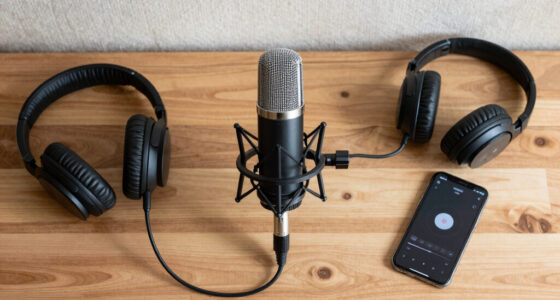


The best portable wireless microphones for most creators are the DJI Mic Mini with two transmitters and a charging case, thanks to its flexible two-person setup and compact recording kit. For phone-first videos, the DJI Mic Mini with a mobile receiver is a simpler travel option, while the JBL Wireless Two Microphone System suits karaoke and small events that need two handheld mics. The main tradeoff is choosing between discreet clip-on microphones for speech and handheld systems built for singing or live use. Phone compatibility, the number of people speaking, and whether you need a separate receiver can matter more than a long feature list. Read on for the full breakdown of all 12 options and the buyers each one suits.

Get everyday essentials delivered free with Prime
- Fast, free delivery on millions of items
- Prime Video, Amazon Music and more included
- Member-only deals all year
Complete the kit


Key Takeaways
- The DJI Mic Mini two-transmitter kit is the most flexible creator pick in this group: it supports two speakers and includes a charging case, while its separate receiver makes it less minimal than the mobile-receiver version.
- The DJI Mic Mini mobile-receiver kit prioritizes a compact phone setup; it is a better fit for mobile recording than buyers who need a receiver-based workflow across other gear.
- Handheld karaoke systems and clip-on lavaliers solve different problems. The JBL, CYY, BONAOK, and dual handheld options target singing and shared-room use, while the Mini Mic Pro, GoorDik, MAYBESTA, and Labstandard focus on speech capture.
- Several products are near-duplicates rather than distinct upgrades. The two BONAOK Q37 listings differ by color, so the choice between rose gold and black is a finish preference, not a change in microphone role.
- Connection type and intended setting separate the best choices more than the word “wireless.” Phone lavaliers suit moving presenters and interviews; handheld systems are easier to pass between singers or speakers.
| BONAOK Q37 Wireless Bluetooth Karaoke Microphone, Rose Gold |  | Best All-in-One Karaoke Handheld | Microphone type: Handheld, unidirectional | Connectivity: Bluetooth and cable | Bluetooth range: 10 m | VIEW LATEST PRICE | See Our Full Breakdown |
| CYY Portable Bluetooth Karaoke Machine with 2 Wireless Microphones |  | Best for Portable Duets | Speaker power: 15 W | Speaker size: 6.5 inches | Bluetooth: Version 5.2 | VIEW LATEST PRICE | See Our Full Breakdown |
| DJI Mic Mini Wireless Microphone System (2 Transmitters, 1 Receiver, Charging Case) | 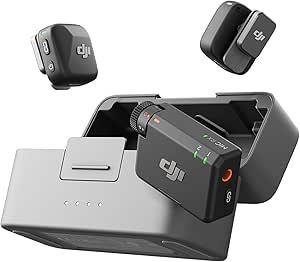 | Best for Lightweight On-Camera Recording | Transmitter weight: 10 g each | Included system: Two transmitters, one receiver, and charging case | Transmission range: 400 m | VIEW LATEST PRICE | See Our Full Breakdown |
| Universal Rechargeable Handheld Wireless Microphone System |  | Best Rechargeable Mic for PA Systems | Connectivity technology: 2.4 GHz | Latency: 9 ms | Range: 164 feet (50 m) | VIEW LATEST PRICE | See Our Full Breakdown |
| Wireless Dual Handheld Dynamic Microphone System with Receiver |  | Best for Long-Range Two-Mic PA Use | Microphone form: Two handheld dynamic microphones | Operating range: 200 feet, line of sight | Polar pattern: Unidirectional | VIEW LATEST PRICE | See Our Full Breakdown |
| JBL Wireless Two Microphone System with Dual-Channel Receiver, Black |  | Best for JBL PartyBox Karaoke | Channels: 2 | Polar pattern: Unidirectional | Frequency response: 65 Hz–15 kHz | VIEW LATEST PRICE | See Our Full Breakdown |
| Mini Mic Pro – Latest Model, Wireless Mini Lavalier Mic for iPhone & Android | 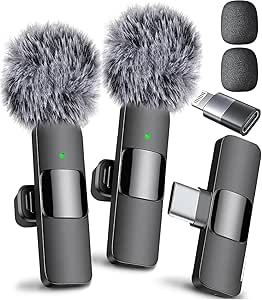 | Best Compact Clip-On | Connector types: Lightning and USB Type-C | Polar pattern: Omnidirectional | Form factor: Mini clip-on | VIEW LATEST PRICE | See Our Full Breakdown |
| GoorDik Wireless USB-C Lavalier Microphone System with Active Noise Reduction |  | Best for Two-Person Phone Interviews | Microphone form factor: Lavalier | Transmitters: 2 | Polar pattern: Omnidirectional | VIEW LATEST PRICE | See Our Full Breakdown |
| DJI Mic Mini Wireless Microphone System (2 Transmitters + 1 Mobile Receiver) |  | Best Premium Lightweight System | Transmitter weight: 10 g each | Transmission range: Up to 300 m | Battery life: Up to 11.5 hours | VIEW LATEST PRICE | See Our Full Breakdown |
| MAYBESTA Wireless Mini Lavalier Microphone System for iPhone and Android |  | Best for Mixed iPhone and Android Use | Microphone form factor: Mini lavalier | Connector types: Lightning and USB Type-C | Wireless connectivity: 2.4 GHz | VIEW LATEST PRICE | See Our Full Breakdown |
| Labstandard Professional Dual Wireless Lavalier Microphone System for iPhone, iPad, and USB-C Devices |  | Best for Two-Person Mobile Interviews | Wireless connectivity: 2.4G wireless | Connectors: Lightning and USB Type-C | Microphone type: Lavalier | VIEW LATEST PRICE | See Our Full Breakdown |
| BONAOK Q37 Wireless Bluetooth Karaoke Microphone, Black |  | Best for Portable Karaoke | Model: Q37 | Connectivity: Bluetooth and AUX | Bluetooth range: 10 m | VIEW LATEST PRICE | See Our Full Breakdown |
| portable wireless microphone | Polar pattern | Signal-to-noise ratio |
|---|---|---|
| BONAOK Q37 Wireless Bluetooth | — | 120 dB |
| CYY Portable Bluetooth Karaoke | — | — |
| DJI Mic Mini Wireless Micropho | — | — |
| Universal Rechargeable Handhel | Cardioid, unidirectional | — |
| Wireless Dual Handheld Dynamic | Unidirectional | 70 dB |
| JBL Wireless Two Microphone Sy | Unidirectional | 60 dB |
| Mini Mic Pro | Omnidirectional | — |
| GoorDik Wireless USB-C Lavalie | Omnidirectional | 65 dB |
| DJI Mic Mini Wireless Micropho | Omnidirectional | 70 dB |
| MAYBESTA Wireless Mini Lavalie | Omnidirectional | 80 dB |
| Labstandard Professional Dual | Omnidirectional | — |
| BONAOK Q37 Wireless Bluetooth | Unidirectional | — |
More Details on Our Top Picks
BONAOK Q37 Wireless Bluetooth Karaoke Microphone, Rose Gold
The BONAOK Q37 is the most self-contained choice here: its handheld design combines a microphone, speaker, MP3 player, and recorder, so a casual singer can start without building a separate PA setup. Bluetooth pairs with a phone, while a cable and microSD playback offer alternatives when wireless playback is inconvenient. Separate controls for mic, echo, and music volume make it easier to balance a sing-along than with the CYY karaoke machine’s two separate microphones and speaker. That simplicity has limits: it is a single handheld unit, not a system for addressing a room, and its 10 m Bluetooth range is modest beside the dedicated PA systems in this list. The microSD slot adds offline playback, but the card is not included. Choose it for portable solo karaoke, not polished video recording or group performance.
Pros:- Combines a microphone, speaker, MP3 player, and recorder in one handheld unit
- Supports both Bluetooth and cable playback
- Separate microphone, echo, and music volume controls
- MicroSD playback supports cards up to 32 GB
Cons:- MicroSD card is not included
- Single handheld format is less suited to duets than the CYY system with two microphones
- Its built-in speaker and 10 m Bluetooth range are a poorer fit for room-scale PA use than the dedicated receiver systems
Best for: Solo singers and families who want a self-contained karaoke mic for casual use at home or while traveling
Not ideal for: Presenters and performers who need to project across a room, use two microphones, or record cleaner on-camera audio
- Microphone type:Handheld, unidirectional
- Connectivity:Bluetooth and cable
- Bluetooth range:10 m
- MicroSD support:Up to 32 GB; card not included
- Audio sensitivity:80 dB
- Signal-to-noise ratio:120 dB
- Power source:Battery-powered
- Dimensions:4.25 × 3.86 × 11.02 inches
Our verdict“Pick the BONAOK Q37 for casual solo karaoke in a compact, all-in-one format, but choose a dual-mic speaker system for duets or a PA setup for presentations.”
CYY Portable Bluetooth Karaoke Machine with 2 Wireless Microphones
For duets and family sing-alongs, the CYY karaoke machine offers a more group-ready setup than the single-mic BONAOK Q37: it includes two wireless microphones and a 15W speaker in one portable package. Bluetooth 5.2, AUX, USB, and Micro TF playback give hosts several ways to play backing tracks, while the five lighting modes add a party feel. At 4.4 lb, it is portable enough to move between rooms or take along, and the stated 6–8 hours of playback supports a typical gathering. The tradeoff is that this is a speaker-first karaoke kit, not a discreet microphone system for video or speech recording. The microphones need AA batteries, feedback may occur if they are held too close to the speaker, and there is no screen for track control. I’d choose it over the Q37 for two singers, but not for a presenter seeking a clean PA microphone setup.
Pros:- Includes two wireless microphones for duets
- 15W speaker and 6.5-inch driver provide an all-in-one karaoke setup
- Bluetooth 5.2, AUX, USB, and Micro TF playback support several music sources
- TWS mode can pair two speakers, and playback is listed at 6–8 hours
Cons:- Each microphone needs two AA batteries, which are not included
- Microphones may feed back when used too close to the speaker
- No screen is included for track or playback information
Best for: Families and casual duet singers who want a portable speaker, two wireless mics, and multiple music inputs in one kit
Not ideal for: Video creators, presenters, or users who want a screen or a microphone system designed for recording rather than karaoke
- Speaker power:15 W
- Speaker size:6.5 inches
- Bluetooth:Version 5.2
- Microphones:Two wireless microphones; each requires two AA batteries, not included
- Connectivity:Bluetooth, AUX, USB, and Micro TF card
- Playback time:6–8 hours
- Weight:4.4 lb
- TWS mode:Connects two speakers
Our verdict“Choose the CYY for portable two-person karaoke; pick a dedicated wireless microphone system instead if recording or speech reinforcement matters more than the built-in speaker and lights.”
DJI Mic Mini Wireless Microphone System (2 Transmitters, 1 Receiver, Charging Case)
The DJI Mic Mini is the clearest fit here for creators who need portable wireless audio rather than a handheld karaoke or PA microphone. Each transmitter weighs just 10 g, making it easier to clip discreetly to clothing than either the BONAOK Q37 or the full-size handheld systems. Two transmitters and one receiver suit interviews with a host and guest, while 48 kHz/24-bit audio and two levels of noise cancellation give creators more control over speech capture. Its stated 400 m range and up to 48 hours of battery life with the charging case also make it better suited to longer shoots than a phone-oriented casual karaoke mic. The tradeoff is a more specialized setup: it is not a room-filling speaker, is not waterproof, and connection to Osmo Mobile series devices requires an additional module. I’d favor it for camera work, not live singing through a PA.
Pros:- Very light transmitters at 10 g each suit discreet on-camera use
- Two transmitters support interviews or two-person recording
- 48 kHz/24-bit audio and two noise-cancellation levels offer recording flexibility
- Charging case provides up to 48 hours of stated battery life
Cons:- Not waterproof, so wet-weather use requires care
- Osmo Mobile series connection requires an additional first-generation OM Multifunctional Module
- Magnets may interfere with pacemakers and other medical devices
Best for: Mobile video creators and interviewers who need a discreet two-person microphone system with a receiver and charging case
Not ideal for: Karaoke singers or event hosts who need handheld microphones, a built-in speaker, or a system that connects directly to a PA
- Transmitter weight:10 g each
- Included system:Two transmitters, one receiver, and charging case
- Transmission range:400 m
- Audio format:48 kHz, 24-bit
- Maximum SPL:120 dB
- Battery life:Up to 48 hours with charging case
- Noise cancellation:Two levels: Basic and Strong
- Connectivity:Bluetooth, DJI OsmoAudio, USB Type-C
Our verdict“Choose the DJI Mic Mini for lightweight two-person video recording, but select a handheld receiver system if your main use is singing or PA sound.”
Universal Rechargeable Handheld Wireless Microphone System
This MICBNIB handheld system is built for people who already have a PA, mixer, amplifier, or karaoke machine with a microphone input. Its 2.4 GHz connection, stated 9 ms latency, and 164-foot range are aimed at live speech and singing, where a noticeable delay or a tethered mic can disrupt delivery. The cardioid pickup pattern focuses on sound from the front, which can help limit surrounding noise compared with the open, speaker-integrated format of the BONAOK Q37. USB-C rechargeable batteries are listed for up to 20 hours of use, reducing reliance on disposable microphone batteries. But “universal” has a boundary: the system is explicitly incompatible with laptops, iPads, and phones, and needs compatible audio equipment. Compared with the dual-handheld system from B0CNVVTF3P, it offers a stated rechargeable battery life and latency figure, while that alternative lists a longer range.
Pros:- Stated 9 ms latency suits live speech and singing
- Up to 164 feet of transmission range
- USB-C rechargeable battery system lists up to 20 hours of playtime
- Cardioid pickup pattern is designed to reduce off-axis sound
Cons:- Not compatible with phones, tablets, or laptops
- Requires a PA, mixer, amplifier, speaker, or karaoke machine with a microphone input
- The listed 65 dB signal-to-noise ratio is lower than the 70 dB listed for the B0CNVVTF3P dual system
Best for: Speakers, singers, and small event hosts who already own a PA, mixer, amplifier, or karaoke machine with a compatible mic input
Not ideal for: Phone and laptop creators or anyone without separate audio equipment that accepts a 3.5 mm or 6.35 mm microphone connection
- Connectivity technology:2.4 GHz
- Latency:9 ms
- Range:164 feet (50 m)
- Polar pattern:Cardioid, unidirectional
- Playtime:Up to 20 hours
- Charging time:2–3 hours
- Connectors:3.5 mm and 6.35 mm jacks
- Compatible devices:PA systems, amplifiers, mixers, speakers, and karaoke machines
Our verdict“Pick this rechargeable handheld system if you have compatible PA gear and value low stated latency; skip it if you need a mic that connects directly to a phone or computer.”
Wireless Dual Handheld Dynamic Microphone System with Receiver
The Wireless Dual Handheld Dynamic Microphone System makes the most sense when two people need handheld mics across a larger event space. Its listed 200-foot line-of-sight range exceeds the 164 feet stated for the MICBNIB system, and the kit includes two microphones, a receiver, batteries, and adapters for 6.35 mm or 3.5 mm mic inputs. That makes it more ready for a duet, meeting, or karaoke setup than buying a single mic separately. The dynamic, unidirectional design is intended to reduce surrounding sound, while automatic pairing keeps setup simple. There are caveats: this is for PA systems, amplifiers, karaoke machines, and similar gear—not phones, tablets, or computers—and the listing says two receiver versions ship at random. It also does not support AUX, so check the input on your equipment before choosing it over the MICBNIB rechargeable alternative.
Pros:- Two handheld microphones support duets and shared presentations
- Listed 200-foot line-of-sight operating range
- Automatic pairing and included receiver adapters simplify setup with compatible audio gear
- Unidirectional dynamic capsules are designed to reduce surrounding sound
Cons:- Not compatible with phones, tablets, or computers
- Two receiver versions are shipped randomly, creating some setup uncertainty
- AUX is not supported, limiting use with consumer audio devices that lack a mic input
Best for: Duet performers, event hosts, and karaoke users who need two handheld microphones with a compatible PA, amplifier, or karaoke machine
Not ideal for: Mobile creators and buyers who need a consistent receiver configuration, AUX playback, or direct phone and computer compatibility
- Microphone form:Two handheld dynamic microphones
- Operating range:200 feet, line of sight
- Polar pattern:Unidirectional
- Connectors:6.35 mm and 3.5 mm jacks
- Impedance:600 ohm
- Signal-to-noise ratio:70 dB
- Power source:Battery-powered; three lithium polymer batteries included
- Compatible equipment:Amplifiers, audio interfaces, karaoke machines, PA systems, and speakers
Our verdict“Choose this kit for two-person performances over a compatible PA when range matters, but pick the MICBNIB system if rechargeable batteries and a stated latency figure are higher priorities.”
JBL Wireless Two Microphone System with Dual-Channel Receiver, Black
I’d choose the JBL Wireless Two Microphone System when portability means bringing a simple two-mic setup to a compatible PartyBox, rather than recording directly to a phone. Its dual-channel UHF receiver lets two singers use the system together, and the plug-and-play setup avoids pairing steps. Replaceable AA batteries also make power management straightforward for events where recharging is inconvenient. Compared with the MAYBESTA Wireless Mini Lavalier Microphone System, this is built for shared live vocals through a speaker, not discreet creator audio or phone recording. The tradeoff is that compatibility is limited to listed JBL PartyBox models, so it is a poor match for buyers with other speakers. The plastic enclosure may also feel less robust than a metal-bodied handheld system.
Pros:- Two microphones can operate through the dual-channel receiver
- Plug-and-play setup requires no pairing
- Replaceable AA batteries simplify power changes during events
- Compatible with a range of listed JBL PartyBox speakers
Cons:- Works with specific JBL PartyBox models rather than serving as a universal speaker system
- Plastic enclosure may feel less durable than metal alternatives
- Handheld speaker-focused setup is less suitable for discreet mobile recording
Best for: PartyBox owners who want two wireless microphones for karaoke, announcements, or small gatherings without a complicated setup
Not ideal for: Phone-based vloggers and buyers with non-JBL speakers, since this system is designed around compatible PartyBox models rather than direct mobile recording
- Channels:2
- Polar pattern:Unidirectional
- Frequency response:65 Hz–15 kHz
- Signal-to-noise ratio:60 dB
- Power:AA batteries
- Weight:1.2 lb
- Compatible devices:Listed JBL PartyBox models
- Warranty:1 year manufacturer warranty
Our verdict“Pick this if you already own a compatible JBL PartyBox and need a straightforward two-mic setup for live vocals.”
Mini Mic Pro – Latest Model, Wireless Mini Lavalier Mic for iPhone & Android
The Mini Mic Pro is the most pocketable choice here for solo phone recording: its clip-on body weighs 80 g and connects through included Lightning or USB-C adapters, without an app or Bluetooth setup. Omnidirectional pickup suits a speaker who needs to move naturally on camera, while the supplied foam and furry wind protection give it more outdoor flexibility than the MAYBESTA Wireless Mini Lavalier Microphone System, whose included accessories are more basic. It can also charge while recording, a useful option for longer sessions. The stated recording time is up to six hours, though the supplied product data also lists two C batteries, so buyers should check the power arrangement before relying on it for field work. Its small form and single-mic approach are not aimed at two-person interviews.
Pros:- Compact clip-on design for discreet mobile recording
- Includes Lightning and USB-C adapters for broad device compatibility
- Plug-and-play operation does not require an app or Bluetooth pairing
- Includes foam and furry wind protection and supports charging while recording
Cons:- Stated recording time of up to six hours may not suit long field sessions
- Product data lists two C batteries, making the power arrangement less clear than a defined rechargeable pack
- Single-mic setup is less suited to recording two speakers at once
Best for: Solo creators filming short videos or interviews on phones and tablets who want a small clip-on mic with both Lightning and USB-C connectivity
Not ideal for: Two-person interview crews or extended field recording sessions that need a clearly specified rechargeable power setup and more than six hours of runtime
- Connector types:Lightning and USB Type-C
- Polar pattern:Omnidirectional
- Form factor:Mini clip-on
- Recording time:Up to 6 hours
- Weight:80 g
- Dimensions:3 × 0.5 × 0.25 in
- Special features:Noise reduction, clip, battery indicator, one-touch recording
- Warranty:6-month manufacturer warranty; 90-day refund guarantee
Our verdict“Choose this for compact solo phone recording, but look to the GoorDik system if you need two transmitters for interviews.”
GoorDik Wireless USB-C Lavalier Microphone System with Active Noise Reduction
For interviews where both people need a mic, the GoorDik system has a practical advantage over single-mic clip-ons: the kit includes two transmitters and one receiver. Its noise-reduction and original-sound modes give creators a choice between reducing background noise and retaining more of the surrounding audio. The listed 30-meter wireless range and six-to-twelve-hour battery life also make it more flexible for walking interviews than the compact Mini Mic Pro. This kit is primarily a USB-C option, though the included adapters broaden its device connections. Setup may require extra steps: some Android phones need OTG enabled, and computers may need the receiver selected as their input. It’s less polished for grab-and-go use than a simpler plug-in mic, but better suited to recording two voices.
Pros:- Two transmitters allow two people to wear microphones at once
- Noise-reduction and original-sound modes suit different recording settings
- Listed wireless range reaches up to 30 meters
- Includes wind protection and USB adapters for supported connections
Cons:- Some Android phones require manual OTG activation
- Computer users may need to select it as the default input
- The receiver and two-transmitter kit is less compact than a single clip-on microphone
Best for: Mobile interviewers and small creator teams who need two lavalier transmitters, wind protection, and adjustable noise handling
Not ideal for: People who want the simplest possible phone setup or use a computer and do not want to adjust input settings or Android OTG permissions
- Microphone form factor:Lavalier
- Transmitters:2
- Polar pattern:Omnidirectional
- Wireless range:Up to 30 m
- Battery life:6–12 hours
- Frequency response:20 Hz–20 kHz
- Signal-to-noise ratio:65 dB
- Weight:70 g
- Included accessories:Receiver, charging cable, foam covers, wind muffs, USB adapter, Lightning adapter
Our verdict“Choose GoorDik for two-person mobile interviews; choose the Mini Mic Pro instead if you mainly record one speaker and value a smaller kit.”
DJI Mic Mini Wireless Microphone System (2 Transmitters + 1 Mobile Receiver)
The DJI Mic Mini stands out for creators who want two discreet transmitters without carrying a bulky kit. At 10 g per transmitter, each mic is light enough to keep clothing movement and visual distraction down, while two noise-cancellation levels let users tailor the sound to quieter or noisier locations. Its stated 11.5-hour battery life and 300-meter transmission range exceed the GoorDik system’s listed range and give the DJI more headroom for long shoots or separated subjects. The tradeoff is that this mobile-receiver bundle does not include a charging case, and it is not waterproof. Some Osmo Mobile setups also need an extra module. Compared with the GoorDik, DJI is the more refined lightweight choice, but buyers should check their exact device connection needs before choosing.
Pros:- Each transmitter weighs only 10 g for discreet wear
- Two noise-cancellation levels adapt to different surroundings
- Stated battery life reaches up to 11.5 hours
- Listed transmission range reaches up to 300 m
Cons:- Not waterproof
- Some Osmo Mobile devices require an additional module
- This bundle does not list a charging case among its included items
Best for: Mobile creators and interviewers who want an especially light two-transmitter kit, long stated runtime, and noise cancellation for varied locations
Not ideal for: Outdoor users who need waterproof equipment, or Osmo Mobile owners whose setup would require an additional module
- Transmitter weight:10 g each
- Transmission range:Up to 300 m
- Battery life:Up to 11.5 hours
- Audio format:48 kHz, 24-bit
- Noise cancellation:2 levels: Basic and Strong
- Polar pattern:Omnidirectional
- Signal-to-noise ratio:70 dB
- Included items:2 transmitters, 1 mobile receiver, accessories
Our verdict“Pick the DJI Mic Mini for lightweight two-person recording and longer sessions, provided waterproofing and a charging case are not requirements.”
MAYBESTA Wireless Mini Lavalier Microphone System for iPhone and Android
The MAYBESTA Wireless Mini Lavalier Microphone System makes sense for creators who switch between Lightning and USB-C phones and want one receiver for both. Its dual-plug design avoids carrying separate adapters, while automatic plug-and-play pairing keeps setup simpler than the GoorDik system, which may need OTG activation on some Android devices. The kit includes two lavalier microphones, so it can cover two speakers, and the mute function is useful for calls or recordings that need brief privacy. The main limitation is that the product data specifies single-channel audio recording, which may restrict how separately two voices can be captured or managed. It also relies on charging by the included cable. Compared with the Mini Mic Pro, it offers a two-mic kit and mute control, but is less focused on a tiny single-mic form.
Pros:- Dual-plug receiver supports Lightning and USB-C devices without separate adapters
- Automatic plug-and-play pairing avoids Bluetooth setup
- Includes two lavalier microphones for recording two speakers
- Noise reduction and a mute function add useful recording controls
Cons:- Product data lists single-channel audio recording, limiting separate control of two voices
- Charging depends on the included cable
- No battery-life figure is provided in the supplied specifications
Best for: Creators who record on both Lightning and USB-C phones and want two lavalier microphones with a simple receiver connection
Not ideal for: Users who need separately managed audio tracks for two speakers or want a clearly documented extended-runtime specification
- Microphone form factor:Mini lavalier
- Connector types:Lightning and USB Type-C
- Wireless connectivity:2.4 GHz
- Polar pattern:Omnidirectional
- Microphones included:2
- Signal-to-noise ratio:80 dB
- Special features:Noise reduction, mute function, plug-and-play
- Included accessories:Receiver, USB charging cable, sponge tips, clips
Our verdict“Choose MAYBESTA if you want a simple two-mic kit that can connect to both Lightning and USB-C phones, but skip it if you need separate audio channels.”
Labstandard Professional Dual Wireless Lavalier Microphone System for iPhone, iPad, and USB-C Devices
The Labstandard dual lavalier system is the more interview-focused choice here: two channels let two people record at once, while its Lightning and USB-C adapters cover a wider mix of phones and tablets than a USB-C-only setup such as the GoorDik Wireless USB-C Lavalier Microphone System. Its stated 0.008-second latency helps keep speech aligned with video, and the built-in noise reduction is aimed at recording in less controlled surroundings. At about six hours of battery life, it suits a day of intermittent filming better than a short one-off clip. The tradeoff is a reliance on small, device-specific adapters that can be misplaced, plus a plastic or metal-alloy enclosure that may feel less refined than premium gear. Choose it for flexible two-person phone recording, not for a self-contained handheld or karaoke setup.
Pros:- Two channels support recording two speakers
- Lightning and USB-C adapters offer broad device compatibility
- Stated 0.008-second latency helps keep audio and video in sync
- Approximate six-hour battery life suits extended mobile recording
Cons:- Small adapters can be lost or damaged, interrupting compatibility
- Plastic or metal-alloy construction may feel less premium than all-metal alternatives
Best for: Mobile interviewers and two-person creators who record on a mix of Lightning and USB-C phones or tablets.
Not ideal for: Buyers who want a rugged, premium-feeling kit or a microphone that works without carrying and keeping track of device adapters.
- Wireless connectivity:2.4G wireless
- Connectors:Lightning and USB Type-C
- Microphone type:Lavalier
- Polar pattern:Omnidirectional
- Channels:2
- Battery life:Approximately 6 hours
- Latency:0.008 seconds
- Weight:0.05 kg
Our verdict“Choose this dual lavalier kit for two-person phone interviews across Lightning and USB-C devices, but skip it if adapter-free simplicity or a more robust finish matters most.”
BONAOK Q37 Wireless Bluetooth Karaoke Microphone, Black
The BONAOK Q37 is a handheld karaoke device, not a compact clip-on mic for filming: it combines a microphone with a Bluetooth speaker and MP3 playback in one portable unit. Separate microphone, echo, and music controls make it easier to balance vocals and backing tracks without relying entirely on a phone app. Compared with the CYY Portable Bluetooth Karaoke Machine, the Q37 is a simpler single-microphone option rather than a machine built around two wireless mics. Bluetooth, AUX, and microSD playback give it several ways to supply music, though you need to bring your own microSD card, and the AUX cable is not included. Its handheld shape and karaoke-focused sound make it a poor fit for discreet interviews or video creators seeking a lavalier system like the Labstandard.
Pros:- Combines a handheld microphone, Bluetooth speaker, and MP3 player
- Separate controls adjust microphone, echo, and music volume
- Supports Bluetooth, AUX, and microSD playback up to 32 GB
- Includes audio and charging cables
Cons:- AUX cable is not included despite AUX connectivity
- MicroSD card is not included
- Handheld karaoke format is less suitable for discreet recording than a lavalier system
Best for: Families and casual singers who want a handheld karaoke mic with built-in speaker functions and multiple music playback options.
Not ideal for: Vloggers, interviewers, or event hosts who need a small clip-on microphone, a receiver-based PA system, or included AUX and microSD accessories.
- Model:Q37
- Connectivity:Bluetooth and AUX
- Bluetooth range:10 m
- Connectors:3.5 mm jack and Micro USB
- MicroSD support:Up to 32 GB
- Polar pattern:Unidirectional
- Audio sensitivity:80 dB
- Dimensions:4.25 x 3.86 x 11.02 inches
- Warranty:1 year manufacturer
Our verdict“Pick the Q37 for casual portable karaoke and flexible music playback, not for hands-free recording or two-microphone performance setups.”

How We Picked
I ranked these portable wireless microphones by how well each setup fits a clear real-world job, rather than treating karaoke microphones, handheld event systems, and phone lavaliers as interchangeable. I weighed the stated connection method and device fit, number of transmitters and microphones, portability of the receiver and case, and whether the design makes sense for speech, singing, or shared use. I also looked at the practical friction a buyer may face: carrying extra receiver hardware, matching a connector to a phone, and choosing a mic style suited to the recording environment.
The order favors useful versatility and a clear fit across common portable recording needs, then gives specialized picks their place when they solve a narrower task well. The DJI Mic Mini two-transmitter kit ranks ahead of single-purpose karaoke and basic lavalier options because it supports two speakers and comes as a mobile recording system. The mobile-receiver DJI kit serves buyers who want fewer components, while JBL and CYY make more sense for handheld singing than interviews. The BONAOK color variants are treated as one product family, and their placement reflects that color alone does not create a separate performance advantage. Product details here are based on the supplied names and stated configurations, so I avoid claims about unprovided specifications.
| portable wireless microphone | Polar pattern |
|---|---|
| BONAOK Q37 Wireless Bluetooth | — |
| CYY Portable Bluetooth Karaoke | — |
| DJI Mic Mini Wireless Micropho | — |
| Universal Rechargeable Handhel | Cardioid, unidirectional |
| Wireless Dual Handheld Dynamic | Unidirectional |
| JBL Wireless Two Microphone Sy | Unidirectional |
| Mini Mic Pro | Omnidirectional |
| GoorDik Wireless USB-C Lavalie | Omnidirectional |
| DJI Mic Mini Wireless Micropho | Omnidirectional |
| MAYBESTA Wireless Mini Lavalie | Omnidirectional |
| Labstandard Professional Dual | Omnidirectional |
| BONAOK Q37 Wireless Bluetooth | Unidirectional |
Factors to Consider When Choosing Portable Wireless Microphones
Before choosing among portable wireless microphones, settle the job the mic needs to do. A compact lavalier can simplify recording a presenter, but it is not a substitute for a handheld microphone at karaoke. These factors help narrow the category before you compare individual models.
Match the microphone style to the way you speak or perform
Clip-on lavaliers keep the microphone close to the speaker, which can help maintain a consistent voice level when someone moves or turns away from a phone. Handheld microphones are more natural to pass between people and often suit karaoke, announcements, or informal events. A portable karaoke machine adds a shared playback-and-singing setup, but it is bulkier than a mic-and-phone recording kit. Do not choose by the word “wireless” alone: the physical mic style changes how you hold, share, and store the system. If your content includes both interviews and singing, one specialized system may not cover both jobs well. Decide which use is frequent enough to guide the purchase, then treat the other as a bonus use case.
Check the full connection path, not just the connector name
A microphone can have the right-looking USB-C or phone receiver and still be a poor match for a particular recording workflow. Check whether the receiver plugs directly into your device, whether you need an adapter, and whether your recording app accepts audio from external microphones. A compact mobile receiver can reduce loose parts, while a separate receiver may suit buyers who want a more conventional recording kit. For multi-device households, list every phone, tablet, or camera you plan to use before buying. Connector changes and device compatibility are common sources of avoidable returns. If you switch devices often, favor a system whose supported connections are clearly stated rather than assuming a phone accessory will work everywhere.
Choose the number of microphones around your actual group size
Two transmitters or handheld microphones can support an interview, duet, or two-person presentation without making speakers share one mic. That convenience only helps if the system can connect the included pieces to your intended device and recording setup. A single lavalier can be the simpler choice for solo videos, since extra transmitters add gear that may go unused. For karaoke, a dual handheld system makes sharing easier, but it does not automatically provide the discreet voice capture a seated interview calls for. Think through whether both people speak at once, take turns, or need separate tracks; those needs are not the same. Buy for your typical number of active speakers, not the largest group you might occasionally record.
Treat portability as the whole kit, not the microphone alone
A small mic is not truly convenient if its receiver, cables, adapters, and charging accessories are easy to forget. Before choosing a compact system, account for every component needed to record and how you will carry or store it. A charging case can keep a multi-part setup together and reduce loose accessories, while a direct-plug receiver can cut down on packing for phone-only use. Handheld karaoke systems may be portable enough for a bag but take more room than a clip-on mic. Consider where the kit will live between sessions and whether you need to set it up quickly in a public place. The best travel option is often the one with the fewest separate parts you must remember.
Prioritize clean speech differently from karaoke performance
Voice recording depends on more than a microphone’s wireless connection: distance from the speaker, room noise, and clothing contact can all shape the result. A lavalier can keep speech pickup consistent, but placement matters, and fabric rubbing may distract from a recording. A handheld mic lets the speaker control distance, though that requires a little technique and can make levels less consistent when people pass it around. Noise-reduction wording is not a guarantee that a system will remove every room sound or make a poor recording space quiet. For singing, playback and the shared performance setup may matter as much as discreet speech capture. Choose based on the sound problem you actually face, and plan to test placement before an important recording.
Pay for capabilities you will use, not a longer feature list
A more involved kit can make sense when it saves setup time, supports two speakers, or fits a recording workflow you use regularly. For a solo creator recording directly to a compatible phone, a simpler lavalier may be easier to pack and operate. For family karaoke or small gatherings, a handheld pair or karaoke-machine package may be more useful than a creator-focused receiver kit. Extra components also mean more charging, storage, and connection steps, so added flexibility has a real handling cost. Identify the one capability that would change your recordings or events most, then compare products on that point. This keeps a buyer from paying for a multi-person system when a straightforward single-speaker setup would do.
Frequently Asked Questions
Should I choose a lavalier or a handheld wireless microphone for interviews?
For a presenter speaking to camera or a seated interview where the mic should stay unobtrusive, a lavalier is usually the more natural fit. A handheld is easier to pass between guests and gives the speaker control over distance, but it remains visible and needs active handling. If two people need separate microphones, look at a two-transmitter lavalier kit rather than assuming one mic can capture both voices evenly. Also check the receiver connection against the device and app you plan to record with. The right choice depends on whether discreet placement or flexible sharing matters more in your setup.
Can I use a phone lavalier system with any iPhone or Android device?
No; compatibility depends on the phone’s port, the receiver connector, and sometimes the recording app. A product name that mentions iPhone or Android does not necessarily mean every model or connector generation is supported. Check your exact phone and whether the kit needs an adapter before ordering. If you record through a specific app, verify that it can accept an external microphone rather than relying on the camera’s default behavior. Buyers who switch phones should favor clearly documented compatibility over a receiver that only fits their current device.
Is a two-microphone kit worthwhile if I usually record alone?
It can be worthwhile if interviews, guest videos, or paired presentations are part of your near-term plans, since a second mic avoids passing one between speakers. For solo recordings, the second transmitter may add charging and storage without improving the result. A smaller single-speaker setup can be simpler to carry and connect. Consider whether you need two speakers recorded at the same time or merely want a spare microphone; those are different reasons to buy a dual kit. If two-person work is rare, prioritize ease of use for your regular solo sessions.
Will a wireless microphone remove background noise when I record outdoors?
Not by itself. A wireless link sends the microphone signal to your device, but traffic, wind, crowds, and nearby conversations can still reach the mic. Noise-reduction features may help with some unwanted sound, yet they cannot replace thoughtful placement or a quieter recording spot. Keep a lavalier close to the speaker and protect it from clothing movement; with a handheld mic, maintain a steady distance and aim it toward the voice. For outdoor work, check what wind protection and noise controls are included rather than relying on broad noise-reduction claims.
Can one portable wireless microphone work for both karaoke and video recording?
Sometimes, but the two tasks favor different designs. A handheld karaoke microphone is easy to sing into and share, while a phone lavalier is made for hands-free speech and a less visible setup. A handheld system may not connect cleanly to your phone’s recording workflow, and a lavalier will not replace a shared karaoke machine or playback setup. Before trying to cover both uses with one purchase, confirm how the receiver connects and whether the microphone’s form suits each setting. If karaoke and creator recording are equally important, separate purpose-built systems may be less frustrating than a compromise.
Conclusion
For the broadest mix of portable creator use, I’d choose the DJI Mic Mini with two transmitters and a charging case as the best overall: it is the clearest fit here for recording two speakers in a compact kit. The DJI Mic Mini with a mobile receiver is the better match for phone-first creators who want a simpler setup, while the JBL Wireless Two Microphone System is my pick for karaoke and small events that call for two handheld mics. For beginners, a phone-compatible lavalier such as the Mini Mic Pro or MAYBESTA can be a more approachable starting point when the stated device fit matches their phone; verify compatibility before choosing. The GoorDik and Labstandard options suit buyers comparing phone lavalier systems, while the CYY package is aimed at people who want a karaoke-machine format. I would treat the two BONAOK Q37 listings as the same basic choice in different colors, not as separate upgrades. My best-value recommendation depends on your use: choose the simplest compatible lavalier for solo phone video, or a dual handheld setup if shared singing is the priority; the product names supplied do not establish enough detail for a price-based value claim. For a premium-style creator setup, the dual-transmitter DJI kit is the most capable fit in this lineup, but buyers who only record alone may be better served by the smaller mobile-receiver configuration.