

TL;DR

Get everyday essentials delivered free — and shop member deals
- Fast, free delivery on millions of items
- Access to Prime Big Deal Days deals on October 6–7
- Prime Video, Amazon Music and more included
Moscow plans to begin reconstructing Yaroslavsky Station in December 2026, adding wave-shaped glass canopies to connect it with neighboring Leningradsky Station. The project is scheduled to run through 2028, but officials have not released the full design or clarified which historic appearance they intend to restore, prompting concern among preservation advocates.
Moscow plans to start reconstructing Yaroslavsky Station in December 2026, adding a wave-shaped glass canopy between it and neighboring Leningradsky Station so passengers can transfer without going outdoors. The project is scheduled to continue until the end of 2028, while preservation advocates are concerned that changes could affect the station’s historic architecture, including work by architect Fyodor Schechtel.
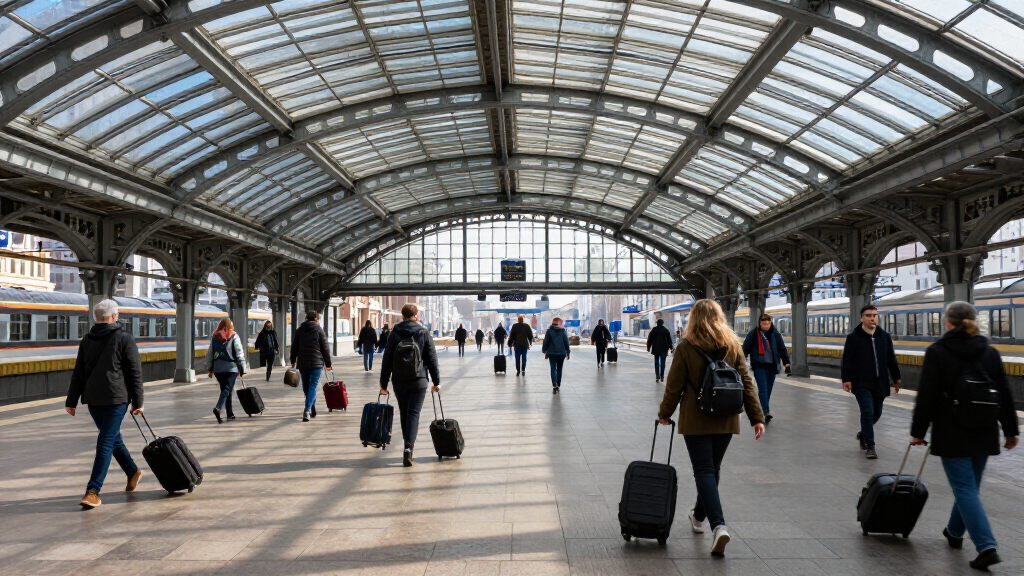
The most prominent planned addition is a set of glass canopies covering 12,800 square meters, or about 138,000 square feet, between the stations’ platforms. The platforms’ existing canopies are also to be updated. Moscow’s plans include new entrances and exits connecting with Komsomolskaya metro station, replacement utility systems and additional passenger halls. The detailed design is still being developed, and public information about it remains limited.
City officials say the reconstruction is intended to accommodate rising passenger numbers and restore the station’s “historic architectural appearance.” Deputy Mayor Vladimir Yefimov said the design accounts for growth in passengers and trips. Authorities have not specified which period of the station’s history they mean by “historic,” a significant omission given that the building has been altered repeatedly.
Yaroslavsky is already one of Russia’s busiest commuter rail stations. The source report says about 80,000 people use its commuter trains on a normal workday, with that figure projected to exceed 100,000 by 2035. Those figures describe current use and a future projection, respectively; they do not establish how many passengers the reconstruction itself will attract or how much travel time it will save.
A New Link at Three Stations Square
The canopy is intended to change how passengers move between two major rail terminals: people transferring between Yaroslavsky and Leningradsky would be able to do so without going outside. The project also includes connections to Komsomolskaya metro station, potentially making the station complex easier to navigate for rail and metro users. The available plan does not yet set out detailed passenger routes or explain how access will work during construction.
The scale of the site’s rail use means decisions about entrances, halls and platform cover affect more than the station’s appearance. The forecast of more than 100,000 commuter-train users on a normal workday by 2035 gives the stated capacity goal a longer-term horizon. However, officials have not published detailed forecasts, construction phasing or performance targets that would let the public judge the project’s expected operational effects.
There is also a heritage question. Schechtel’s early-20th-century station building is known for its neo-Russian design and decorative details. If reconstruction changes the building or its setting, the eventual design will determine how those historic features sit alongside the new canopy and passenger facilities. The current public information does not establish that Schechtel’s work will be removed, nor does it resolve preservationists’ concerns.
As an affiliate, we earn on qualifying purchases.
A Station Changed Across Eras
The first station at the site opened in 1862, serving a railway initially called Troitsky, after the route to Sergiyev Posad and the Trinity Lavra of St. Sergius. The station took the name Yaroslavsky in 1870, when the railway reached Yaroslavl; lines were later extended toward Arkhangelsk and connected to other regional routes. It stands on Komsomolskaya Square, also known as Three Stations Square, beside Leningradsky Station.
The building most associated with Yaroslavsky today dates from 1902–1904. It was designed by Fyodor Schechtel after an earlier expansion project became entangled in the financial scandal surrounding industrialist Savva Mamontov’s railway company. Schechtel worked with an existing structure rather than designing from an empty site. His neo-Russian design drew on northern Russian motifs, with decorative facade patterns, animal imagery and majolica panels.
The station’s story continued after Schechtel. It became associated with the Trans-Siberian Railway, and trains to Vladivostok still leave from Yaroslavsky. A monument beside the tracks has marked the station’s status as the Trans-Siberian’s “kilometer zero” since 2001. The multiple layers of construction help explain why officials’ unspecified promise to restore a historic appearance has drawn scrutiny.
“The building will regain its “historic architectural appearance.””
— Moscow urban development and construction authorities
heritage station preservation books
As an affiliate, we earn on qualifying purchases.
As an affiliate, we earn on qualifying purchases.
Design Details Still Pending
The project’s design remains in development. Authorities have not published a complete plan showing how the glass canopy will meet the station buildings, which historic elements may be changed, or how construction will affect the station’s decorative features. The source report also identifies concern among preservation advocates but does not provide a formal response from the project team to those concerns.
It is not clear what officials mean by restoring the station’s “historic” appearance, given its several reconstructions, or how they will balance preservation with new halls, entrances and utilities. The stated 2035 passenger figure is a projection; the available material does not give its assumptions or identify how much of any projected growth the rebuild is meant to accommodate.
The schedule has been reported as beginning in December 2026, while Mayor Sergey Sobyanin was also reported as saying work would begin “this year” on August 25. The source material does not provide the year attached to that announcement, so the two timing references cannot be reconciled from the available information. The December 2026 start and end-of-2028 completion are the specific schedule given for the reconstruction.
train station architectural restoration models
As an affiliate, we earn on qualifying purchases.
As an affiliate, we earn on qualifying purchases.
Design and Construction Milestones
The next substantive development is likely to be the release of a fuller design, including details about the canopy, the station’s historic fabric and the planned connections to the metro. No date for that disclosure is provided in the source material. Those plans should clarify how the project’s access and capacity aims will be balanced against the preservation concerns raised over Yaroslavsky’s architecture.
Under the announced schedule, construction is due to start in December 2026 and continue through 2028, with completion expected by year-end. Officials have not provided a construction timetable by phase, information about temporary passenger arrangements, or a more exact opening date. Those details remain necessary for travelers and nearby rail users to understand the project’s practical effects.
As an affiliate, we earn on qualifying purchases.
Key Questions
What is Moscow planning at Yaroslavsky Station?
Moscow plans to reconstruct the station and connect it with neighboring Leningradsky Station using wave-shaped glass canopies. Plans also include new passenger halls, updated utilities and entrances and exits connecting to Komsomolskaya metro station.
When is the reconstruction scheduled to start and finish?
The reported schedule gives a December 2026 start and completion by the end of 2028. A separate reference to a mayoral announcement that work would start “this year” does not include the year, so the source material does not reconcile the two statements.
Will the project remove Fyodor Schechtel’s architecture?
The available plans do not confirm that Schechtel’s work will be removed. Preservation concerns have been reported, but the detailed design is still being developed and officials have not specified what they mean by restoring the station’s “historic architectural appearance.”
How large will the glass canopy be?
The planned canopies between the stations’ platforms are expected to cover 12,800 square meters, about 138,000 square feet. Canopies over the platforms themselves are also set to be updated.
Why does the project matter to passengers?
The canopy is intended to let passengers transfer between Yaroslavsky and Leningradsky without going outdoors. The station also serves about 80,000 commuter-train users on a normal workday, and the reported projection is that the number will exceed 100,000 by 2035.
Source: rss
Halloween Picks
halloween
As an affiliate, we earn on qualifying purchases.