
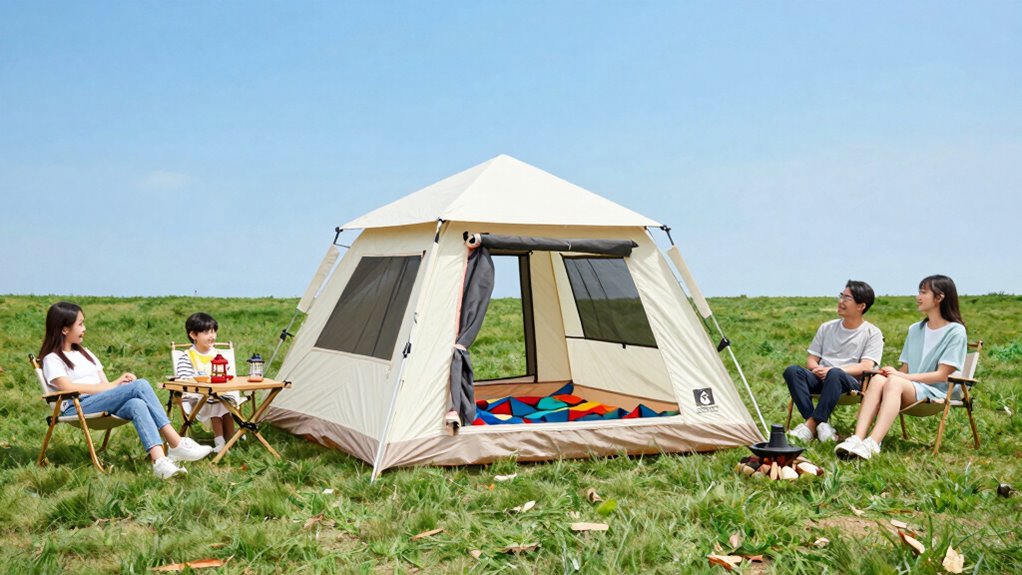

Family tent capacity ratings often just count how many people can sleep side by side, but that doesn’t mean everyone will be comfortable. These ratings usually ignore gear, movement, or extra space for belongings. To get a better idea, consider adding a few extra spots for gear and comfort. If you want to know how to choose the right size and maximize your camping experience, keep exploring these helpful tips.

Get everyday essentials delivered free with Prime
- Fast, free delivery on millions of items
- Prime Video, Amazon Music and more included
- Member-only deals all year
Key Takeaways
- Capacity ratings indicate maximum sleeping spots, not overall comfort or gear storage needs.
- Adding extra space beyond the rated capacity ensures comfort and accommodates gear or additional family members.
- Proper tent maintenance prolongs lifespan, maintains functionality, and ensures safety during trips.
- Use gear lofts and external pockets to maximize organization and living space inside the tent.
- Select a size that considers gear, children, pets, and movement for a more enjoyable camping experience.
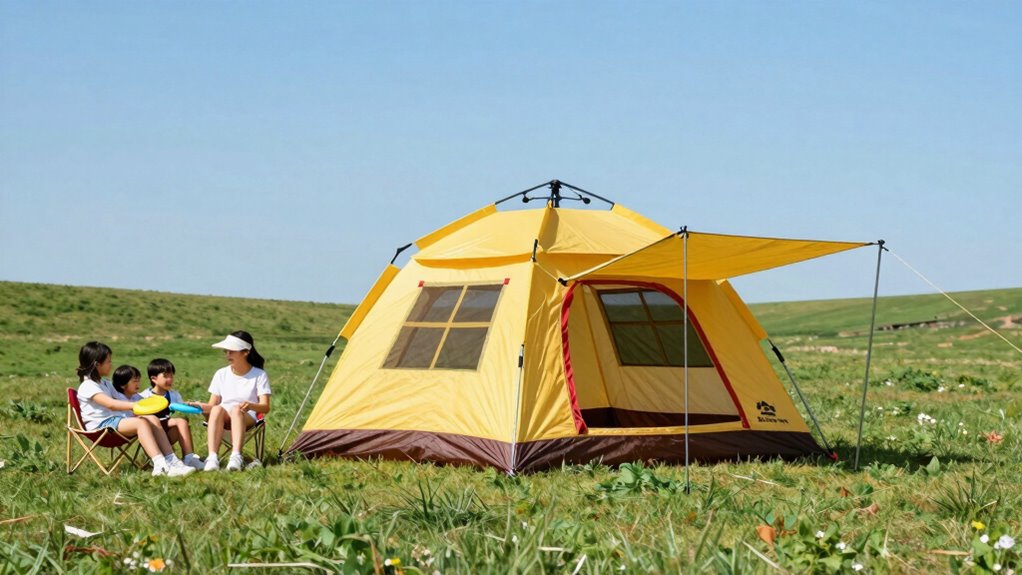
When choosing a family tent, understanding capacity ratings is essential to guarantee everyone has enough space to sleep comfortably and move around freely. These ratings are often advertised as sleeping six, eight, or even ten, but they don’t always tell the full story. It’s important to recognize that capacity ratings are typically based on the maximum number of people that can fit inside, with little regard for comfort or gear storage. If you’re packing camping gear or planning to bring extra belongings, you’ll want to consider a higher capacity than your group size. For example, a tent rated for six might only comfortably sleep four if you include gear and want some room to move.
Knowing how to interpret these ratings helps you make smarter choices. Most manufacturers list the capacity based on the number of people who can sleep side by side in sleeping bags, often ignoring the space needed for gear or movement. If you’re traveling with kids, pets, or bulky camping gear, you should think about adding a few extra spaces to the rating. This way, you’ll avoid feeling cramped and ensure everyone has enough room to sleep and store their belongings. Remember, a family tent isn’t just about sleeping; it’s also about creating a comfortable living space, especially on longer trips. Additionally, understanding tent capacity ratings helps you select the right size to maximize comfort and functionality. Being aware of proper tent sizing can also help you avoid the frustration of trying to fit everyone into a tent that’s too small. Proper tent maintenance extends the lifespan of your gear and ensures ongoing comfort and safety during your trips. Regularly cleaning your tent, especially after each trip, helps prevent mold and keeps the fabric in top condition. It’s also beneficial to familiarize yourself with tent setup techniques to make pitching your tent quicker and more efficient. When packing up, ensure all zippers and seams are in good working order, and store your tent in a dry, cool place. This maintenance not only prolongs the life of your camping gear but also helps you keep the tent in shape for future family adventures. A well-maintained tent will provide better insulation, fewer leaks, and overall comfort, allowing you to enjoy your trip fully. To further enhance your camping experience, consider adding extra gear storage options such as gear lofts or external compartments to keep your living space organized and clutter-free. Ultimately, understanding tent capacity ratings and practicing proper tent maintenance go hand in hand. Being realistic about how many people and how much gear your tent can comfortably handle ensures everyone has a good night’s sleep. So, when shopping for your family tent, look beyond the basic ratings and assess your specific needs. Remember, a little extra space and proper care go a long way in making your family camping experience enjoyable, safe, and comfortable.
As an affiliate, we earn on qualifying purchases.
Frequently Asked Questions
How Is Tent Capacity Calculated Beyond Sleeping Bag Counts?
Tent capacity is calculated based on camping comfort and tent ergonomics, not just sleeping bag counts. Manufacturers consider the tent’s floor area, height, and door/window placement to determine how many people can sleep comfortably without feeling cramped. You should also factor in gear storage and movement space. So, a tent rated for four might only suit three for actual comfort, ensuring everyone has enough room to sleep, move, and relax.
Do Tent Capacities Account for Gear and Camping Equipment?
Absolutely, tent capacities often don’t tell the whole story. They usually focus on sleeping arrangements, so you need to take into account interior space and ventilation features for gear and equipment. Think of it as packing a suitcase—you need room for essentials without cramming everything in. Good ventilation helps keep everyone comfortable and dry, especially when you add gear. Always check the tent’s interior dimensions and ventilation options to guarantee a comfortable fit.
Can Small Tents Comfortably Fit More People Than Rated?
Small tents can sometimes fit more people than rated, but it often compromises camping comfort and tent size efficiency. You might squeeze in extra campers, but you’ll likely feel cramped, especially if gear and sleeping bags are added. For a more comfortable experience, stick to the rated capacity, or opt for a larger tent. This guarantees enough space, better airflow, and an overall more enjoyable camping trip.
How Do Weather Conditions Affect Actual Tent Capacity?
Imagine squeezing into a tent during a storm, pretending it’s a cozy castle—only to realize weather impact drastically shrinks your space. Weather conditions, especially rain and wind, test your tent’s storm resilience, often forcing you to shed gear or even leave early. High winds and heavy rain can compromise structure and comfort, reducing the actual capacity. So, don’t rely solely on rated capacity; consider weather for a safe, snug night.
Are There Safety Margins in Capacity Ratings for Family Tents?
Yes, family tent capacity ratings include safety margins to account for fire safety and ventilation concerns. You shouldn’t push the limits, as overcrowding can increase fire risks and reduce airflow, making the tent less safe and comfortable. Always follow manufacturer guidelines and consider extra space for gear or weather changes. This guarantees a safer, more comfortable experience, especially when considering fire safety and proper ventilation during your camping trip.
large family camping tent 8 person
As an affiliate, we earn on qualifying purchases.
As an affiliate, we earn on qualifying purchases.
Conclusion
So, when choosing a family tent, don’t just rely on the capacity rating alone. Remember, it’s often based on sleeping bags, not actual people, so add a few extra spots for comfort and gear. It might seem tight, but with a little planning, you can still enjoy a cozy, functional space. Ultimately, understanding these ratings helps you pick the right tent for your adventures, ensuring everyone’s comfortable and happy—no matter the size of your family.
As an affiliate, we earn on qualifying purchases.
As an affiliate, we earn on qualifying purchases.
Halloween Picks
halloween
As an affiliate, we earn on qualifying purchases.