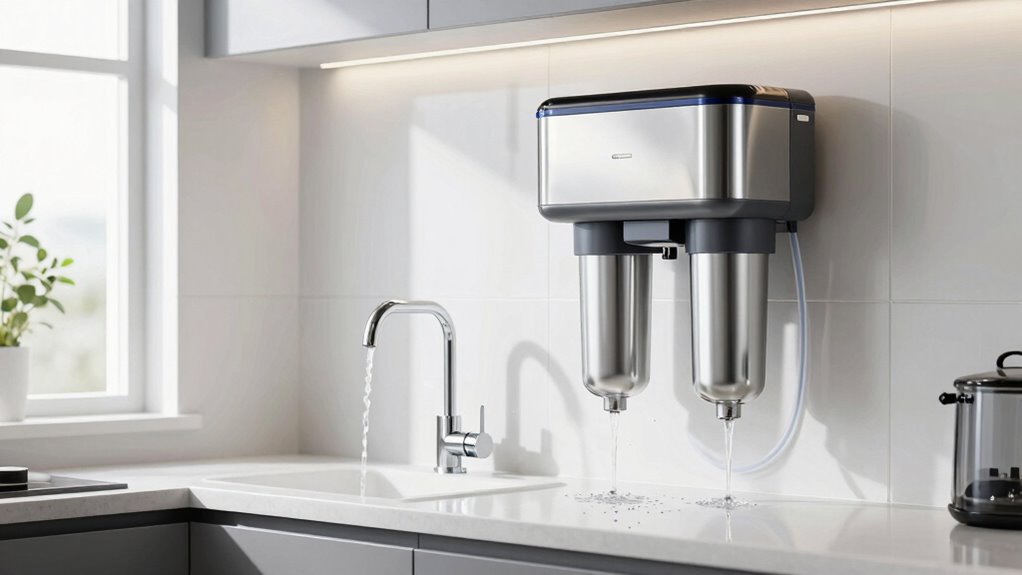

If you want clean, safe water throughout your home with minimal fuss, a whole-house water filter is a great choice for everyday use. It removes chlorine, sediment, and improves water quality for appliances and skin. If your focus is on drinking water with high purity—removing heavy metals, bacteria, or nitrates—then a reverse osmosis system is better, though it involves more maintenance. To decide which fits your needs best, explore the details behind each option.
Key Takeaways
- Whole-house filters treat water at the entry point, benefiting all taps, while RO systems focus on providing high-purity drinking water.
- Whole-house filters are easier and quicker to install and maintain compared to the more complex, under-sink RO systems.
- RO systems remove a broader range of contaminants, including heavy metals and microbes, for highly pure drinking water.
- Whole-house filters improve water clarity and reduce chlorine and sediment, protecting appliances and skin; RO enhances water safety and taste.
- Choice depends on water quality needs, with whole-house filters suited for general treatment and RO for drinking water purity.
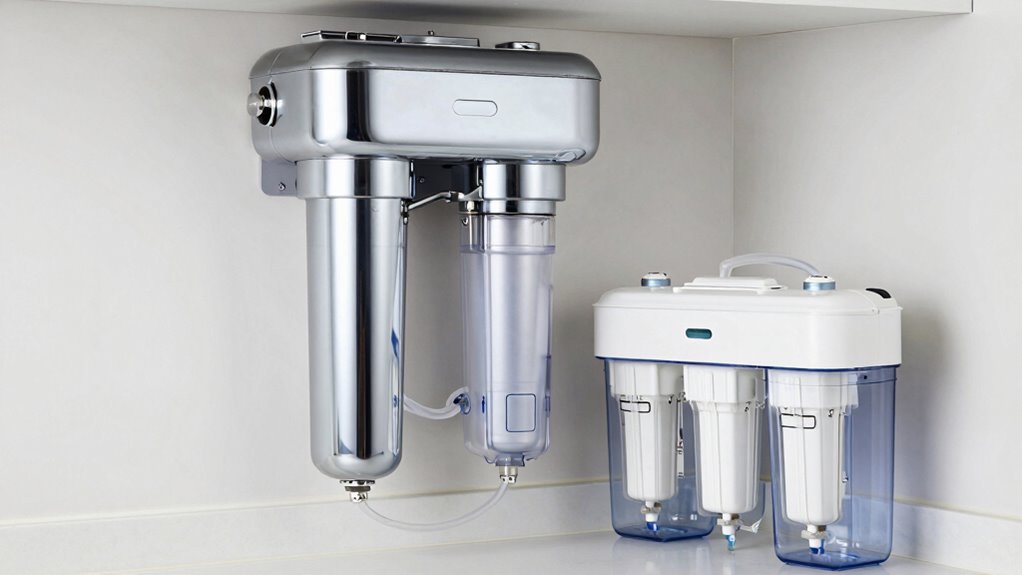
When choosing a water filtration system for your home, understanding the differences between a whole-house water filter and reverse osmosis can help you make an informed decision. Both systems aim to improve water quality, but they do so in distinct ways, affecting aspects like taste, safety, and installation process. A whole-house water filter is designed to treat water as it enters your home, providing clean water from every tap. It typically uses filters, activated carbon, or other media to remove chlorine, sediment, and certain contaminants, ensuring that the water you use daily is free from common impurities. The installation process for these systems is generally straightforward, often involving attaching the unit to your main water line, either in the basement, garage, or utility area. This setup usually requires minimal plumbing adjustments and can be completed in a few hours, making it accessible even for DIY enthusiasts.
In contrast, reverse osmosis (RO) systems focus on producing extremely pure water by forcing tap water through a semi-permeable membrane that filters out a broad range of contaminants, including heavy metals, salts, and microbes. They are often installed under the sink or as a dedicated unit for drinking water, meaning they don’t treat water used for bathing or laundry. The installation process for reverse osmosis is more involved because these systems require additional components like storage tanks and multiple filters, along with precise plumbing connections. It’s advisable to have a professional handle the installation to ensure proper setup and maximum performance. While the initial setup may take longer and be more complex, the result is water that meets high purity standards, often improving taste and safety for drinking and cooking. Additionally, system maintenance** is an important aspect to consider, as neglecting filter replacements can compromise water quality. Regular monitoring of filters and membranes ensures optimal performance and prevents the buildup of contaminants. Proper maintenance is also essential to prevent the growth of bacteria within the system, which can affect water safety. Moreover, understanding the types of contaminants** removed by each system can help you tailor your choice to your specific needs.
When considering water quality, think about what you need from your system. Whole-house filters are excellent for removing chlorine, sediment, and improving overall water clarity, which benefits your appliances and skin. Reverse osmosis provides a higher level of purification, making it ideal if you’re concerned about contaminants like lead, nitrates, or bacteria. Additionally, color accuracy can be affected by the purity of the water used in your appliances and filters, influencing overall system performance. Keep in mind that while whole-house filters require less maintenance and are easier to install, they don’t typically remove dissolved salts or microbes as effectively as RO systems. Conversely, reverse osmosis units may require regular filter and membrane replacements, but they deliver exceptionally pure water for consumption. Ultimately, your choice depends on your specific water quality concerns, budget, and how much effort you’re willing to invest in installation and maintenance. If you want extensive treatment for your entire home with minimal hassle, a whole-house filter might be best. If your priority is drinking water with the highest purity, then reverse osmosis could be the superior choice. Considering water testing before selecting a system can help you determine which contaminants are present and guide your decision-making process. It’s also helpful to evaluate your water quality to identify the most suitable system based on your needs.

Express Water Whole House Water Filter System, Ultimate Protection, 3-Stage
- Whole House Filtration: 3-stage filtration for entire home
- Improves Water Quality: Reduces chlorine, heavy metals, and scale
- Durable Design: Stainless steel bracket and free-standing frame
As an affiliate, we earn on qualifying purchases.
As an affiliate, we earn on qualifying purchases.
Frequently Asked Questions
How Long Does Installation Typically Take for Each System?
Installation usually takes about 2 to 4 hours for a whole-house water filter, depending on your home’s plumbing complexity. Reverse osmosis systems often take 4 to 6 hours, since they involve more components. After installation, you’ll want to follow maintenance schedules for each, which impacts the cost comparison over time. Both systems require regular filter changes, but reverse osmosis tends to have more frequent upkeep, influencing long-term expenses.
What Maintenance Is Required for Whole-House Filters Versus Reverse Osmosis?
Think of maintaining your water system like tending a garden. For whole-house filters, you’ll need to replace filters periodically—usually every 6 to 12 months—to guarantee ideal water quality and system compatibility. Reverse osmosis units require membrane and filter changes roughly every 6-12 months as well. Regular flushing and sanitizing keep both systems functioning smoothly, preserving water quality and preventing buildup that could compromise system compatibility.
Are There Any Health Risks Associated With Either System?
Health concerns are minimal with both systems when properly maintained. Whole-house filters primarily remove sediment and large contaminants, while reverse osmosis systems excel at chemical removal, including harmful pollutants. However, if filters aren’t regularly replaced or systems aren’t maintained correctly, bacteria or contaminants could develop, posing health risks. Always follow manufacturer guidelines and schedule regular maintenance to guarantee both systems effectively protect your health without introducing new risks.
Can These Systems Improve Water Taste and Odor?
Like a revitalizing gust, these systems can notably improve water taste and odor. They enhance taste by removing chlorine, sediments, and other impurities, giving your water a cleaner, more invigorating flavor. Odor reduction is achieved by filtering out sulfur and organic compounds that create unpleasant smells. Whether you choose a whole-house filter or reverse osmosis, both effectively elevate water quality, making every sip more enjoyable.
What Is the Typical Lifespan of Each Filtration System?
You’ll likely get about 10 to 15 years from a whole-house water filter, depending on filtration efficiency and system compatibility, with regular maintenance extending its lifespan. Reverse osmosis units typically last around 10 years, with membrane replacements necessary for peak performance. Regularly check filters and membranes, as their efficiency impacts water quality. Proper maintenance ensures both systems work effectively, providing clean, great-tasting water throughout your home.
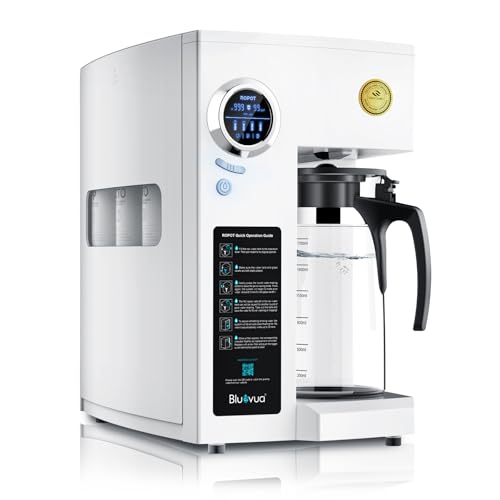
Bluevua RO100ROPOT Countertop Reverse Osmosis Water Filter System
- 6-Stage Filtration with UV: Removes contaminants and enriches minerals
- Countertop, No Installation: Plug-and-play design with glass carafe
- Power and Water Saving: Auto standby mode and 2:1 pure to drain ratio
As an affiliate, we earn on qualifying purchases.
As an affiliate, we earn on qualifying purchases.
Conclusion
Choosing between a whole-house filter and reverse osmosis depends on your needs, much like selecting a sword or a shield in a battle. If you seek extensive protection, a whole-house filter acts as your armor, guarding every tap. For pure, crystal-clear drinking water, reverse osmosis is your trusty sword, slicing through impurities. Remember, the right choice guarantees your home’s water is as pure and invigorating as a spring, echoing the timeless quest for purity and health.

iSpring RCC7AK-BN NSF Certified, 75 GPD, Alkaline 6-Stage Reverse Osmosis System, pH+ Remineralization RO Water Filter System Under Sink Patented Top-Mounted Faucet Design for Easy Installation
- Patented Top-Mounted Faucet Design: Easy above-sink installation
- Mineral Boost with AK Stage: Adds essential minerals and balanced pH
- Transparent Filter Housing: Monitor contaminant buildup easily
As an affiliate, we earn on qualifying purchases.
As an affiliate, we earn on qualifying purchases.
iSpring RCC7AK-BN NSF Certified, 75 GPD, Alkaline 6-Stage Reverse Osmosis System, pH+ Remineralization RO Water Filter System Under Sink Patented Top-Mounted Faucet Design for Easy Installation
- Patented Top-Mounted Faucet Design: Easy above-sink installation
- Mineral Boost with AK Stage: Adds essential minerals and balanced pH
- Transparent Filter Housing: Monitor contaminant buildup easily
As an affiliate, we earn on qualifying purchases.
As an affiliate, we earn on qualifying purchases.