
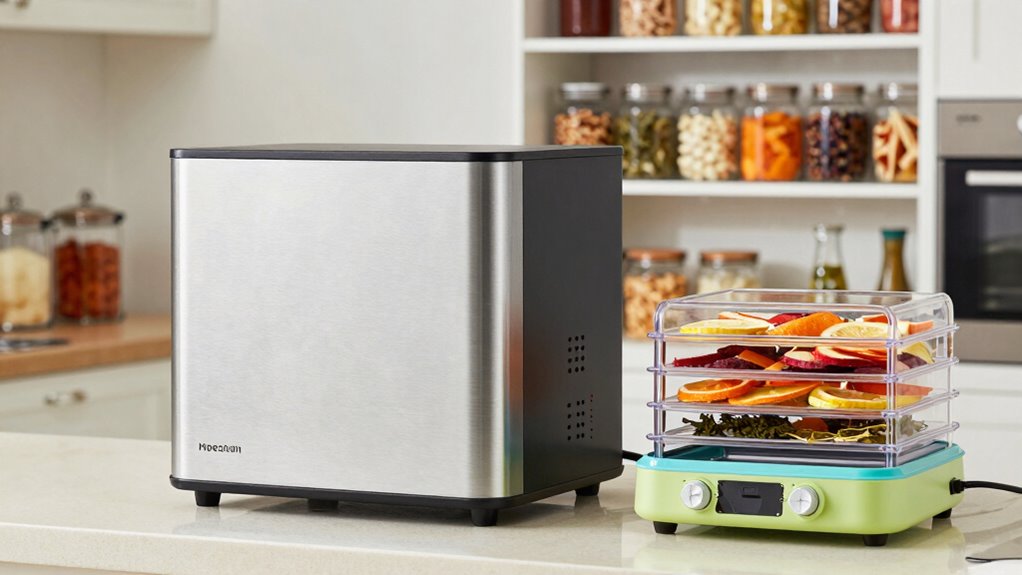

If you’re considering long-term food storage, freeze dryers typically offer better preservation of flavor, nutrients, and delicate textures by removing moisture in a vacuum without heat. Dehydrators are more affordable, faster, and easier to operate, making them ideal for sturdy foods like jerky and dried fruit. Both methods extend shelf life, but choosing the right one depends on your budget and preservation goals. Keep exploring to discover which method suits your needs best.

Get everyday essentials delivered free with Prime
- Fast, free delivery on millions of items
- Prime Video, Amazon Music and more included
- Member-only deals all year
Key Takeaways
- Freeze dryers preserve more nutrients, flavor, and delicate textures compared to dehydrators.
- Dehydrators are more cost-effective, energy-efficient, and easier to operate for long-term storage.
- Freeze-dried foods have a longer shelf life and better moisture resistance than dehydrated foods.
- Dehydration is suitable for sturdy foods like jerky and dried fruits, while freeze drying excels with delicate items.
- Choice depends on budget, available equipment, and preservation goals for long-term food storage.
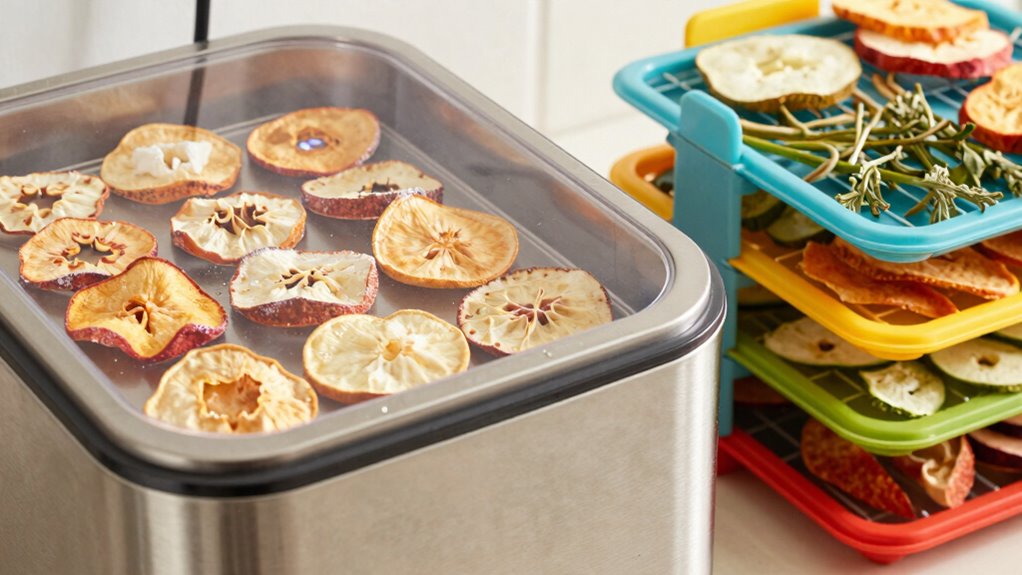
Have you ever wondered which method—freeze drying or dehydrating—is best for long-term food storage? Both techniques aim to extend the shelf life of your food, but they do so in different ways that influence flavor preservation and nutrient retention. Freeze drying involves freezing the food first, then placing it in a vacuum chamber where almost all the water is removed through sublimation. This process preserves much of the food’s original texture, flavor, and nutrients because it minimizes the heat exposure that can degrade delicate compounds. As a result, freeze-dried foods tend to retain their natural flavor more effectively and preserve a higher percentage of essential nutrients like vitamins and antioxidants. When you rehydrate freeze-dried foods, they often taste closer to fresh, with a texture that’s more familiar compared to dehydrated options.
Freeze drying preserves flavor and nutrients by minimizing heat exposure, keeping foods closer to their fresh taste.
Dehydrating, on the other hand, uses low heat and air circulation to evaporate moisture from food over several hours or days. This method is generally simpler and more affordable but can sometimes impact flavor and nutrients. The heat involved in dehydration can cause some loss of sensitive vitamins, such as vitamin C, and may alter the food’s natural taste slightly, especially if dried at higher temperatures. However, dehydration still does a good job at reducing water content enough to prevent microbial growth, making it suitable for long-term storage. It’s particularly effective for preserving foods with sturdy textures, like jerky, dried fruit, or herbs, where flavor concentration can actually improve because of the moisture loss.
If your priority is maximum flavor preservation and nutrient retention, freeze drying is the superior choice, especially for fruits, vegetables, and dairy products. It maintains the original flavor profile and nutritional content much better than dehydration. But if you’re looking for a cost-effective, energy-efficient method that’s easier to operate, dehydration is a solid option. It’s also worth noting that dehydrated foods tend to be lighter and more compact, making them easier to store and transport.
Ultimately, the best choice depends on your specific needs, budget, and the types of foods you want to preserve. Freeze drying offers superior quality, particularly for delicate items, but requires more investment and equipment. Dehydration is accessible and practical for everyday storage, especially for tougher foods. Both methods can effectively extend your food’s shelf life, but understanding how they impact flavor and nutrients helps you decide which approach fits your long-term storage goals best.
freeze dryer for food preservation
As an affiliate, we earn on qualifying purchases.
As an affiliate, we earn on qualifying purchases.
Frequently Asked Questions
Which Method Preserves More Nutrients Over Time?
You’ll find that freeze drying preserves more nutrients over time because it removes moisture quickly at low temperatures, maintaining nutrient retention and flavor preservation better than dehydrating. Dehydrators use heat, which can break down sensitive vitamins and affect flavor. If your priority is long-term storage with maximum nutrient retention and flavor, freeze drying is the superior method. It keeps your food fresher and more nutritious for extended periods.
Are Freeze Dryers More Energy-Efficient Than Dehydrators?
Freeze dryers generally consume more energy than dehydrators due to their complex processes, making them less energy-efficient for long-term storage. However, they tend to have better equipment durability because they operate at lower temperatures and experience less wear and tear. If you’re prioritizing energy savings, a dehydrator might be better, but if durability and nutrient preservation matter more, a freeze dryer could be worth the extra energy use.
Can Both Methods Handle Large Quantities of Food Simultaneously?
You can handle large quantities of food at once with both methods, but batch size and processing speed vary. Freeze dryers typically process smaller batches more slowly but preserve more nutrients and flavor. Dehydrators often handle bigger batches faster, making them ideal for bulk drying. So, if you prioritize speed and volume, a dehydrator might suit you better, while a freeze dryer suits those seeking quality and detailed preservation.
How Do Storage Requirements Differ After Processing?
After processing, your storage requirements differ mainly in packaging techniques and storage duration. Freeze-dried foods need airtight, moisture-proof containers to prevent freezer burn and maintain quality over extended periods, often years. Dehydrated foods, on the other hand, require lightweight, moisture-resistant packaging for shorter storage, typically months to a year. Proper packaging is essential to preserve flavor, texture, and nutritional value, regardless of the method you choose.
What Are the Initial Costs Compared to Long-Term Savings?
Your initial costs for a freeze dryer are higher, making it a significant investment upfront. However, a thorough cost analysis shows that long-term savings come from preserved food quality and reduced waste. Dehydrators cost less initially but may require more frequent replacements or produce lower-quality storage. The investment return for a freeze dryer is often better over time, especially if you prioritize food longevity and nutrient retention.
food dehydrator for long-term storage
As an affiliate, we earn on qualifying purchases.
As an affiliate, we earn on qualifying purchases.
Conclusion
Ultimately, choosing between a freeze dryer and a dehydrator depends on your long-term food goals. While some say freeze drying preserves more nutrients and flavor, others argue dehydration is more budget-friendly and easier to use. The truth? Both methods work well—just in different ways. So, pick what fits your needs and enjoy the peace of mind knowing your food will last longer, no matter which method you choose. It’s all about making your prepping simpler and more reliable.
As an affiliate, we earn on qualifying purchases.
As an affiliate, we earn on qualifying purchases.
Halloween Picks
halloween
As an affiliate, we earn on qualifying purchases.