
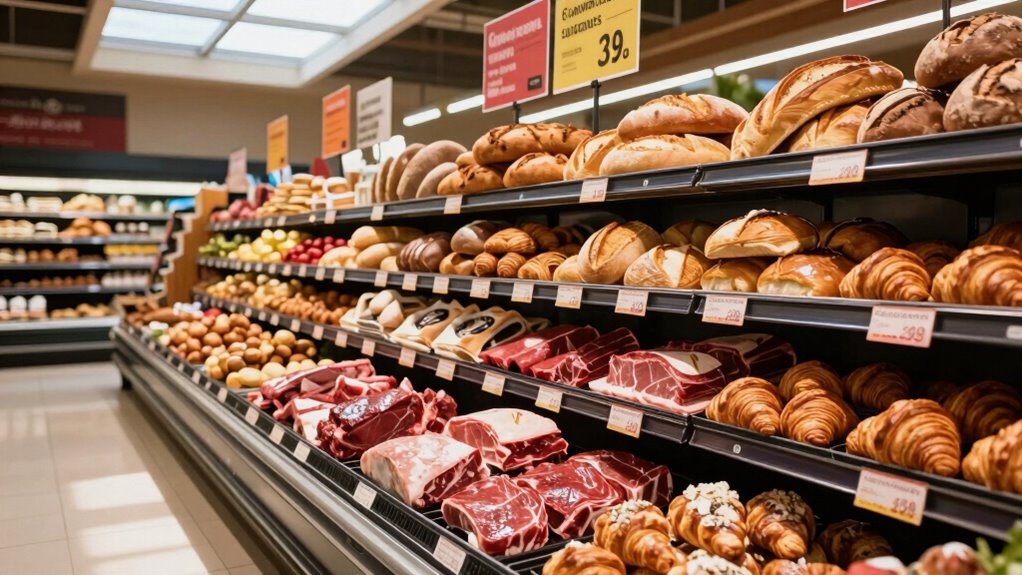

Knowing the best time for grocery markdowns can significantly reduce your shopping bills. The Master Grocery Checklist stands out for organizing your shopping efficiently, while Conquering the Grocery Game offers practical tips to spend less without sacrificing quality. The main challenge lies in balancing timing, planning, and knowing when discounts appear, which varies by store and region. Some tools help track prices, while others focus on coupon management, each with its own tradeoffs. Continue reading for a detailed breakdown of the top options and how they can help you maximize savings.

Get everyday essentials delivered free with Prime
- Fast, free delivery on millions of items
- Prime Video, Amazon Music and more included
- Member-only deals all year
Key Takeaways
- Product diversity ranges from comprehensive checklists to coupon tracking tools, addressing different shopping strategies.
- Top-ranked options combine ease of use with effective savings tracking, making them suitable for most shoppers.
- Price tracking and couponing tools often outperform static lists for timing markdowns, but may require more effort.
- Budget-focused buyers should prioritize tools that emphasize cost reduction over organization or planning.
- The best products balance usability, features, and price, with some premium options offering advanced insights for serious savers.


More Details on Our Top Picks
Master Grocery Checklist: Categorized Grocery Items, 8.5×11 Inches, 100 Pages
This checklist is ideal for shoppers who want to streamline their grocery trips with thorough organization. Compared to the other guides and books in this roundup, it excels in providing a large, easy-to-write format that keeps everything clear and accessible. However, since it’s purely a planner without tips on saving money or shopping strategies, it’s less useful for budget-focused buyers. Its extensive list and categorization help prevent forgotten items, but it offers no advice on cost-cutting or meal planning beyond listing. This pick is best for meticulous shoppers who prefer a tangible, organized approach to grocery trips, rather than those seeking budgeting advice.
Pros:- Helps organize and categorize grocery items for efficient shopping
- Large format allows for easy writing and readability
- Includes an extensive list of common groceries to cover most needs
Cons:- No features beyond basic checklists, limiting its utility
- No guidance on saving money or meal planning strategies
Best for: Individuals who want a detailed, easy-to-use tool to organize their grocery shopping and avoid missing items.
Not ideal for: Budget-conscious shoppers looking for money-saving tips or strategies, as this is purely an organizer.
- Size:8.5×11 Inches
- Pages:100
Our verdict“Best suited for organized shoppers who want a clear, large-format checklist for grocery trips without additional budget advice.”
Conquering the Grocery Game: Spend Less Without Eating Worse
This book stands out for offering actionable tips to cut grocery bills while maintaining quality, making it a strong companion for those comparing it to the more planning-focused options like the ‘Master Grocery Checklist.’ Unlike the checklist, it provides strategic advice on shopping smarter and meal planning to stretch every dollar. Its main drawback is the lack of detailed product recommendations, which might leave some readers wanting specific brand or item suggestions. It’s ideal for budget-conscious consumers who want to learn how to shop smarter without sacrificing food quality, but less so for those seeking a physical planner or detailed tracking tools.
Pros:- Provides practical, easy-to-understand money-saving tips
- Focuses on maintaining food quality while spending less
- Useful for shoppers seeking to improve their shopping habits
Cons:- Lacks detailed product or brand recommendations
- No customer reviews or ratings available, limiting credibility
Best for: Budget-conscious shoppers eager for practical savings strategies that do not require extensive planning tools.
Not ideal for: Shoppers who prefer detailed checklists or tracking tools, since this is primarily a strategic guide without organizational features.
Our verdict“A solid choice for budget-minded shoppers who want actionable advice to lower their grocery bills without sacrificing quality.”
The Weekly Grocery Shop: Plan Better, Eat Better, Spend Less
This book combines practical strategies for weekly shopping with tips to eat healthier and save money, making it a good alternative to the more generic ‘Food Inflation Cure.’ Unlike the grocery checklist or the coupon tracker, it emphasizes planning to improve overall shopping efficiency and healthier eating habits. Its downside is the absence of specific recipes or product suggestions, which could limit direct application. It’s best suited for those who want to enhance their weekly shopping routines and make smarter, healthier choices on a budget, rather than those seeking detailed coupon tracking or lists.
Pros:- Offers practical strategies for weekly shopping and meal planning
- Helps save money while encouraging healthier eating habits
- Provides actionable insights to improve shopping efficiency
Cons:- Does not include specific recipes or product suggestions
- May lack detailed, step-by-step instructions for all users
Best for: Consumers looking to improve their weekly grocery planning and incorporate healthier, budget-friendly habits.
Not ideal for: Shoppers who prefer detailed shopping lists, coupon tracking, or specific product recommendations, since it focuses on strategies rather than lists or discounts.
Our verdict“Ideal for those seeking to organize their weekly grocery trips with health-conscious, budget-friendly strategies.”
Couponing Tracker: Savings By Store, Weekly Log, Shopping List, Notes & Calculations
This couponing tracker is designed for shoppers who want to methodically record store-specific deals, savings, and shopping details. Compared to the more strategy-focused ‘Conquering the Grocery Game,’ it emphasizes tracking and maximizing coupons, which can significantly boost savings if used consistently. Its main limitation is the absence of detailed product features or specific discount offers, making it less useful for casual shoppers or those new to couponing. It’s best for dedicated coupon users who want a comprehensive way to organize and analyze their savings efforts, but not for shoppers seeking overall budgeting or planning tools.
Pros:- Helps organize grocery savings and store-specific deals
- Includes multiple sections for comprehensive tracking
- Aids in maximizing savings and shopping efficiency
Cons:- Lacks detailed product features or specific discounts
- No customer reviews to validate its effectiveness
Best for: Coupon enthusiasts who want a dedicated log to track their savings and store deals for maximum discounts.
Not ideal for: Casual shoppers or those unfamiliar with couponing, since it requires active engagement with coupons and detailed tracking.
Our verdict“Best suited for serious couponers who want a structured way to track and maximize their grocery savings efforts.”
Food Inflation Cure: The Frugal Budget Guide to Slashing Your Grocery Bill Without Going Hungry
This guide targets shoppers eager to cut grocery costs without sacrificing nutrition. Unlike the more general planning and tracking tools, it offers practical, easy-to-follow tips for reducing expenses while eating healthily. Its main drawback is the lack of detailed nutritional data or specific recipes, which might limit its practical application for those wanting comprehensive meal plans. It makes the most sense for budget-conscious consumers who need straightforward advice to keep their diet nutritious and affordable, rather than those seeking detailed nutritional breakdowns or meal suggestions.
Pros:- Provides practical, actionable tips for reducing grocery bills
- Focuses on maintaining healthy eating habits
- Easy-to-follow strategies suitable for most budgets
Cons:- Lacks detailed nutritional information or specific recipes
- No detailed product or brand recommendations
Best for: Health-conscious budget shoppers who want straightforward, actionable tips to reduce grocery expenses without sacrificing nutrition.
Not ideal for: Consumers seeking detailed meal plans or nutritional analyses, as it focuses on broad strategies and budget tips.
Our verdict“A good choice for budget-focused shoppers who want simple, effective ways to eat healthily without overspending.”
Grocery Price Book – Beating Inflation a Dollar at a Time
This grocery price book stands out for its straightforward approach to helping consumers monitor and compare prices over time, making it ideal for those seeking to beat inflation through better budgeting. Unlike Grocery Game Plan, which offers detailed tracking tools, this book provides a simple, manual method that requires no digital setup, but it lacks advanced features for automatic updates. It’s best suited for budget-conscious shoppers who prefer a tangible record, though the limited information makes it less ideal for those wanting comprehensive digital tools. Pros: Helps track and compare grocery prices; Assists in budgeting and saving money; Easy to use with minimal setup; Encourages disciplined shopping habits. Cons: No detailed features or digital integration; Limited to manual entry; Lacks in-depth analysis or alerts.
Verdict: This pick makes the most sense for shoppers who want a basic, physical tool to monitor prices and avoid overpaying during markdown seasons.Pros:- Helps track and compare grocery prices
- Assists in budgeting and saving money
- Easy to use with minimal setup
Cons:- No detailed features or digital integration
- Limited to manual entry
- Lacks in-depth analysis or alerts
Best for: Budget-conscious shoppers who prefer manual record-keeping and simple price comparisons
Not ideal for: Tech-savvy shoppers seeking digital tools or automated tracking
- Pages:120
- Size:6 x 9 inches
Our verdict“Ideal for traditional shoppers wanting a straightforward way to keep tabs on grocery prices during markdown season.”
America’s Cheapest Family: Strategies to Cut Your Grocery Bill in Half
This book makes the list for its practical, coupon-free methods to slash grocery bills, appealing to shoppers who want straightforward tips without relying on coupon clipping. Compared to Extreme Couponing for Beginners, which focuses solely on coupons, this guide offers a broader range of strategies that can be more accessible for everyday shoppers. However, the effectiveness of its advice can vary based on individual circumstances, and it lacks detailed product features or digital tools. It’s best for families seeking cost-cutting tips that don’t depend on coupons but may not suit those who prefer high-tech savings solutions. Pros: Offers practical and innovative money-saving strategies; Helps reduce grocery expenses significantly; Easy-to-implement tips for everyday shopping; Focuses on sustainable, coupon-free savings. Cons: No specific product features or tools; Effectiveness depends on individual circumstances; May require significant lifestyle adjustments.
Verdict: This guide suits budget-conscious families ready to adopt new habits for lower grocery bills without coupon dependency.Pros:- Offers practical and innovative money-saving strategies
- Helps reduce grocery expenses significantly
- Easy-to-implement tips for everyday shopping
Cons:- No specific product features or tools
- Effectiveness depends on individual circumstances
- May require lifestyle adjustments
Best for: Families willing to change shopping habits for substantial savings without using coupons
Not ideal for: Coupon enthusiasts or shoppers who rely heavily on digital tools and apps
Our verdict“Best for families seeking practical, coupon-free methods to cut grocery costs during markdown periods.”
Extreme Couponing for Beginners: The Step-by-Step Guide to Slashing Your Grocery Bill and Saving Thousands Per Year
This book provides a clear, step-by-step guide for beginners eager to learn effective couponing, making it a valuable resource compared to Who Knew? Extreme Coupons which is more comprehensive but also more detailed. While it focuses on coupon strategies that can save thousands annually, it doesn’t include digital tools or specific product tracking features. Its straightforward instructions suit those new to couponing, but experienced savers may find it too basic. For anyone serious about couponing, this offers a reliable starting point, though it doesn’t provide the same breadth of online resources as Who Knew?. Pros: Provides clear, step-by-step instructions for beginners; Focuses on saving money on groceries; Potential to save thousands per year; Easy to follow. Cons: No specific product features or tools; Limited to couponing advice; Not suitable for advanced couponers.
Verdict: Ideal for grocery newcomers eager to learn couponing basics and maximize savings during markdown sales.Pros:- Provides clear, step-by-step instructions for beginners
- Focuses on saving money on groceries
- Potential to save thousands per year
Cons:- No specific product features or tools
- Limited to couponing advice
- Not suitable for advanced couponers
Best for: Beginners looking for a simple, guided approach to couponing and savings
Not ideal for: Experienced couponers or those seeking digital tracking tools
Our verdict“Perfect for newcomers eager to start couponing and save during grocery markdowns.”
Grocery Game Plan: Track Prices, Save Smart – Grocery Price Tracking Book
This 120-page book makes the list for its focused approach to manual price tracking, helping shoppers compare and monitor store prices effectively. Unlike digital apps, it offers portability and simplicity, which benefits those wary of tech solutions. Its compact size allows for easy transport, but it’s limited by the absence of digital features or automated updates. This makes it suitable for budget-conscious shoppers who prefer paper records over apps, but less ideal for those needing real-time alerts or extensive data analysis. Compared with Grocery Price Book, this provides a more structured format, but with less flexibility. Pros: Helps track and compare grocery prices easily; Compact 6 x 9 inch size for portability; Designed for manual price comparison; Encourages disciplined shopping habits. Cons: No digital or automated features; Limited to manual entry; Lacks online resources or additional tools.
Verdict: Best suited for shoppers who prefer a straightforward, portable manual tracking system for markdown season savings.Pros:- Helps track and compare grocery prices easily
- Compact 6 x 9 inch size for portability
- Ideal for budget-conscious shoppers
Cons:- No digital or automated features
- Limited to manual entry
- Lacks online resources or additional tools
Best for: Budget-conscious shoppers who favor paper tracking over digital solutions
Not ideal for: Tech-savvy users seeking real-time data and automatic updates
- Pages:120
- Size:6 x 9 inches
Our verdict“Great for shoppers who want an easy, portable way to manually monitor prices during markdowns.”
Who Knew? Extreme Coupons: Your Step-by-Step Guide to Saving Money on Groceries
This guide stands out for its extensive directory of printable coupons and detailed step-by-step instructions, making it ideal for those who want to maximize savings through coupon clipping. Unlike Extreme Couponing for Beginners, which emphasizes beginner techniques, this offers a more comprehensive approach for dedicated couponers. Its focus on printable coupons makes it less useful for digital-only shoppers or those who prefer online coupon apps. Since it lacks specific pricing features or real-time tracking tools, it’s best used alongside other resources during markdown sales. This book is perfect for highly motivated couponers aiming to extract the most savings, but not for casual shoppers. Pros: Includes a directory of hundreds of printable coupons; Provides practical, detailed savings strategies; Helps maximize grocery discounts; Suitable for dedicated couponers. Cons: No digital tracking or price comparison features; Limited content details; No real-time updates or app integration.
Verdict: Best for coupon enthusiasts who want a detailed guide to stacking printable coupons during markdown periods.Pros:- Includes a directory of hundreds of printable coupons
- Provides practical, detailed savings strategies
- Helps maximize grocery discounts
Cons:- No digital tracking or price comparison features
- Limited content details
- No real-time updates or app integration
Best for: Dedicated couponers eager to leverage printable coupons for maximum savings
Not ideal for: Casual shoppers or those seeking digital, automated savings tools
Our verdict“Ideal for serious couponers aiming to combine printable coupons with markdown deals for maximum savings.”

How We Picked
These products were evaluated based on their ability to help consumers identify the best times for grocery markdowns, considering factors like usability, features, and value. We prioritized tools that offer clear insights into discount patterns, ease of tracking, and overall cost-effectiveness. Products that provide comprehensive guidance or automation for timing savings scored higher, while those with limited functionality or steep learning curves ranked lower. Our ranking reflects a blend of practicality and depth, ensuring each pick serves a specific shopper need and offers a meaningful advantage in timing grocery discounts.Factors to Consider When Choosing Time For Grocery Markdowns
Choosing the right tool or method to find grocery markdowns depends on your shopping habits and goals. Consider whether you prefer manual planning, automated tracking, or a combination of both. The following factors will help you select the best option for your needs, highlighting what to look for and common pitfalls to avoid.Ease of Use and Learning Curve
Some products, like simple checklists, are straightforward but may lack advanced features. Others, like price tracking apps, offer automation but can be complex to set up. Decide how much time you want to invest and choose accordingly. Overly complicated tools may discourage consistent use, reducing their effectiveness.
Features and Data Accuracy
Effective tools should provide accurate, timely data on markdown cycles, store-specific trends, and coupon opportunities. Beware of products that rely on outdated or generic data, as they may lead you to miss real savings. Look for options that update regularly and include multiple store options if you shop at different locations.
Integration and Compatibility
If you already use budgeting or shopping apps, choosing a compatible tool can streamline your process. Some products integrate with digital calendars or reminders, helping you plan your shopping trips around markdown days. Compatibility reduces manual effort and increases the likelihood of consistent use.
Cost vs. Savings Potential
While some tools are free or low-cost, others require subscriptions or purchases. Weigh the upfront cost against potential savings; premium products often offer deeper insights or automation that can justify their price. Avoid overspending on features you won’t use, but consider investing in a robust tool if you shop frequently or aim to maximize discounts.
Frequency of Store Promotions
Understanding how often your favorite stores mark down items is key. Some stores have predictable cycles—weekly or biweekly—making simple schedules effective. Others have irregular sales, benefiting more from tools that track price histories. Recognizing your store’s patterns helps tailor your approach for better timing.
Common Mistakes to Avoid
One common mistake is relying solely on memory or guesswork, missing out on optimal markdown periods. Another is ignoring smaller discounts or not tracking prices consistently. Overextending on paid tools without clear benefits can also lead to frustration. Focus on tools that match your shopping style and provide actionable insights.
Frequently Asked Questions
How can I tell when grocery stores typically markdown items?
Most grocery stores follow predictable cycles, such as weekly markdowns on perishable goods or store-wide sales on certain days. Many stores also reduce prices on items nearing their expiration date or during seasonal clearances. Using a dedicated price tracking tool or observing your favorite stores’ patterns over time can help identify these regular discount periods.
Are digital tools or apps worth investing in for grocery markdowns?
Yes, if you shop regularly and want to maximize savings, digital tools can offer valuable insights into price trends and markdown timing. They often automate the process of tracking discounts, saving you time and effort. However, selecting a user-friendly option that matches your shopping frequency and preferences is key to getting the most value from these apps.
Can I rely on coupons alone to save on groceries?
Coupons can be effective but often only apply to specific brands or products. Relying solely on coupons may limit your savings if discounts are infrequent or product-specific. Combining coupons with knowledge of store markdown cycles generally yields better results, as you can buy items at their lowest prices without being tied to particular brands.
What should I avoid when trying to time grocery markdowns?
Avoid making impulsive purchases based on temporary discounts or relying on memory without tracking. Also, steer clear of ignoring smaller markdowns or discounts on less-needed items, which can add up over time. Planning ahead and using reliable tracking methods can prevent overspending and help you capitalize on genuine deals.
Is it better to shop at specific stores for markdowns or multiple stores?
Shopping at multiple stores can increase your chances of finding markdowns, especially if each store has different cycles. Focus on stores where you frequently buy essentials and observe their discount patterns. Using a price tracking tool across several stores can help you decide where to shop for the best markdowns, maximizing your savings overall.
Conclusion
For most casual shoppers, a straightforward price tracking app or a well-organized checklist offers enough guidance to capitalize on markdowns without added complexity. Budget-conscious buyers should focus on tools that highlight the best discounts and store cycles, making Grocery Price Book or Extreme Couponing for Beginners ideal picks. If you prefer a comprehensive, all-in-one solution, the Couponing Tracker balances ease of use with detailed savings tracking. Serious savers or those with complex shopping routines might opt for premium options that provide deep insights into store patterns. Ultimately, your choice depends on how much time and effort you want to dedicate to timing your grocery discounts.
As an affiliate, we earn on qualifying purchases.Halloween Picks
halloween