

TL;DR

Get everyday essentials delivered free with Prime
- Fast, free delivery on millions of items
- Prime Video, Amazon Music and more included
- Member-only deals all year
A Meduza summary of Ukrainska Pravda reporting describes how residents and institutions in Kyiv, Odesa, Dnipro, Zaporizhzhia and Kharkiv are adapting to frequent Russian air attacks. The report details disruptions to schools, transport, healthcare and businesses, alongside efforts to keep services and cultural life operating. Some details, including the supplied account of Odesa transport, are incomplete.
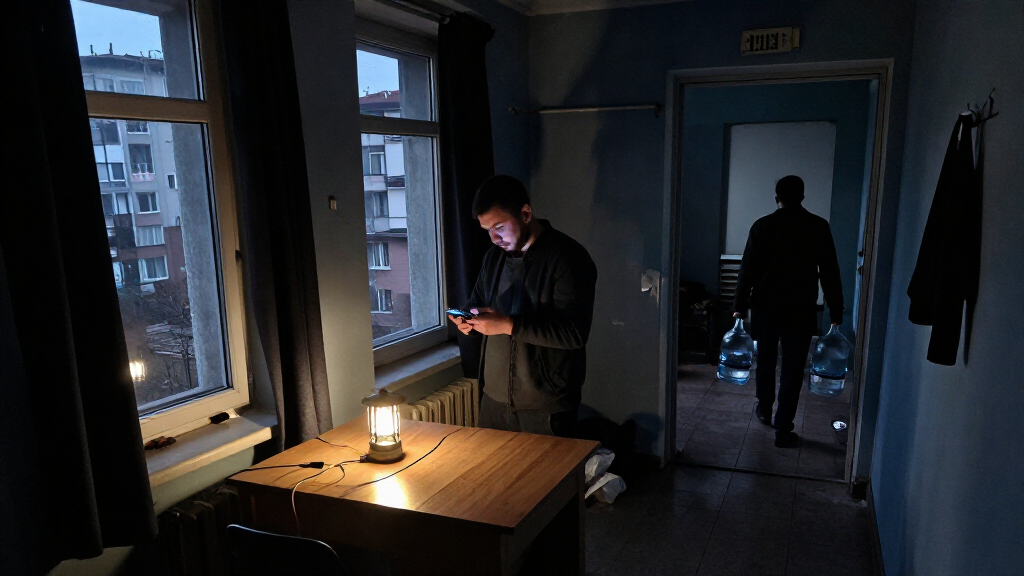
Frequent Russian air attacks and alerts are reshaping daily life in five major Ukrainian cities, according to a Meduza summary of reporting by Ukrainska Pravda and regional outlets. The report describes businesses staying open in some areas, schools moving lessons underground or online, and transport and healthcare services adjusting operations as residents face repeated threats.
In Kharkiv, near the front line, sirens sound about 10 times a day on average, the report says. Factories and public transport continue operating during alerts, although transport runs less often and rides are free. Some shops close, while malls may keep operating; one mall has rented store space in its parking area, which is considered a shelter. Children study online or in underground schools. An underground hospital is being built at the regional clinical hospital, while attacks and wounded arrivals from the front are straining care and leading surgeons to postpone scheduled operations.
In Zaporizhzhia, the report says almost all large shopping malls have been destroyed, while smaller neighborhood centers remain open. The Zaporizhstal steel plant, the city’s largest employer, stopped operating after missile strikes in September. The city has 10 underground schools, and most of its 92 schools combine in-person and remote lessons. After first-person-view drones attacked public transport at least twice in September, minibuses serving the nearby Kushuhum community began using metal mesh protection. They no longer reach the community’s southernmost outskirts, closest to the front.
Dnipro’s air raid alerts were issued five times as often in September 2026 as in September 2025, according to the report. Some malls close when there is a threat; others assess the danger. Public transport continues, but rail services can be delayed or canceled. In Odesa, large malls and retail chains suspend operations during missile threats, while many stores continue through drone threats. Businesses face repair and backup-power costs, and some reopen soon after damage. School evacuations to shelters disrupt lessons in Odesa and other cities where in-person classes continue.
How Alerts Reshape Essential Services
The reporting shows how a sustained threat affects more than immediate safety. Repeated evacuations interrupt education, while attacks and backup needs put pressure on health services, businesses and transport. In Zaporizhzhia, damage to the city’s largest employer has also halted a major industrial operation.
Residents’ adaptations help explain how daily routines continue under threat, but they do not remove the danger. In Dnipro, limited shelter availability means some people use the two-wall rule and seek shelters mainly when ballistic missiles threaten or explosions are heard. The report says the city has not seen a large-scale exodus; moving costs and concern about losing work are among the reasons people stay.
As an affiliate, we earn on qualifying purchases.
Five Cities, Different Risks
The report focuses on Kyiv, Odesa, Dnipro, Zaporizhzhia and Kharkiv, drawing on Ukrainska Pravda reporting with help from regional outlets. It describes conditions during a period when, according to the source material, Russia began using jet-powered drones extensively in late summer 2026. The supplied account says air alerts have become frequent and strikes have hit sites including factories, warehouses, train stations, shopping malls, business centers, gas stations and kindergartens.
The cities face different levels and forms of danger. Kharkiv and Zaporizhzhia are described as close to the front line. In Dnipro, the report identifies the city as a departure point for people traveling from other places, including Zaporizhzhia, who may need to take a bus before boarding a train. Zaporizhzhia and Dnipro also receive people displaced from areas nearer the front.
Despite the attacks, cultural venues continue operating in Zaporizhzhia, where the report says theaters, cinemas and a philharmonic hall draw sizable crowds. In Dnipro, theater performances pause during alerts so audiences can evacuate to basements. These examples describe local practices, not a uniform response across all institutions.
“Even during an attack, life on the streets carries on at the same pace as long as the strike isn’t too close.”
— Ukrainska Pravda, as quoted in Meduza’s summary
As an affiliate, we earn on qualifying purchases.
The Limits of the Available Reporting
The supplied source material does not provide a complete account of Odesa’s transport response; its description ends as it begins that section. It also does not give a full city-by-city count of casualties, damage, alert duration or the number of people affected. The report summarizes local reporting and examples, so it does not establish how common each adaptation is across every neighborhood or institution.
Some figures have specific comparisons: Dnipro’s September 2026 alert frequency is reported as five times the level a year earlier, while Kharkiv’s siren figure is an average per day. The source provides no broader baseline for several other observations, including how frequently facilities are struck or how many operations are postponed.
As an affiliate, we earn on qualifying purchases.
Services Continue Under Air Threats
The reporting describes ongoing adaptations rather than a single announced policy or next milestone. Schools, health facilities, businesses and transport providers will continue making decisions around alerts and perceived threat levels, according to the practices outlined in the report. In Zaporizhzhia, underground schools offer a way to continue lessons during alerts, while construction of an underground hospital in Kharkiv is still underway.
Further reporting would be needed to establish how these arrangements change, whether damaged operations resume, and how complete the account of Odesa transport is. The source material does not specify a timetable for those developments.
As an affiliate, we earn on qualifying purchases.
Key Questions
Which cities does the report cover?
It covers Kyiv, Odesa, Dnipro, Zaporizhzhia and Kharkiv, drawing on Ukrainska Pravda reporting and regional outlets.
How are schools adapting?
Some children study online or in underground schools. In cities where in-person lessons continue, alerts can send students to shelters and disrupt class schedules.
What has happened to transport?
Public transport continues during alerts in Kharkiv and Dnipro, though services face constraints. Rail journeys from Dnipro can be delayed or canceled. In Zaporizhzhia, some minibuses use metal mesh after drone attacks, and no longer serve the southernmost outskirts of Kushuhum.
Why has Dnipro not seen a large-scale exodus?
The report says moving costs money and residents may fear losing their jobs. It also describes Dnipro as a destination for people displaced from areas closer to the front.
What remains unknown from the supplied report?
The supplied account cuts off during its description of Odesa transport. It also does not provide comprehensive casualty, damage or disruption totals for all five cities.
Source: rss
Fall Picks
fall essentials
As an affiliate, we earn on qualifying purchases.