
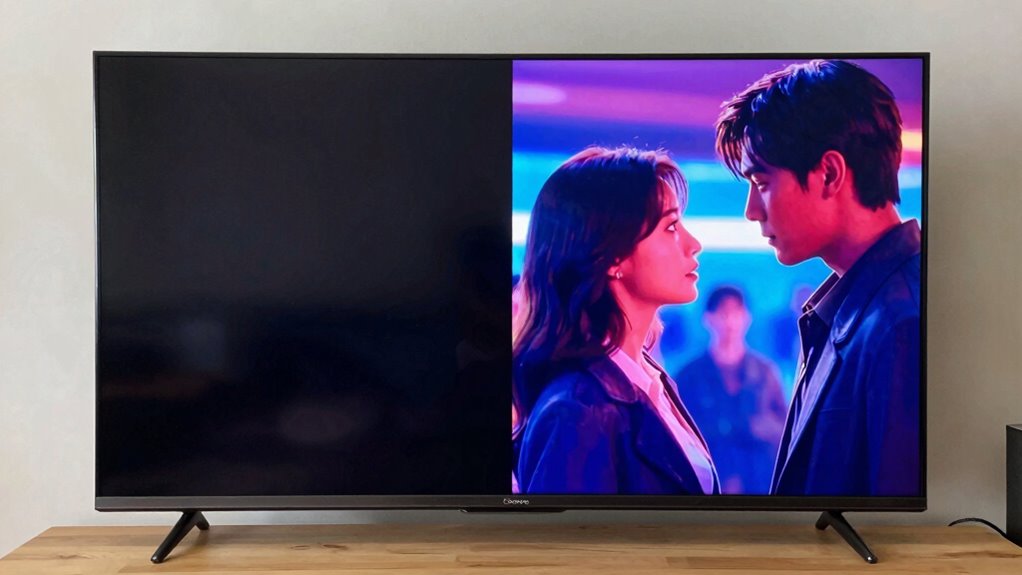

If you love movies and casual viewing, an OLED TV offers richer colors, deeper blacks, and better contrast, especially in dark scenes, creating a more immersive experience. It’s perfect if picture quality and cinematic detail matter most, though it comes at a higher price. LED TVs are budget-friendly and work well in well-lit rooms, making them suitable for everyday use. To find out which option fits your needs best, keep exploring the details below.

Get everyday essentials delivered free with Prime
- Fast, free delivery on millions of items
- Prime Video, Amazon Music and more included
- Member-only deals all year
Key Takeaways
- OLED offers superior contrast, deeper blacks, and richer colors, ideal for immersive movie experiences in dark rooms.
- LED TVs are more affordable and suitable for casual viewing in well-lit environments.
- OLED maintains consistent picture quality across wide viewing angles, enhancing group movie watching.
- LED models with advanced backlighting provide good picture quality at a lower cost for budget-conscious viewers.
- Movie lovers prioritize OLED for cinematic depth, while casual viewers may prefer LED for everyday viewing.

When choosing a new TV, understanding the differences between OLED and LED models can help you make an informed decision. As a movie lover or casual viewer, you want a screen that delivers vibrant colors, sharp contrast, and a good viewing experience from different angles. OLED and LED TVs each have their strengths and weaknesses, so it’s essential to consider how these factors impact your viewing habits.
OLED TVs are known for their superior color accuracy. Because each pixel produces its own light, they can display a broader range of colors with more precision. This results in richer, more lifelike images that make movies and shows feel more immersive. If you care about visual detail and true-to-life colors, OLED models tend to outperform LED TVs, especially in darker scenes where subtle color nuances matter.
Viewing angles are another vital aspect. OLED screens maintain consistent picture quality, even when you’re watching from the side. Unlike many LED models, which can lose brightness and color saturation when viewed off-center, OLED displays provide a wider viewing angle without sacrificing clarity. This means everyone in the room gets the same vibrant experience, whether they’re sitting directly in front or off to the side. If you often watch with friends or family, this feature makes OLED a compelling choice.
However, LED TVs still have their advantages. They generally cost less than OLEDs, making them more accessible if you’re on a budget. Modern LED models, especially those with Full Array local dimming, can produce impressive contrast and deep blacks, though not quite to the level of OLEDs. The backlighting technology in LED TVs affects color consistency and viewing angles. While they’ve improved considerably, some viewers might notice a slight decline in color accuracy and viewing quality from wider angles.
If you’re a casual viewer who mostly watches in a dedicated space directly facing the screen, an LED TV can serve you well. But if you prioritize picture quality, especially in dark rooms or for cinematic experiences, OLED offers a noticeable upgrade. The choice ultimately depends on how much you value color precision and viewing flexibility versus budget and specific usage scenarios. Both options can enhance your entertainment, but understanding these key differences guarantees you pick the right TV for your preferences.
As an affiliate, we earn on qualifying purchases.
Frequently Asked Questions
How Do OLED and LED TVS Compare in Lifespan?
You’ll find that LED TVs generally have a longer lifespan because their screen durability is higher, often lasting around 100,000 hours of use. OLED TVs, while offering superior color accuracy, tend to have a shorter lifespan due to their organic materials degrading over time, usually around 30,000 to 50,000 hours. If longevity matters most, LED might be the better choice, but OLED provides richer visuals despite the slightly shorter durability.
Which TV Type Has Better Black Levels in Bright Rooms?
In bright rooms, LED TVs often provide better black levels, especially due to their higher brightness capabilities. Notably, LED screens typically excel in color accuracy and maintain consistent viewing angles, making them more suitable for well-lit environments. If you watch TV in a bright room, an LED might offer deeper blacks and clearer images, ensuring you enjoy vibrant colors without washing out in ambient light.
Are OLED TVS More Prone to Image Burn-In?
Yes, OLED TVs are more prone to image burn-in, which can affect screen longevity if static images stay on too long. This issue can limit content flexibility, especially if you frequently watch channels with persistent logos or gaming. However, modern OLEDs include features that help prevent burn-in. You should be mindful of what you display to maintain your TV’s quality over time, especially if you want long-term durability.
How Energy-Efficient Are OLED Versus LED TVS?
You’ll find OLED TVs generally more energy-efficient than LED TVs, especially when displaying darker scenes, because they turn off pixels completely for true blacks. This improves not just energy savings but also color accuracy, giving richer visuals. However, LED TVs often have better sound quality due to their design. If you prioritize vivid colors and lower power consumption, OLEDs are a smart choice, but consider your sound needs too.
What Are the Maintenance Requirements for Each Type?
Did you know LED TVs typically last about 7 to 10 years, while OLEDs can last around 4 to 6 years? For maintenance, both require occasional screen calibration to guarantee the best picture quality. OLED screens need gentle cleaning and avoiding static images to prevent burn-in, whereas LED TVs are more forgiving. You should also check remote control durability, as both types often share similar remote build quality, but handle them carefully to extend lifespan.
LED TV with full array local dimming
As an affiliate, we earn on qualifying purchases.
As an affiliate, we earn on qualifying purchases.
Conclusion
As you settle into your favorite chair, the flicker of a movie comes alive on your screen, whether it’s the deep blacks of OLED or the bright vibrancy of LED. Imagine yourself immersed in rich, cinematic worlds, every detail crisp and colors bursting with life. Whichever you choose, you’re inviting yourself into a domain where visuals captivate and stories unfold vividly, transforming your viewing into an unforgettable experience—your perfect escape, right there in your living room.
As an affiliate, we earn on qualifying purchases.
budget LED TV for casual viewing
As an affiliate, we earn on qualifying purchases.
As an affiliate, we earn on qualifying purchases.
Halloween Picks
halloween
As an affiliate, we earn on qualifying purchases.