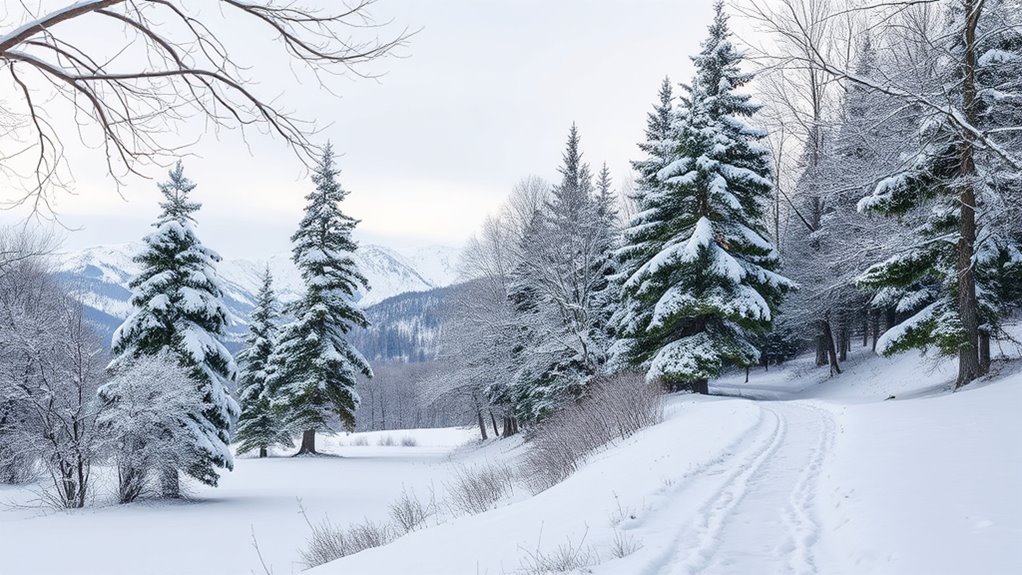
During winter, many national parks reduce or close visitor centers and restrict road access for safety reasons. However, you can still explore via snowmobile trails, cross-country skiing, or winter hikes in certain areas. Lodging options inside parks often close, so planning ahead is essential. Enjoy the peaceful solitude and unique scenery that winter offers, from snow-covered landscapes to wildlife activity. If you’d like to discover more about managing parks safely and making the most of off-season visits, keep exploring.
Key Takeaways
- Many parks reduce visitor center hours or close them entirely during winter, offering limited services off-season.
- Seasonal road closures and gated entrances restrict vehicle access, with some parks opening select gates for specific activities.
- Lodging and campgrounds often close in winter, requiring advance reservations or alternative accommodations in nearby communities.
- Winter activities like snowshoeing, cross-country skiing, and snowmobiling provide unique off-season exploration options.
- Visiting during winter offers tranquil experiences with fewer visitors, wildlife viewing opportunities, and scenic, snow-covered landscapes.
Visitor Center Operations and Seasonal Closures

Have you wondered how visitor centers operate during winter at national parks? Many parks adjust their hours or close entirely due to seasonal operating hours and weather conditions. Some visitor centers remain open on limited schedules, like Voyageurs National Park’s Kabetogama Lake and Rainy Lake centers, which operate weekends from January to March. Others, such as Grand Teton, close temporarily from late October to early May, though select facilities like chapels stay open. Yellowstone’s visitor facilities offer limited services from November to April, and Isle Royale closes completely from November 1 to April 15. These seasonal closures help parks manage staffing and safety, but they also mean fewer amenities and visitor services during winter months. It’s also helpful to understand seasonal park operations and how they impact accessibility and planning. Always check current conditions before planning your visit.
Road Access and Transportation Options During Winter
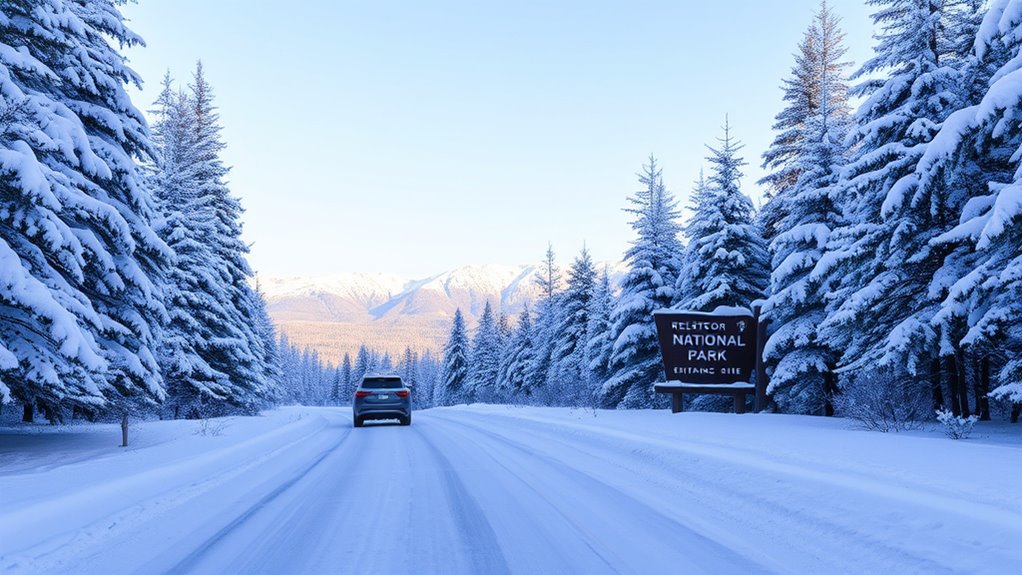
During winter, road access to many national parks can become limited or restricted by seasonal closures and gated entrances. Snowmobile travel offers a viable option in parks where roads are closed to vehicles, providing an exciting way to explore winter scenery. Always verify current conditions before your trip, as gated entrances and road closures vary depending on weather and park policies. Regular park updates can help ensure safe and enjoyable visits during the off-season.
Winter Road Closures
Winter road closures vary across national parks, often limiting vehicle access to main routes while closing smaller roads and interior park roads. You may find that many roads are blocked by snow, making travel challenging and requiring alternative transportation. This limits access to some areas, but it also enhances opportunities for snow-covered hiking and wildlife viewing. With fewer visitors, winter wildlife often becomes more visible, especially along open roads and trailheads. Some parks keep certain routes open year-round, like Yellowstone’s North Entrance, but others restrict vehicle access entirely. Always check current conditions before your trip, as weather can quickly change road status. These closures encourage you to explore quieter trails on foot or snowshoe, experiencing the park’s serene winter landscape up close. Additionally, naturalLanguageProcessing technology is increasingly used to analyze weather and road condition data, helping visitors plan their trips more effectively.
Snowmobile Access Options
Snowmobile access provides a practical way to explore many national parks when roads are closed to regular vehicles. You can traverse designated snowmobile trails that connect key park areas and scenic spots, offering a unique winter experience. To ride legally, you’ll need to obtain winter permits, which guarantee compliance with park regulations and help fund trail maintenance. Many parks, like Yellowstone and Voyageurs, maintain groomed snowmobile trails during the winter months, making it easier to access remote regions. Before heading out, check specific park rules and trail conditions, as restrictions and open routes vary. Carry safety gear, stay on designated trails, and respect wildlife and natural features. Snowmobiling offers an exhilarating way to enjoy the serenity and beauty of parks in winter’s quiet season.
Gated Park Entrances
Many park entrances are gated or closed to vehicle traffic in winter, which can limit access to certain areas. Gated entrances are often a safety measure, ensuring park security and managing winter conditions. During this season, many roads stay closed to regular vehicles, but some parks keep key gates open for snowmobiles, snowcoaches, or emergency access. Always check current conditions before you go, as weather can cause unexpected closures. Some parks, like Yellowstone’s North Entrance, remain accessible year-round, while others close most roads. To explore beyond gated entrances, consider alternative transportation options like snowmobiles or guided tours. Remember, park security measures are in place to protect visitors and preserve natural resources during the winter months. Additionally, understanding the contrast ratio of available transportation routes can help determine the best access points for your winter visit.
Lodging and Camping Opportunities in Off-Peak Seasons
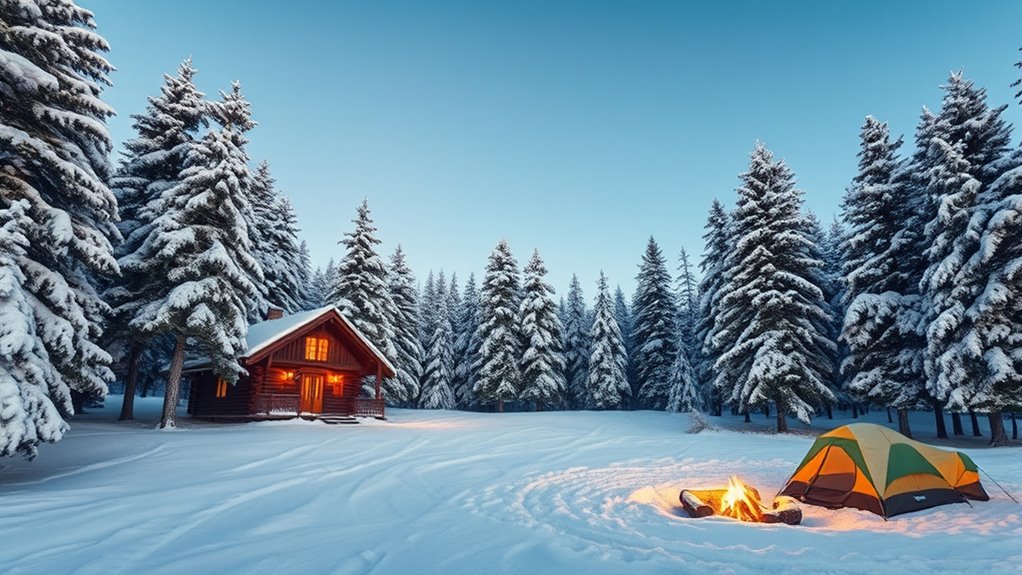
During the off-peak season, lodging options inside many parks become limited or close entirely, so planning ahead is essential. If you’re seeking outdoor adventures, backcountry camping offers a remote experience, but it requires permits and self-sufficiency. Many visitors find nearby towns and gateway communities provide alternative accommodations during winter months.
Winter Lodging Availability
In the off-peak winter months, most national parks considerably reduce or suspend their lodging and camping services, making overnight stays more limited than during peak seasons. If you’re seeking winter lodging, options are often confined to select lodges or cabins that remain open. For example, Yellowstone’s Old Faithful Snow Lodge offers winter accommodations from mid-December to March, but most other lodges and campgrounds close. In Grand Teton, developed campgrounds shut by mid-October, and winter camping isn’t available in many parks. Isle Royale remains completely closed to lodging and camping during winter. To extend your stay, consider nearby gateway communities that provide accommodations. Keep in mind, limited winter lodging means planning ahead is essential to secure your off-season retreat. Sustainable travel options can also help reduce environmental impact during your visit.
Backcountry Camping Options
Backcountry camping offers a flexible way to experience national parks in the off-peak winter season, even when developed campgrounds and lodges are closed. In winter, you can immerse yourself in snow-covered landscapes and observe winter wildlife like elk, wolves, and foxes, which are more visible with fewer visitors around. To do so, you’ll need a permit, proper gear, and self-sufficiency skills, as amenities and ranger assistance are limited. Prepare for harsh weather, icy trails, and limited access to water and shelter. Pack extra supplies, check weather conditions, and inform someone of your plans. Backcountry camping lets you enjoy solitude and stunning scenery, but safety and preparation are essential in these remote, wintery environments. Being aware of vehicle access limitations is also important, as winter conditions can restrict travel to certain areas.
Engaging in Winter Activities and Guided Events
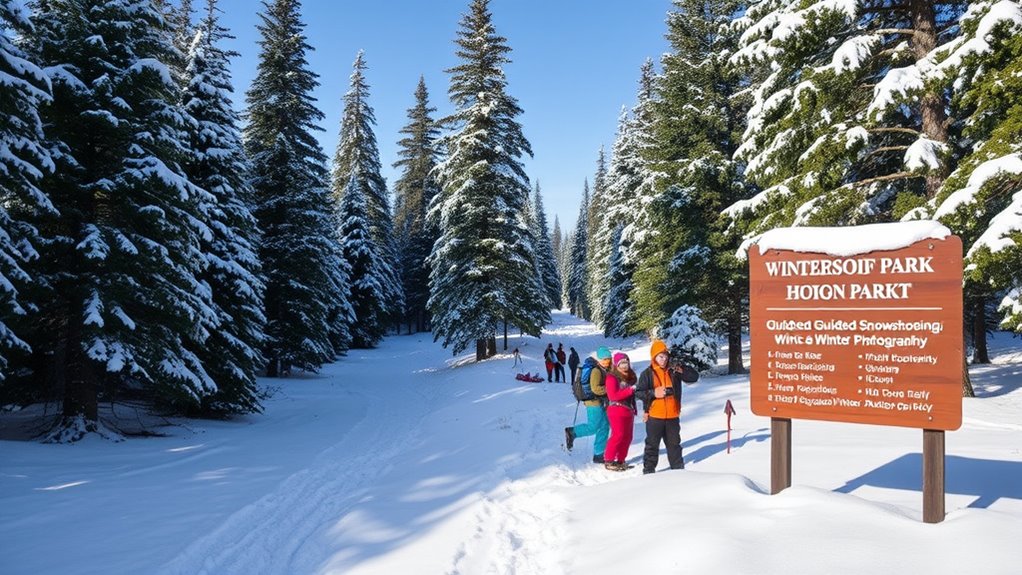
Winter offers a variety of engaging activities and guided events that let you experience national parks in a unique, snow-covered setting. You can explore trails on cross-country skis or snowshoes, taking in the peaceful winter wildlife and stunning snow-covered landscapes. Many parks host ranger-led programs, such as guided snowshoe hikes or evening photography workshops, providing insights into the winter ecosystem. Snowmobiling and snowcoach tours are popular in parks like Yellowstone, offering a thrilling way to see distant geysers and wildlife. Some parks also organize seasonal festivals or special events, giving you a chance to connect with park history and nature. Additionally, many parks are incorporating sustainable, eco-friendly practices into their winter activities to protect these pristine environments. Always check schedules and availability beforehand, and dress appropriately to fully enjoy these winter adventures.
Staying Safe: Tips for Winter Park Travel

Traveling in winter parks requires careful planning and awareness of potential hazards. To stay safe, consider these tips:
- Dress in layers and wear waterproof gear to handle extreme cold and snow-covered vistas.
- Carry navigation tools like maps, GPS, and a compass, especially when wildlife tracking or exploring remote areas.
- Check weather and road conditions before heading out, as storms can quickly isolate you.
- Bring emergency supplies, including extra food, water, a flashlight, and a first aid kit, since services may be limited.
- Be mindful of wildlife tracking signs—disturbed animals can behave unpredictably. Always stay on marked trails, avoid getting lost, and inform someone of your plans. Safety first guarantees you’ll enjoy the serenity of winter parks with peace of mind. Additionally, understanding the Mental Wellbeing Index can help you assess your mental preparedness for outdoor adventures.
Experiencing Solitude and Unique Scenery in the Off-Season
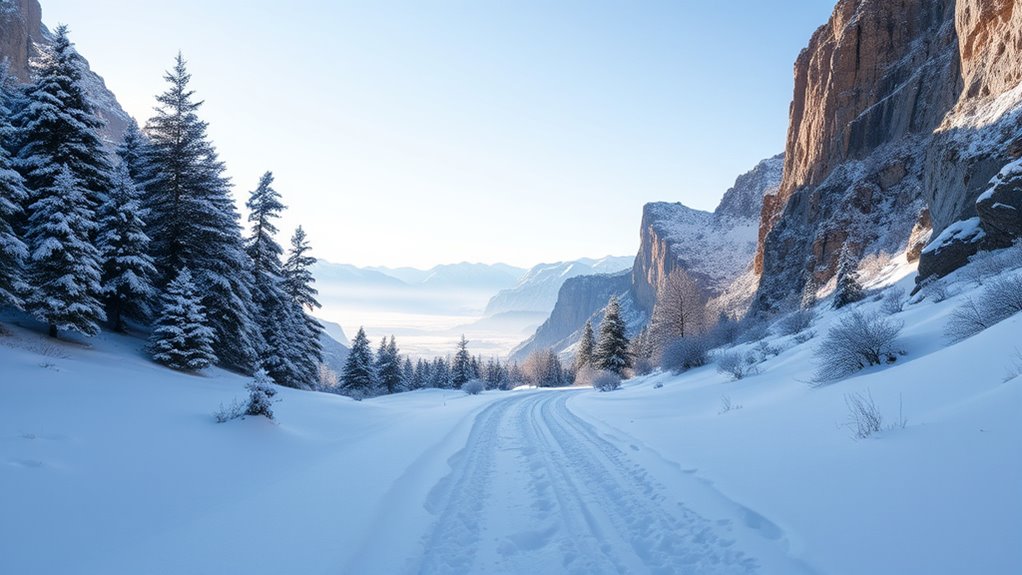
Visiting national parks during the off-season offers a rare opportunity to experience their natural beauty without the crowds. With fewer visitors, you can enjoy peaceful solitude while observing wildlife in their winter habitats. Animals like elk, deer, and birds are more visible against snow-covered landscapes, providing excellent wildlife observation chances. The quiet also enhances scenic photography, as snow-draped trees, frozen lakes, and dramatic light create breathtaking images. Without the hustle of peak season, you’ll notice subtle details often missed, like animal tracks in fresh snow or the intricate patterns of ice on a river. This serene setting allows for a more intimate connection with nature, making every moment feel special and authentic. Winter’s stillness transforms the park into a living winter tableau waiting to be explored. Wildlife visibility is often improved during this season, allowing visitors to appreciate the behavior and presence of animals more clearly.
Special Events and Unique Winter Experiences
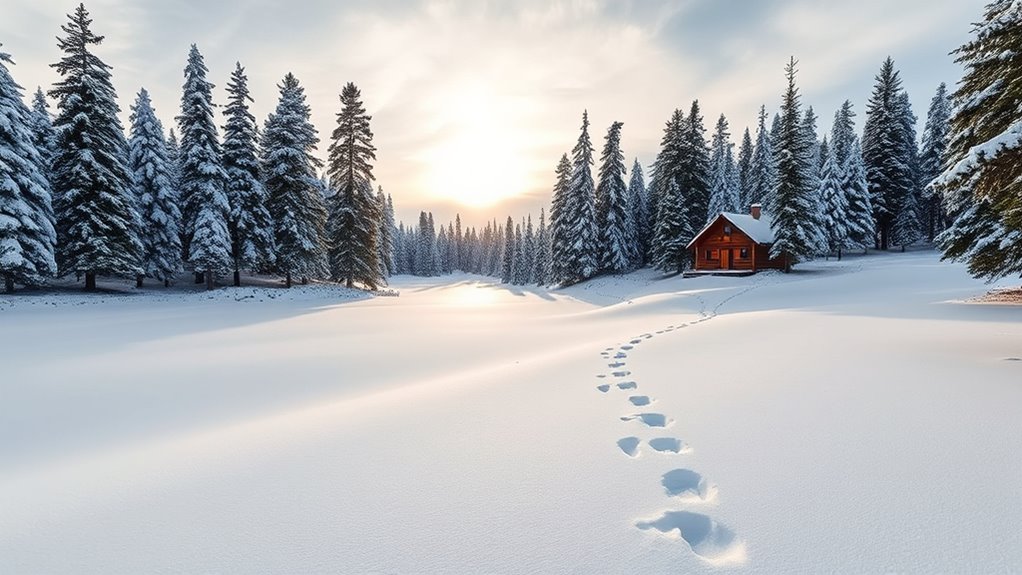
Many national parks host special events that highlight the unique beauty and activities of the winter season. You can experience winter wildlife sightings against snow-covered landscapes or participate in festive programs designed for the colder months. Here are four standout experiences:
- Guided snowshoe hikes—learn about park ecosystems while exploring trails blanketed in snow.
- Winter wildlife watching tours—spot animals adapted to cold weather, like elk and bald eagles.
- Snowmobile and snowcoach rides—venture into remote areas inaccessible in summer, with scenic views of frost-covered trees.
- Winter festivals and candlelight walks—enjoy local traditions, music, and illuminated trails under a starlit sky.
Additionally, many parks utilize advanced fraud detection techniques to ensure visitor safety and manage ticketing systems securely, enhancing overall visitor experience.
Frequently Asked Questions
Are Park Entrance Fees Waived During the Winter Season?
You might be surprised, but park entrance fees are generally not waived during the winter season. However, some parks offer seasonal discounts or fee-free days, so it’s worth checking their specific winter access policies before you go. While most parks keep their gates open year-round, fees usually apply, and discounts can help you save. Always verify current fee policies online, as they can vary by park and season.
Can I Access All Park Facilities With a Winter Pass?
You can’t access all park facilities with a winter pass because many amenities and visitor centers close or reduce hours during the season. Winter is perfect for photography and wildlife viewing, but you’ll need to plan ahead. Some parks, like Yellowstone and Voyageurs, still offer limited access and activities, so check specific park conditions and hours. Bring extra supplies and be prepared for limited services to fully enjoy winter adventures.
Are Guided Winter Tours Available Without Prior Booking?
You typically need to book guided snowshoeing tours in advance, especially for popular parks, to enjoy winter photography and explore scenic winter landscapes. While some parks may offer last-minute availability, most guided tours require prior reservations due to limited staff and space. Check with individual park services or visitor centers beforehand. This guarantees you don’t miss out on unique experiences like guided snowshoeing or capturing stunning winter scenery.
How Do I Find Real-Time Weather Updates for Remote Parks?
You need real-time weather updates for remote parks? Don’t rely solely on general forecasts—check park alerts and official websites daily. Sign up for email or text alerts from the park service, and use GPS-enabled weather apps for instant updates. Stay vigilant, especially in winter, where remote weather can change fast. Prepare for sudden storms or closures, and always inform someone of your plans before heading into the wild.
Is There Snow Removal for Trails and Parking Areas?
You should check with park authorities about trail maintenance and parking lot clearing, as snow removal varies by location and season. Many parks prioritize maintaining main trails and parking areas to ensure safety, but conditions can change rapidly. Before heading out, look for updates on park websites or call visitor centers for the latest info on snow removal efforts, so you can plan your trip accordingly and stay safe in winter conditions.
Conclusion
Visiting the park during winter reveals unexpected serenity, where quiet trails and snow-covered vistas seem to align just for you. As you explore off-season serenity, you might find that the peaceful solitude coincides with stunning winter scenes, offering a rare chance to connect deeply with nature. Embrace the chance to create your own winter story—sometimes, the quietest moments happen when you least expect them, making your journey truly unforgettable.