
The best journalist phone microphones make interviews clearer without slowing down a field recording. My best overall pick is the DJI Mic Mini (2 TX + 1 Mobile RX), a strong fit for two-person interviews and mobile reporting; the Hollyland LARK A2 Mini Duo stands out for a compact dual-mic setup, while the COMICA Revo S offers a handheld format for reporter-led conversations. The main tradeoffs are one mic versus two, phone-connector compatibility, and how much control you need over noise and recording workflow. A small wireless lavalier can be quick to clip on, but it may be less suited to shared microphones or changing interview conditions. Read on for the full breakdown and help matching a kit to the way you report.

Get everyday essentials delivered free with Prime
- Fast, free delivery on millions of items
- Prime Video, Amazon Music and more included
- Member-only deals all year
Complete the kit

Key Takeaways
- The two-transmitter DJI Mic Mini mobile kit is the most versatile fit for interviews: it gives a journalist a way to mic both a reporter and a source, while one-transmitter versions suit solo recording better.
- Receiver format can matter as much as microphone quality: mobile receivers reduce setup friction with a phone, while kits with a separate receiver may suit people who also record with other gear.
- Wireless lavaliers dominate this lineup for field reporting: they keep the phone in hand or on a stand and put the mic near the speaker, unlike the desk-oriented ZealSound K66 USB condenser.
- Handheld and clip-on microphones serve different interview styles: the COMICA Revo S fits reporter-led, shared-mic conversations; dual lavaliers are better when both speakers need hands-free capture.
- Several options prioritize simplicity over flexibility: compact sets such as the MAYBESTA, Mini Mic Pro, and GoorDik may appeal to first-time users, while multi-piece DJI kits offer more room to adapt but require more setup and kit management.
| 2-Pack Wireless Lavalier Microphone Set for USB-C and iOS Devices |  | Best Value for Two-Person Interviews | Connectivity: 2.4 GHz wireless | Microphone type: Lavalier | Polar pattern: Omnidirectional | VIEW LATEST PRICE | See Our Full Breakdown |
| COMICA Revo S Wireless Handheld Microphone |  | Best Handheld for Solo Stand-Ups | Microphone capsule: 14 mm condenser | Polar pattern: Cardioid (unidirectional) | Recording format: 48 kHz/24-bit | VIEW LATEST PRICE | See Our Full Breakdown |
| DJI Mic Mini (2 TX + 1 Mobile RX), Ultralight, Active Noise Cancelling |  | Best for Lightweight Field Interviews | Transmitters included: 2 | Receiver included: 1 mobile receiver | Transmitter weight: About 10 g | VIEW LATEST PRICE | See Our Full Breakdown |
| Labstandard Dual Wireless Lavalier Microphone Set for iPhone, iPad, and USB-C Devices |  | Best for Mixed-Connector Phone Teams | Microphone type: Wireless lavalier | Channels: 2 | Polar pattern: Omnidirectional | VIEW LATEST PRICE | See Our Full Breakdown |
| MAYBESTA Wireless Lavalier Microphone for iPhone and Android |  | Best Compact Starter Kit | Microphone type: Mini lavalier | Connectors: Lightning and USB Type-C | Polar pattern: Omnidirectional | VIEW LATEST PRICE | See Our Full Breakdown |
| DJI Mic Mini Wireless Microphone (1 Transmitter + 1 Receiver) |  | Best for Long-Range Solo Reporting | Included: 1 transmitter, 1 receiver, accessories | Transmitter weight: 10 g | Maximum transmission range: Up to 400 m | VIEW LATEST PRICE | See Our Full Breakdown |
| DJI Mic Mini Wireless Microphone (1 Transmitter + Mobile Receiver) |  | Best for Simple USB-C Phone Setup | Included components: 1 transmitter, 1 USB-C mobile receiver | Transmitter weight: 10 g | Audio sampling rate: 48 kHz | VIEW LATEST PRICE | See Our Full Breakdown |
| Hollyland LARK A2 Mini Duo Wireless Lavalier Microphone Kit |  | Best for Two-Person Interviews | Kit contents: 2 transmitters, 1 USB-C receiver, charging case, accessories | Audio resolution: 48 kHz / 24-bit | Wireless connectivity: 2.4 GHz | VIEW LATEST PRICE | See Our Full Breakdown |
| Mini Mic Pro Wireless Lavalier Microphone with Charging Case |  | Best for Mixed USB-C and Lightning Gear | Connectivity: USB-C and Lightning | Microphone type: Omnidirectional lavalier | Compatible devices: Android, laptop, smartphone, tablet, iPad | VIEW LATEST PRICE | See Our Full Breakdown |
| Mini Mic Pro (Latest Model – Wireless Mini Microphone for iPhone and Android) | 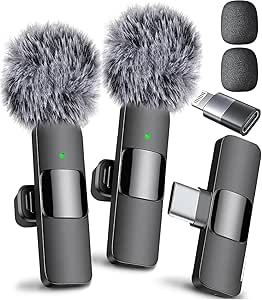 | Best for Basic Plug-and-Play Reporting | Connectivity: Lightning and USB Type-C | Polar pattern: Omnidirectional | Battery life: Up to 6 hours per charge | VIEW LATEST PRICE | See Our Full Breakdown |
| DJI Mic Mini Wireless Microphone Kit with 2 Transmitters, Receiver, and Charging Case | 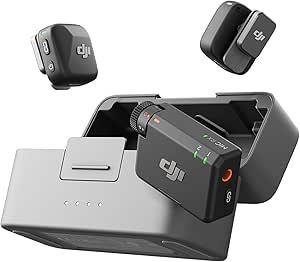 | Best for Two-Person Field Interviews | Included: 2 transmitters, 1 receiver, charging case, and accessories | Transmitter weight: 10 g | Maximum transmission range: 400 m | VIEW LATEST PRICE | See Our Full Breakdown |
| ZealSound K66 USB Condenser Podcast Microphone |  | Best for Desk-Based Phone Interviews | Microphone type: USB condenser | Pickup pattern: Cardioid | Frequency response: 40 Hz–18 kHz | VIEW LATEST PRICE | See Our Full Breakdown |
| GoorDik Wireless USB-C Lavalier Microphone Set with Noise Reduction |  | Best for Accessory-Rich Budget Field Setups | Connectivity: Wireless | Connectors: USB Type-C, USB Type-A adapter | Microphone type: Lavalier | VIEW LATEST PRICE | See Our Full Breakdown |
| journalist phone microphone | Connectivity |
|---|---|
| 2-Pack Wireless Lavalier Micro | 2.4 GHz wireless |
| COMICA Revo S Wireless Handhel | — |
| DJI Mic Mini | — |
| Labstandard Dual Wireless Lava | Lightning and USB Type-C; Bluetooth also listed |
| MAYBESTA Wireless Lavalier Mic | — |
| DJI Mic Mini Wireless Micropho | — |
| DJI Mic Mini Wireless Micropho | — |
| Hollyland LARK A2 Mini Duo Wir | — |
| Mini Mic Pro Wireless Lavalier | USB-C and Lightning |
| Mini Mic Pro | Lightning and USB Type-C |
| DJI Mic Mini Wireless Micropho | Bluetooth, DJI OsmoAudio, USB Type-C |
| ZealSound K66 USB Condenser Po | USB; includes USB-C and Lightning adapters |
| GoorDik Wireless USB-C Lavalie | Wireless |
More Details on Our Top Picks
2-Pack Wireless Lavalier Microphone Set for USB-C and iOS Devices
For a journalist recording a two-person conversation on a phone, this set makes a practical case with two included lavaliers and a receiver that pairs automatically, avoiding app or Bluetooth setup. Its USB-C connection and included iOS adapter suit mixed-device teams, while noise reduction and a mute control give the interviewer basic ways to manage a recording. Compared with the Labstandard Dual Wireless Lavalier Microphone Set, it offers a stated range of up to 98 feet, but its battery life is shorter at up to five hours versus Labstandard’s roughly six. A receiver that can charge a connected phone is useful during longer field sessions, though it does not extend the microphones’ stated runtime. The plastic build and Android OTG requirement are practical limitations; journalists needing a longer shift or more clearly specified compatibility should look elsewhere.
Pros:- Two lavalier microphones support recording an interviewer and guest at once.
- Automatic plug-and-play pairing avoids Bluetooth setup and a companion app.
- USB-C connection plus included iOS adapter accommodates multiple phone types.
- Receiver can charge a connected phone during recording.
Cons:- Up to five hours of microphone battery life may not cover a full reporting day.
- Android users need a device with OTG enabled.
- Plastic enclosure offers less robust construction than a metal-bodied handheld option such as the COMICA Revo S.
Best for: Mobile reporters recording short interviews with two speakers who want a simple plug-in receiver for USB-C or iOS devices.
Not ideal for: Reporters covering long events or using Android phones without OTG support, since the microphones run for up to five hours and OTG must be enabled on those phones.
- Connectivity:2.4 GHz wireless
- Microphone type:Lavalier
- Polar pattern:Omnidirectional
- Microphones included:2
- Connector:USB Type-C; includes iOS adapter
- Transmission range:Up to 98 feet
- Battery life:Up to 5 hours
- Charging time:1.5 hours
Our verdict“Choose this set for straightforward, two-person phone interviews, but skip it if you need all-day runtime or Android OTG-free setup.”
COMICA Revo S Wireless Handheld Microphone
The COMICA Revo S takes a different approach from the clip-on systems in this roundup: its handheld form and cardioid pickup suit a journalist who wants to point the microphone toward a speaker during a stand-up or quick street interview. Its 14 mm condenser capsule and stated 48 kHz/24-bit recording give the spec sheet a more detailed audio target than the two-lavalier starter sets, while three gain levels help adjust sensitivity for different voices. The stated 15-hour runtime also outlasts the five-hour two-pack and six-hour Labstandard set. That longer run time comes with a tradeoff: it provides one channel, not two independently mic’d speakers, and its USB-C receiver is less convenient for Lightning phones without a separate adapter. Battery details are inconsistent in the supplied information, so I would verify the included power arrangement before relying on it for field work.
Pros:- Cardioid pickup is suited to aiming the microphone at a speaker.
- Three gain levels provide sensitivity adjustments for different recording situations.
- Up to 15 hours of stated battery life exceeds the runtimes listed for the dual-lavalier sets.
- USB-C receiver supports compatible smartphones, tablets, laptops, and PCs.
Cons:- Single-channel handheld design does not provide two separately mic’d interview subjects.
- Lightning devices require a separate OTG-compatible USB-C-to-Lightning adapter.
- Supplied battery information conflicts between a built-in lithium battery and an included C battery.
Best for: Solo mobile reporters who prefer holding a directional mic for stand-ups, brief interviews, or video reports and use USB-C devices.
Not ideal for: Journalists who need to mic two people at once, want discreet clip-on microphones, or record directly to a Lightning phone without buying an adapter.
- Microphone capsule:14 mm condenser
- Polar pattern:Cardioid (unidirectional)
- Recording format:48 kHz/24-bit
- Noise reduction:One-key CalMix denoise
- Gain adjustment:3 levels
- Battery life:Up to 15 hours
- Connector:USB Type-C
- Channels:1
Our verdict“Pick the Revo S if you want a long-running handheld mic for solo reporting, not a discreet dual-person lavalier setup.”
DJI Mic Mini (2 TX + 1 Mobile RX), Ultralight, Active Noise Cancelling
The DJI Mic Mini is the most field-ready choice here for reporters who want two lightweight transmitters without putting bulky hardware on interview subjects. Each transmitter weighs a stated 10 g, and the two noise-cancellation levels let a journalist choose a gentler setting indoors or a stronger one in noisier surroundings. Automatic limiting adds protection against sudden loud input, while the stated 300 m transmission range gives more room to move than the 98-foot range listed for the two-pack wireless lavaliers. Up to 11.5 hours of operation also beats those smaller sets’ stated runtimes. The tradeoff is that the supplied kit is oriented around a mobile receiver and USB-C compatibility; journalists using Lightning phones should confirm the required connection path. Its feature set is more involved than a basic plug-in pair, and DJI ecosystem direct connection mainly benefits reporters already using compatible DJI gear.
Pros:- Two transmitters support interviews with two separately mic’d people.
- Transmitter weight of about 10 g helps keep clips discreet and comfortable.
- Two noise-cancellation levels suit both quieter interiors and noisier locations.
- Stated 300 m range and up to 11.5 hours of operation exceed the listed range and runtime of the basic two-mic set.
Cons:- The supplied mobile receiver is listed with USB-C compatibility, so Lightning users should check adapter needs.
- DJI ecosystem direct connection is useful mainly to owners of supported DJI devices.
- The product information describes compatibility and operating details across several kit variants, so buyers should confirm the exact included accessories.
Best for: Mobile journalists recording two-person interviews outdoors who value lightweight transmitters, adjustable noise cancellation, and extended operating time.
Not ideal for: Reporters who need the simplest low-feature plug-in mic, rely on an unverified Lightning connection, or do not use compatible DJI devices and want ecosystem integration.
- Transmitters included:2
- Receiver included:1 mobile receiver
- Transmitter weight:About 10 g
- Maximum transmission range:300 m
- Maximum operating time:Up to 11.5 hours
- Noise cancellation:2 levels: Basic and Strong
- Audio protection:Automatic limiting
- Connection:USB Type-C mobile receiver; direct connection with supported OsmoAudio devices
Our verdict“Choose the DJI Mic Mini for mobile two-person reporting where discreet transmitters, stronger noise control, and long operating time matter most.”
Labstandard Dual Wireless Lavalier Microphone Set for iPhone, iPad, and USB-C Devices
Labstandard earns its place through dual microphones and both Lightning and USB-C connectivity, a useful combination for newsroom teams sharing kits across iPhones and newer USB-C devices. The stated 0.008-second latency is aimed at keeping audio and video in sync, which matters when a reporter is filming interviews on a phone rather than matching sound later. Compared with the 2-Pack Wireless Lavalier Microphone Set, Labstandard lists about an extra hour of battery life and wider connector coverage, but gives a shorter stated transmission range: its data does not specify one, while the other set claims up to 98 feet. The listed Bluetooth connection is not explained, so I would not count on it as a defined recording feature. Ambiguous enclosure materials and a modest six-hour runtime also make this less reassuring for rough or extended field assignments.
Pros:- Two omnidirectional lavaliers support interviews with two people.
- Lightning and USB-C connections cover common phone and tablet ports.
- Stated 0.008-second latency is designed to keep recorded audio aligned with video.
- About six hours of battery life is slightly longer than the five hours listed for the other basic two-mic set.
Cons:- The stated battery life of about six hours may fall short for extended assignments.
- Bluetooth is listed, but its function in the recording setup is not explained.
- Enclosure material is described ambiguously as plastic or metal alloy, and no transmission range is provided.
Best for: Small reporting teams that share microphones between Lightning and USB-C phones and regularly record two-person interviews.
Not ideal for: Journalists who need a clearly documented wireless range, a durable field build, or a long-running kit for full-day coverage.
- Microphone type:Wireless lavalier
- Channels:2
- Polar pattern:Omnidirectional
- Connectivity:Lightning and USB Type-C; Bluetooth also listed
- Latency:0.008 seconds
- Battery life:About 6 hours
- Weight:0.05 kg
- Dimensions:4.5 x 3.3 x 0.7 inches
Our verdict“Choose Labstandard when one dual-mic kit must serve Lightning and USB-C phones, but avoid it if range and build details need to be firmly documented.”
MAYBESTA Wireless Lavalier Microphone for iPhone and Android
MAYBESTA is a straightforward option for a phone reporter who wants a small clip-on mic and a receiver that supports both USB-C and Lightning. Automatic pairing skips Bluetooth setup, while the included windscreen and noise-reduction feature offer basic help against handling and background noise. Its one-touch mute is particularly useful when recording a continuous video but needing to silence the mic briefly. Unlike the two-transmitter DJI Mic Mini, this product is listed as a single-channel system, so its supplied microphones should not be assumed to provide two independent interview tracks. The product details also contain a meaningful specification mismatch: “2.4 GHz” is given as frequency response, though that describes a wireless band, and the battery is called both rechargeable and a C battery. I would treat those details cautiously and choose a better-documented system for important assignments.
Pros:- Receiver supports Lightning and USB Type-C phone connections.
- Automatic pairing avoids a separate Bluetooth setup process.
- Included windscreen and noise reduction address common outdoor and background-noise issues.
- One-touch mute can silence the microphone without stopping the recording.
Cons:- The listed frequency response of 2.4 GHz appears to describe the wireless band rather than the audio response.
- Battery information conflicts between a rechargeable microphone and an included C battery.
- Listed channel count is one, so it is not clearly specified as a dual-channel interview system.
Best for: New mobile reporters who want a compact, plug-and-play lavalier with both major phone connector types and basic mute and noise-reduction controls.
Not ideal for: Journalists recording high-stakes interviews who need verified battery specifications, clear audio-frequency data, or two independent recording channels.
- Microphone type:Mini lavalier
- Connectors:Lightning and USB Type-C
- Polar pattern:Omnidirectional
- Channels:1
- Signal-to-noise ratio:80 dB
- Audio sensitivity:15 dB
- Model:WM356-1
- Included accessories:1 receiver, USB charging cable, 2 sponge tips, 2 lavalier microphones, 3 clips
Our verdict“Pick MAYBESTA for a compact, easy-start phone mic with Lightning and USB-C support, but choose a better-documented kit for critical reporting.”
DJI Mic Mini Wireless Microphone (1 Transmitter + 1 Receiver)
For a journalist recording solo interviews or stand-ups, this kit pairs a discreet 10 g transmitter with a separate receiver and a stated range of up to 400 m. Its two noise-cancellation levels let you choose between a lighter touch in quieter settings and stronger suppression in busy surroundings, while automatic limiting helps reduce the risk of clipped audio when a speaker suddenly gets louder. Compared with the DJI Mic Mini Mobile Receiver version, this set is a better fit for a workflow that calls for a separate receiver rather than a direct USB-C phone connection. The tradeoff is its single transmitter: for two-person interviews, the Hollyland LARK A2 Mini Duo is a more ready-made choice. This configuration also needs an added module for connection to Osmo Mobile series products.
Pros:- Lightweight 10 g transmitter is suited to discreet on-camera or interview recording.
- Up to 400 m stated transmission range offers flexibility when the phone and speaker are separated.
- Two noise-cancellation levels adapt to quieter rooms and noisier locations.
- Automatic limiting can help guard against sudden peaks clipping the recording.
Cons:- One transmitter does not cover two-person interviews without an additional mic.
- The kit uses a separate receiver rather than the direct USB-C mobile receiver in the other DJI option.
- Osmo Mobile series connection requires the first-generation DJI OM Multifunctional Module.
Best for: Solo field reporters who want a lightweight clip-on mic, long stated wireless range, and a separate receiver in their recording setup.
Not ideal for: Journalists who regularly record two people at once or need a receiver that plugs directly into a USB-C phone.
- Included:1 transmitter, 1 receiver, accessories
- Transmitter weight:10 g
- Maximum transmission range:Up to 400 m
- Sampling rate:48 kHz
- Maximum SPL:120 dB
- Operating time:Up to 10 hours per unit
- Noise cancellation:Basic and Strong levels
- Microphone pattern:Omnidirectional
Our verdict“Choose this DJI kit for solo reporting that benefits from a separate receiver and long stated range, but pick a two-transmitter set for interviews with multiple speakers.”
DJI Mic Mini Wireless Microphone (1 Transmitter + Mobile Receiver)
This version makes the DJI Mic Mini easier to fit into a phone-first reporting kit: its USB-C mobile receiver plugs into a compatible phone, while the 10 g transmitter clips to the speaker. That direct connection is the main distinction from the DJI Mic Mini kit with a separate receiver, which may suit other recording arrangements better. Both DJI single-transmitter options list up to 400 m range and offer two noise-cancellation levels plus automatic limiting; this model adds a charging-case battery claim of up to 48 hours for the system. That figure is not the transmitter’s uninterrupted recording time, so plan around charging rather than treating it as a single-session runtime. With only one transmitter, it is less suited to paired interviews than the Hollyland LARK A2 Mini Duo, and its receiver requires USB-C.
Pros:- USB-C mobile receiver offers a plug-and-play connection to compatible phones.
- 10 g transmitter is lightweight and unobtrusive when clipped to clothing.
- Basic and Strong noise-cancellation settings provide options for different surroundings.
- Charging case supports up to 48 hours of stated battery life.
Cons:- USB-C receiver limits use with phones and devices that lack a compatible port.
- One transmitter is less useful for two-person interviews than the Hollyland LARK A2 Mini Duo.
- The system is not waterproof.
Best for: Phone-first reporters using a compatible USB-C device who want a compact, direct-connect receiver for solo interviews and stand-ups.
Not ideal for: Journalists with Lightning-only or other non-USB-C phones, or those who need two speakers miked simultaneously.
- Included components:1 transmitter, 1 USB-C mobile receiver
- Transmitter weight:10 g
- Audio sampling rate:48 kHz
- Audio bit depth:24-bit via supported OsmoAudio devices
- Maximum transmission range:Up to 400 m
- Battery life with charging case:Up to 48 hours
- Noise cancellation:Basic and Strong levels
- Water resistance:Not waterproof
Our verdict“Pick this model for straightforward USB-C phone reporting with one speaker, and choose a dual-transmitter kit if your interviews often include a second voice.”
Hollyland LARK A2 Mini Duo Wireless Lavalier Microphone Kit
The LARK A2 Mini Duo is the clearest fit here for a journalist who needs to record two speakers at once: the kit includes two transmitters, unlike either single-transmitter DJI Mic Mini configuration. Its 48 kHz / 24-bit audio, adjustable AI noise cancellation, and -6 dB safety track give reporters several ways to manage changing voices and background sound. The safety track is especially useful when a lively exchange produces an unexpected peak, though it is a safeguard rather than a substitute for setting recording levels well. Battery life is listed as up to seven hours per transmitter, or nine with power saving, with up to 42 hours total from the case. The tradeoff against DJI’s stated 400 m range is this kit’s shorter 200 m range, which is also subject to conditions. Its receiver is USB-C, so port compatibility matters.
Pros:- Two included transmitters make it ready for interviews with two speakers.
- 48 kHz / 24-bit audio is specified for detailed recording.
- AI Auto-Limit and a -6 dB safety track help protect against sudden loud sounds.
- Charging case supports up to 42 hours of total use, with quick charging available.
Cons:- Its stated 200 m range is shorter than the up-to-400 m range listed for the DJI Mic Mini options.
- The USB-C receiver may not suit phones or recording devices without that port.
- The stated wireless range depends on conditions and obstructions.
Best for: Mobile journalists who routinely record two-person interviews and want separate wireless transmitters with a safety track.
Not ideal for: Reporters who need the longest stated wireless reach or must connect to devices without USB-C.
- Kit contents:2 transmitters, 1 USB-C receiver, charging case, accessories
- Audio resolution:48 kHz / 24-bit
- Wireless connectivity:2.4 GHz
- Wireless range:Up to 200 m (650 ft)
- Battery life per transmitter:Up to 7 hours; up to 9 hours with AI Power Saving
- Total battery life with charging case:Up to 42 hours
- Transmitter weight:8.5 g
- Maximum sound pressure level:120 dB SPL
Our verdict“Choose the LARK A2 Mini Duo when two-speaker coverage and recording safeguards matter more than maximum stated range.”
Mini Mic Pro Wireless Lavalier Microphone with Charging Case
For a reporter who switches between newer USB-C phones and Lightning devices, this Mini Mic Pro kit stands out for including both connector types. The supplied foam and deadcat covers also give it a practical advantage for outdoor stand-ups, where wind can interfere with spoken audio. Its listed runtime is up to eight hours per charge, and the ability to charge the connected device while recording may help on long phone-based assignments. Compared with the DJI Mic Mini Mobile Receiver, this set puts compatibility across USB-C and Lightning at the center rather than offering DJI’s stated longer wireless range and noise-cancellation levels. One limitation is the listed single audio channel, despite the two lavalier microphones in the included components; buyers should not assume this provides independent two-speaker tracks. The receiver also needs its charging case for storage.
Pros:- USB-C and Lightning adapters support a range of phone connections.
- Foam and deadcat covers help reduce wind noise in outdoor recordings.
- Up to eight hours of stated battery life per charge suits extended assignments.
- Can charge the connected device while recording.
Cons:- The listed single audio channel may not provide separate tracks for two speakers.
- The receiver needs the charging case for storage.
- Its specifications do not list the longer transmission range or selectable noise-cancellation levels offered by the DJI Mic Mini options.
Best for: Reporters who work across both USB-C and Lightning phones and want included wind covers for outdoor voice recording.
Not ideal for: Journalists who need separate channels for two interview subjects or want a receiver that stores independently of its charging case.
- Connectivity:USB-C and Lightning
- Microphone type:Omnidirectional lavalier
- Compatible devices:Android, laptop, smartphone, tablet, iPad
- Battery life:Up to 8 hours per charge
- Channels:1
- Included components:Charging case, 2 lavalier microphones, receiver, USB charging cable, 2 clips, 2 foam tips, 2 deadcat tips
- Enclosure material:ABS
- Device charging while recording:Supported
Our verdict“Choose this Mini Mic Pro for cross-connector phone compatibility and included wind covers, but not for independently recorded two-person interviews.”
Mini Mic Pro (Latest Model – Wireless Mini Microphone for iPhone and Android)
This Mini Mic Pro is aimed at reporters who want a simple phone connection without managing a separate recording app or Bluetooth pairing: it includes USB-C and Lightning adapters and supports one-touch recording. Foam and deadcat covers are included for wind protection, and the connected phone can be charged during recording. Its listed battery life is up to six hours, shorter than the eight hours stated for the other Mini Mic Pro in this roundup. Both sets list one audio channel, so neither is the strongest choice for capturing two interviewees on separate tracks. Compared with the DJI Mic Mini Mobile Receiver, this model prioritizes broad connector compatibility and basic operation over stated long-range transmission and selectable noise cancellation. The product information does not provide a sampling rate or transmission range, making it harder to judge for assignments where those details matter.
Pros:- USB-C and Lightning adapters support a broad range of phones and tablets.
- One-touch recording and a stated plug-and-play setup keep operation simple.
- Foam and deadcat covers are included to help manage wind outdoors.
- Supports charging the connected device while recording.
Cons:- Up to six hours of listed battery life is less than the eight hours stated for the other Mini Mic Pro.
- The listed system has one audio channel, limiting its usefulness for separate two-person interview tracks.
- Product information does not specify sampling rate or wireless transmission range.
Best for: Newer phone reporters who want a straightforward wireless mic with USB-C and Lightning adapters for solo interviews, voiceovers, or stand-ups.
Not ideal for: Journalists who need documented transmission range and sampling-rate specifications, longer listed battery life, or separate tracks for multiple speakers.
- Connectivity:Lightning and USB Type-C
- Polar pattern:Omnidirectional
- Battery life:Up to 6 hours per charge
- Channels:1
- Special features:One-touch recording, battery indicator light, clip, noise reduction
- Included microphones:2 lavalier microphones
- Included wind protection:2 foam tips and 2 deadcat tips
- Enclosure material:ABS
Our verdict“Choose this Mini Mic Pro for simple solo phone recording across USB-C and Lightning devices, but look elsewhere when detailed audio specifications or multi-speaker tracks are priorities.”
DJI Mic Mini Wireless Microphone Kit with 2 Transmitters, Receiver, and Charging Case
For reporting with a source or co-host, this kit pairs two lightweight transmitters with a receiver, so each speaker can be miked separately rather than sharing one phone mic. At 10 g per transmitter, it is discreet for on-camera interviews, while 48 kHz audio, automatic limiting, and two noise-cancellation levels give journalists useful controls across changing locations. Compared with the GoorDik Wireless USB-C Lavalier Microphone Set, the DJI offers a receiver-based workflow and a stated range up to 400 m, rather than GoorDik’s 30 m range. That reach does not make it waterproof, though, and the phone setup may take more planning than a simple direct-to-phone receiver. Its case supports up to 48 hours of battery life, but Osmo Mobile compatibility has a specific accessory requirement.
Pros:- Two 10 g transmitters support discreet, separate miking for interviews.
- Up to 400 m transmission range offers flexibility when the phone and speakers are farther apart.
- Two noise-cancellation levels and automatic limiting help manage noisy settings and sudden loud peaks.
- Charging case provides up to 48 hours of battery life.
Cons:- Not waterproof, limiting its suitability for wet-weather reporting.
- Connecting to Osmo Mobile series products requires the first-generation DJI OM Multifunctional Module.
- Magnets may interfere with magnetic cards or some medical and electronic devices.
Best for: Mobile reporters recording two-person interviews who want separate wireless transmitters, a charging case, and long-range flexibility.
Not ideal for: Reporters working in rain or who need a simple Osmo Mobile connection; the kit is not waterproof and that setup requires the first-generation DJI OM Multifunctional Module.
- Included:2 transmitters, 1 receiver, charging case, and accessories
- Transmitter weight:10 g
- Maximum transmission range:400 m
- Sampling rate:48 kHz
- Maximum SPL:120 dB
- Battery life with charging case:Up to 48 hours
- Noise cancellation:2 levels: Basic and Strong
- Connectivity:Bluetooth, DJI OsmoAudio, USB Type-C
- Water resistance:Not waterproof
Our verdict“Choose this kit for two-person phone reporting where discreet transmitters and range matter more than weather protection or the simplest setup.”
ZealSound K66 USB Condenser Podcast Microphone
The K66 suits journalists recording seated interviews, voiceovers, or remote segments at a desk: its cardioid USB condenser focuses on the speaker in front of it, and zero-latency headphone monitoring makes it easier to catch problems while recording. Unlike the wireless DJI Mic Mini kit, this is a stationary microphone, so it avoids transmitter placement and wireless-range concerns but cannot follow a reporter moving around. The included USB-C and Lightning adapters widen its phone and tablet compatibility, while physical volume, echo, and mute controls reduce reliance on software menus. The tradeoff is a less field-ready setup: the microphone needs to sit near the speaker, and noise reduction is activated by holding the mute button, a control behavior that may take practice. Device support can also vary.
Pros:- Cardioid pickup pattern is suited to capturing a nearby speaker from the front.
- Zero-latency headphone monitoring helps catch audio issues during recording.
- Separate physical controls for microphone volume, monitoring, echo, and mute support quick adjustments.
- USB-C and Lightning adapters support compatible phones, tablets, and computers.
Cons:- Stationary design is less suitable for walking interviews or mobile field reporting.
- Noise reduction requires a press-and-hold action on the mute button, which may be easy to miss.
- Compatibility depends on the connected device supporting the microphone connection.
Best for: Journalists recording seated phone or tablet interviews, commentary, and voiceovers who want headphone monitoring and hands-on controls.
Not ideal for: Field reporters who need to move with a source or record two speakers from separate microphones; this is a single, desk-oriented microphone.
- Microphone type:USB condenser
- Pickup pattern:Cardioid
- Frequency response:40 Hz–18 kHz
- Sampling rate:46 kHz
- Sensitivity:−45 dB ±3 dB
- Monitoring:Zero-latency via 3.5 mm headphone jack
- Controls:Microphone volume, monitoring volume, echo adjustment, mute
- Connectivity:USB; includes USB-C and Lightning adapters
- Compatibility:Windows PC, Mac, PS4, PS5, iPhone, iPad, and compatible USB-C devices
Our verdict“Pick the K66 for controlled, seated recordings with live headphone checks, but choose a lavalier kit for mobile interviews.”
GoorDik Wireless USB-C Lavalier Microphone Set with Noise Reduction
GoorDik gives phone journalists a straightforward way to mic two people: the set includes two transmitters, a USB-C receiver, and both Lightning and USB adapters. Its foam covers and furry windshields are useful for adapting to indoor rooms and breezy outdoor locations, while noise-reduction and original-sound modes let the reporter choose between processing and a less altered recording. Compared with the DJI Mic Mini kit, GoorDik lists a shorter 30 m wireless range and 6–12 hours of battery life per transmitter, so it is better suited to nearby interviews than spread-out field setups. The omnidirectional pickup can capture voices from around each mic, but it may also admit more surrounding sound than a directional approach. Some Android phones need OTG enabled, and computers may need input settings changed before recording.
Pros:- Two transmitters support two-person interviews without sharing a microphone.
- Noise-reduction, original-sound, and mute modes offer basic control over the recording.
- Included USB-C, Lightning, and USB adapters accommodate a range of compatible devices.
- Foam covers and furry windshields provide options for indoor and outdoor recording.
Cons:- Wireless range is up to 30 m, shorter than the DJI Mic Mini kit’s stated 400 m range.
- Omnidirectional pickup can capture more ambient sound in noisy reporting locations.
- Some Android phones may require OTG activation, and computers may need the mic selected as the default input.
Best for: Phone journalists recording two nearby speakers who want included wind protection and adapters for USB-C, Lightning, and USB connections.
Not ideal for: Reporters who need long-distance wireless placement, highly directional pickup, or a connection that works without checking phone and computer settings.
- Connectivity:Wireless
- Connectors:USB Type-C, USB Type-A adapter
- Microphone type:Lavalier
- Polar pattern:Omnidirectional
- Channels:2
- Frequency response:20–20,000 Hz
- Signal-to-noise ratio:65 dB
- Wireless range:Up to 30 m
- Battery life:6–12 hours per transmitter
Our verdict“Choose GoorDik for nearby two-person interviews when supplied adapters and wind protection matter more than extended range.”
How We Picked
I ranked these journalist phone microphones by how well their formats support real reporting tasks: recording a source clearly, handling one- or two-person interviews, connecting to common phones, and packing easily for work away from a desk. I also weighed receiver type, noise-control features, included transmitters, charging and storage arrangements, and whether a product’s format matches mobile journalism rather than studio or creator-focused recording.
The ranking favors usable interview coverage and phone workflow over a long feature list. That puts adaptable dual-transmitter mobile kits ahead for reporters who regularly interview others, while single-mic kits remain sensible for solo work and simpler setups. The handheld COMICA has a distinct role for shared, reporter-led interviews; the ZealSound K66 ranks lower for field use because a USB condenser is a desk-style choice rather than a wearable wireless setup. Product names and kit configurations are treated as distinct options, since a mobile receiver, separate receiver, extra transmitter, and charging case can change the reporting workflow.
Factors to Consider When Choosing Journalist Phone Microphones
For reporting, the right microphone is the one that fits your interview and phone workflow, not the one with the longest feature list. I would start by deciding how many people need microphones, then check the connection, recording environment, and what you can manage while working alone.
Choose the microphone format around the interview
A clip-on lavalier keeps the speaker’s hands free and the mic close to their voice, which suits sit-down interviews and walk-and-talks. A handheld model can be easier to pass between speakers or use for short questions in a busy public setting, but it occupies a hand and can make mic distance inconsistent. A desk microphone is more appropriate for a planned indoor recording than quick street reporting. Think about how your subjects will be positioned and whether you can clip a mic onto their clothing. The most portable format is not automatically the most practical if it does not match the way you ask questions.
Decide how many people need to be miked
For a solo stand-up or a recording where only one speaker is near the phone, one transmitter can keep the kit lighter and simpler. Interviews with both a reporter and a source are more reliably served by two transmitters, rather than hoping a single mic placed between them will capture both voices evenly. If you usually record only the interviewee, a second transmitter may add pieces to charge and carry without improving your routine. Consider whether you need both voices on every assignment or only occasionally. A kit that matches your normal speaker count is often easier to manage under deadline.
Check the phone connection before buying
USB-C and iOS compatibility should be verified against the exact phone and receiver included in the kit. Similar product names can refer to different bundles, and a phone-oriented receiver is not interchangeable with every separate receiver or adapter. Also check whether the phone can charge while recording if your reporting sessions run long. Do not assume a connector alone guarantees that every recording app will recognize the microphone as expected. Confirm the connection path and any adapter needs before relying on a new kit for an assignment.
Match noise control to the places you report
Noise-reduction features can help in busy surroundings, but they are not a substitute for placing the microphone close to the speaker. Strong filtering may also affect natural voice tone, so test any noise mode in a quiet room and in the kind of location where you work. Wind, traffic, crowds, and room echo create different problems; one setting cannot solve all of them. A lavalier can be easier to position consistently, while a handheld mic lets the reporter adjust distance during a question. For important interviews, a short test recording can reveal issues before the conversation starts.
Balance a compact kit against backup needs
A compact wireless set is quick to pack, but a field kit also has to stay charged, paired, and protected between assignments. A charging case can make storage and power management easier, while extra transmitters and receivers add flexibility at the cost of more gear to track. Check what is included rather than inferring it from a product-family name. For a reporter working alone, fewer parts can reduce setup errors; for a team or frequent two-person interviews, extra components may justify the added handling. Keep a wired or phone-mic fallback available when missing audio would compromise the story.
Pay for workflow gains, not unused features
Spending more makes sense when a kit adds something you will use regularly, such as a second transmitter, a mobile receiver suited to your phone, or a case that supports repeated field work. Extra modes are less valuable if they complicate setup or do not address your recording conditions. At the other end, the simplest low-friction option can be a good first microphone for occasional reporting, provided the connector and speaker setup fit. Compare the complete bundle and its intended use, not just the microphone’s name. The best value is the kit that avoids both unnecessary accessories and missing pieces you would need to buy or carry later.
Frequently Asked Questions
Should I choose one transmitter or a two-transmitter kit for interviews?
Choose one transmitter if you mainly record a single speaker or use the phone close to the interviewer. A two-transmitter kit is more suitable when both the reporter and source need clear, separate mic placement. It can also help when an interview includes two guests, depending on the kit’s supported setup. Extra transmitters bring more charging and pairing tasks, so they are not automatically worth carrying for solo work. Base the choice on the speaker count you encounter most often, not on occasional edge cases.
Is a mobile receiver better than a separate receiver for phone reporting?
A mobile receiver can make a phone-first setup more direct by reducing the number of components between the microphone and handset. A separate receiver may be more useful if you also plan to record with cameras or other equipment, depending on the specific kit. Neither format guarantees compatibility with every phone, case, or app, so verify the exact connection before an assignment. Consider whether you need to keep the phone charging while recording, since some setups may limit access to its port. Pick the receiver that matches your reporting device and the way you pack your gear.
Can a wireless lavalier handle interviews outdoors?
A wireless lavalier can work well outdoors when it is clipped close to the speaker’s mouth and its connection remains stable. Outdoor recording still brings wind and traffic noise, which noise-reduction modes may not remove cleanly. Clothing can also rub against a clip-on microphone, so placement and a short test recording matter. For a fast-moving street interview, a handheld microphone may be easier to reposition, while a lavalier is less obtrusive for a longer conversation. Choose based on the location and interview style, and keep a backup recording plan for important material.
Is a USB condenser microphone a good choice for mobile journalism?
A USB condenser such as the ZealSound K66 is better suited to a stationary indoor setup than a reporter moving between locations. It may fit voice recording at a desk, but it is not the same kind of wearable, wireless field kit as the lavalier options in this roundup. Before buying one for phone use, check phone compatibility, power needs, and how you will position the microphone. If you mostly record interviews on location, a portable lavalier or handheld design will usually fit the task better. Choose a desk mic only when your reporting workflow is mainly planned and stationary.
What should I test before using a new phone microphone for a published interview?
Record a short sample with the exact phone, app, receiver, and microphone placement you plan to use. Listen for the phone using the external mic, clear speech, clothing noise, connection dropouts, and any filtering that makes voices sound unnatural. Test the setup at the location when possible, since indoor and outdoor noise behave differently. Confirm that the transmitters and receiver are charged and that the phone has enough storage and battery for the assignment. A brief check before the interview is easier than discovering a connection problem during editing.
Conclusion
For the broadest range of phone interviews, I recommend the DJI Mic Mini (2 TX + 1 Mobile RX) as the best overall pick: its two-transmitter setup and mobile receiver suit reporting with both a journalist and a source. For a compact dual-lavalier alternative, the Hollyland LARK A2 Mini Duo is worth a close look; for a shared handheld format, choose the COMICA Revo S. The best value depends on your routine: a simple single-transmitter option such as the MAYBESTA makes more sense for occasional solo recording than carrying a larger kit. Beginners should favor an easy-to-connect, phone-matched lavalier and test it before an assignment, while frequent interviewers may benefit from a two-mic bundle with a case. For desk-based voice work, the ZealSound K66 has a different role, but it is not my pick for mobile field reporting.