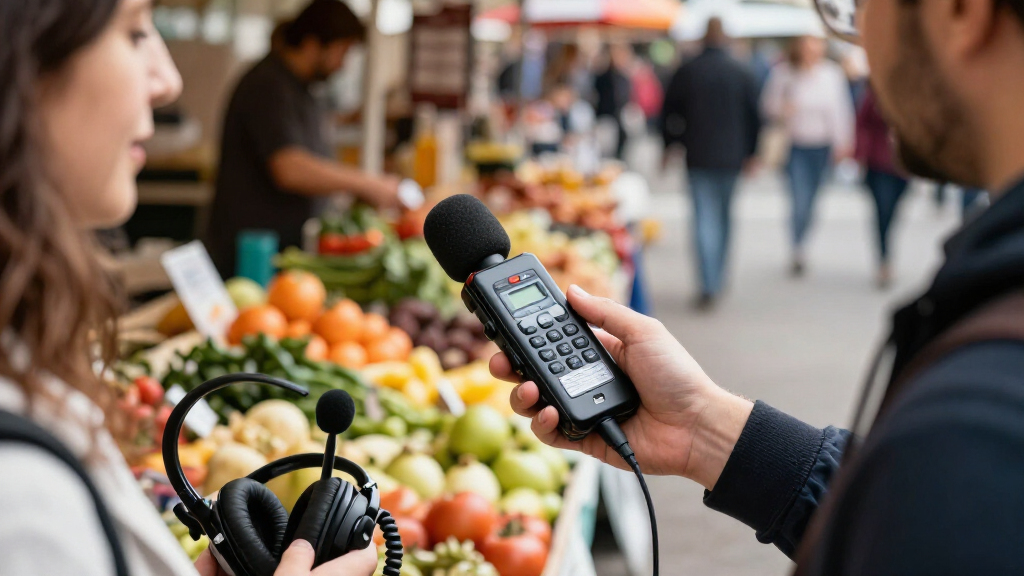
For journalists choosing among portable audio recorders, I rank the OM SYSTEM LS-P5 as the best overall because its three-microphone design and recording flexibility suit varied reporting situations. The TASCAM DR-10L stands out for hands-free, close-miked interviews, while the Zoom H1n offers a straightforward path to stereo field recording. The main tradeoffs are whether you need a built-in stereo mic or a lavalier, dependable physical controls or a smaller wearable unit, and professional recording flexibility or simple dictation features. Storage claims alone do not tell you how well a recorder fits an interview workflow. Read on for the full breakdown of all 15 options and the buyer factors that separate them.

Get everyday essentials delivered free with Prime
- Fast, free delivery on millions of items
- Prime Video, Amazon Music and more included
- Member-only deals all year
Key Takeaways
- The LS-P5 is the most adaptable reporting pick: its three microphones give it more recording options than the simpler WS-series voice recorders.
- Mic placement matters more than a large storage figure: the TASCAM DR-10L’s included lavalier suits a single interview subject better than a pocket recorder placed across a table.
- The H1n and LS-P5 serve different field needs: the H1n is a direct route to stereo recording, while the LS-P5 offers more microphone versatility.
- Wearable recorders solve a specific problem: the Instamic models prioritize discreet, hands-free placement, but they are less like conventional recorders with prominent controls.
- Several listed products focus on dictation or older media: the WS-853, WS-883, microcassette models, and basic voice recorders are not interchangeable with field-oriented PCM recorders.
| Olympus WS-853 Digital Voice Recorder, 8GB, Black |  | Best for Straightforward Interview Work | Internal storage: 8GB | Expandable storage: Built-in microSD card slot | Recording format: MP3 | VIEW LATEST PRICE | See Our Full Breakdown |
| NEXTSIGNAL 160GB Digital Voice Recorder with Playback |  | Best for High-Capacity Reporting Days | Storage: 160GB total: 32GB internal plus 128GB memory card | Recording formats: MP3, WAV | Maximum recording bitrate: Up to 1536 kbps | VIEW LATEST PRICE | See Our Full Breakdown |
| 72GB Digital Voice Recorder with USB-C |  | Best for USB-C File Transfers | Storage: 72GB | Recording format: WAV | Microphone: Built-in 360° omnidirectional, mono | VIEW LATEST PRICE | See Our Full Breakdown |
| Tonfarb 64GB Digital Voice Recorder with Playback |  | Best for Playback and File Review | Storage: 64GB built-in TF card | Recording formats: MP3, WAV | Maximum recording quality: 1536 kbps PCM | VIEW LATEST PRICE | See Our Full Breakdown |
| Elasound Voice-Activated Recorder with AI Noise Reduction, 128GB Storage, and 100-Hour Battery |  | Best for Long, Hands-Free Recording | Storage: 128GB TF card stated; product information also lists 136GB built-in media | Recording format: MP3 | Maximum recording capacity: Up to 9,800 hours at 32 kbps | VIEW LATEST PRICE | See Our Full Breakdown |
| Zoom Instamic Pro Plus C Mono/Stereo Wearable Recorder with Timecode |  | Best for Discreet, Timecode-Synced Reporting | Microphones: Four built-in MEMS microphones | Recording format: 32-bit float | Microphone operation mode: Mono listed | VIEW LATEST PRICE | See Our Full Breakdown |
| OM SYSTEM Olympus LS-P5 Linear PCM Recorder with Three Microphones, Bluetooth, and 16GB Memory |  | Best for Versatile Stereo Interviews | Microphones: Three directional microphones | Maximum recording resolution: 96 kHz/24-bit | Recording formats: PCM, FLAC, and MP3 | VIEW LATEST PRICE | See Our Full Breakdown |
| TASCAM DR-10L Portable Digital Audio Recorder with Lavalier Microphone |  | Best for Clip-On Interview Recording | Recording format: WAV, compatible with BWF | Resolution and sample rates: 16-bit or 24-bit; 44.1 kHz or 48 kHz | Recording mode: Mono | VIEW LATEST PRICE | See Our Full Breakdown |
| Olympus Pearlcorder J300 Microcassette Recorder |  | Best for Tape-Based Dictation | Recorder type: Microcassette | Recording feature: Voice-activated recording | Tape speeds: Dual | VIEW LATEST PRICE | See Our Full Breakdown |
| Tonfarb 136GB Digital Voice Recorder with Playback |  | Best for Long-Running Digital Dictation | Storage: 136 GB total: 8 GB built in and included 128 GB TF card | Recording formats: MP3 and WAV | Maximum recording bitrate: Up to 1536 kbps PCM | VIEW LATEST PRICE | See Our Full Breakdown |
| Instamic Pro Plus C Mono Wearable Recorder with Timecode |  | Best for Wearable Field Reporting | Microphone configuration: Mono; four built-in omnidirectional MEMS microphones | Recording format: AIFF | Audio recording: 32-bit float | VIEW LATEST PRICE | See Our Full Breakdown |
| Sony BM-575 Portable Microcassette Dictation Recorder |  | Best for Tape-Based Interviews | Recorder type: Portable microcassette dictation recorder | Case material: Metal | Controls: Slide switch | VIEW LATEST PRICE | See Our Full Breakdown |
| OM SYSTEM WS-883 Digital Voice Recorder with Stereo Microphones and 8 GB Memory |  | Best for Beginner Interview Recording | Storage: 8 GB | Microphones: Built-in stereo, angled at 90° | Recording formats: MP3 and PCM | VIEW LATEST PRICE | See Our Full Breakdown |
| Sunlan 16GB Digital Voice Recorder with Playback |  | Best for Simple, Voice-Activated Notes | Storage: 16 GB | Recording format: WAV | Recording quality: Up to 1536 kbps | VIEW LATEST PRICE | See Our Full Breakdown |
| Zoom H1n Portable Digital Recorder with Stereo Microphones |  | Best for Stereo Field Interviews | Microphones: Built-in stereo condenser microphones, 90-degree X/Y format | Recording format: WAV | Memory storage capacity: 32 GB | VIEW LATEST PRICE | See Our Full Breakdown |
| portable audio recorders for journalist | Weight | Recording format | Storage |
|---|---|---|---|
| Olympus WS-853 Digital Voice R | 2.56 ounces | MP3 | — |
| NEXTSIGNAL 160GB Digital Voice | — | — | 160GB total: 32GB internal plus 128GB memory card |
| 72GB Digital Voice Recorder wi | — | WAV | 72GB |
| Tonfarb 64GB Digital Voice Rec | — | — | 64GB built-in TF card |
| Elasound Voice-Activated Recor | 0.17 kg | MP3 | 128GB TF card stated; product information also lists 136GB built-in media |
| Zoom Instamic Pro Plus C Mono/ | 18 g | 32-bit float | — |
| OM SYSTEM Olympus LS-P5 Linear | — | — | — |
| TASCAM DR-10L Portable Digital | 1.76 oz | WAV, compatible with BWF | — |
| Olympus Pearlcorder J300 Micro | — | — | — |
| Tonfarb 136GB Digital Voice Re | 97 g in description; 100 g in product specifications | — | 136 GB total: 8 GB built in and included 128 GB TF card |
| Instamic Pro Plus C Mono Weara | 35 g | AIFF | 16 GB |
| Sony BM-575 Portable Microcass | 16 oz | — | — |
| OM SYSTEM WS-883 Digital Voice | 0.08 kg | — | 8 GB |
| Sunlan 16GB Digital Voice Reco | 35 g | WAV | 16 GB |
| Zoom H1n Portable Digital Reco | 2.4 oz | WAV | — |
More Details on Our Top Picks
Olympus WS-853 Digital Voice Recorder, 8GB, Black
The Olympus WS-853 is the most straightforward pick here for journalists who want a familiar handheld recorder rather than a feature-heavy device. Its built-in stereo microphone records MP3 audio, while the 3.5 mm headphone jack lets you monitor playback or review an interview on the recorder. Compared with the higher-capacity NEXTSIGNAL 160GB, its 8GB storage leaves less room for long assignments, though a microSD slot offers a way to expand it.
The WS-853’s strongest practical advantage is up to 110 hours of battery life from two AAA batteries, which are easier to replace in the field than a nonstandard rechargeable cell. Direct USB connection and adjustable playback speed also help with file transfer and transcription. The tradeoffs are its small screen and MP3-only recording; journalists who need listed WAV capture or extensive built-in storage should look at the Tonfarb or NEXTSIGNAL instead.
Pros:- Stereo built-in microphone records interviews in MP3 format.
- MicroSD card slot supplements the 8GB internal storage.
- Up to 110 hours of battery life from two included AAA batteries.
- Direct USB connection supports file transfer and battery charging; playback speed ranges from 0.5x to 2.0x.
Cons:- Recording format is limited to MP3, unlike the WAV-capable NEXTSIGNAL and Tonfarb.
- The 1.5-inch screen is small for browsing and managing files.
- The 8GB internal storage is modest unless a microSD card is added.
Best for: Reporters who need a simple handheld recorder for interviews, notes, and transcription, with replaceable batteries for longer days away from a charger.
Not ideal for: Journalists who need WAV recording, substantial onboard capacity without adding a card, or a larger screen for managing recordings.
- Internal storage:8GB
- Expandable storage:Built-in microSD card slot
- Recording format:MP3
- Microphone:Built-in stereo
- Battery:2 AAA batteries, included
- Battery life:Up to 110 hours
- USB connection:Direct USB connection with battery charging
- Weight:2.56 ounces
Our verdict“Choose the WS-853 for uncomplicated interview recording and replaceable-battery endurance, but pick a WAV-capable model if recording flexibility matters more.”
NEXTSIGNAL 160GB Digital Voice Recorder with Playback
For journalists juggling several interviews or recording long events, the NEXTSIGNAL 160GB puts capacity ahead of compact simplicity. Its listed storage combines 32GB internal memory with a 128GB card, and its dual stereo microphones support WAV and MP3 recording. Compared with the Olympus WS-853, it offers far more stated storage and WAV capture, but the Olympus’s replaceable AAA batteries may be easier to keep running when charging is not an option.
One-click recording, voice activation, bookmarks, and scheduled recording give this model more ways to manage assignments than the basic WS-853. Up to 68 hours of continuous battery life is useful for extended reporting, though the battery is nonstandard. Its 1.44-inch screen is small, and the stated maximum recording time depends on settings and available storage—not a guarantee of hours at the highest quality. Choose it for capacity and controls, not a polished professional monitoring setup.
Pros:- Listed 160GB total storage combines 32GB internal memory and a 128GB card.
- Dual stereo microphones support WAV and MP3 recording at up to 1536 kbps.
- One-click recording, bookmarks, voice activation, and scheduled recording suit varied assignments.
- Up to 68 hours of continuous battery life and password protection.
Cons:- Uses a nonstandard 1100 mAh battery rather than replaceable AAA batteries like the Olympus WS-853.
- The 1.44-inch screen limits comfortable file browsing.
- The stated 11,500-hour recording capacity depends on settings and available storage.
Best for: Journalists recording multiple interviews, hearings, or long events who want WAV support, ample stated storage, and onboard tools for organizing playback.
Not ideal for: Reporters who rely on easily replaceable field batteries or need a larger display and a more clearly specified high-quality recording workflow.
- Storage:160GB total: 32GB internal plus 128GB memory card
- Recording formats:MP3, WAV
- Maximum recording bitrate:Up to 1536 kbps
- Microphones:Built-in dual stereo microphones
- Battery capacity:1100 mAh
- Continuous battery life:68+ hours
- Playback tools:A-B repeat, bookmarks, variable-speed playback
- Dimensions:3.9 × 1.4 × 0.4 inches
Our verdict“Pick the NEXTSIGNAL when storage, WAV support, and recording controls matter more than replaceable batteries or a larger screen.”
72GB Digital Voice Recorder with USB-C
The 72GB Digital Voice Recorder stands out for reporters who want a built-in USB-C connector and a simple way to move files to compatible devices. One-touch recording, timestamps, and adjustable segment lengths help keep interviews organized, while low-battery auto-save is a useful safeguard when a recording session runs longer than planned. Compared with the stereo Olympus WS-853, this model records in mono WAV, so it is less suited to capturing spatial detail but keeps the format focused on spoken-word work.
Its 360° omnidirectional microphone and voice activation suit meetings and conversations where speakers may not stay in one position. The advertised 7,600-hour capacity applies only at low bitrates, and the stated continuous recording limit is up to 35 hours—well below the Elasound’s claim. The included headphones and cables make the kit ready to connect, though the extra accessories do not change its mono recording limitation. I’d choose it for easy transfers and organized notes, not stereo ambience.
Pros:- Built-in USB-C connector supports direct file transfer without relying on a separate data cable.
- One-touch and voice-activated recording suit quick interviews and meetings.
- Timestamped files, adjustable segment saving, and low-battery auto-save support file organization and protection.
- 72GB storage and up to 35 hours of continuous recording.
Cons:- The built-in microphone records mono, unlike the stereo Olympus WS-853 and NEXTSIGNAL.
- The stated 7,600-hour capacity applies to low-bitrate settings.
- Up to 35 hours of continuous recording is shorter than the battery claims for the WS-853 and Elasound.
Best for: Mobile reporters who transfer interview files over USB-C and want timestamped mono WAV recordings with voice activation and automatic saving features.
Not ideal for: Journalists who need stereo capture, the longest continuous battery life, or a recorder with clearly stated high-quality recording capacity.
- Storage:72GB
- Recording format:WAV
- Microphone:Built-in 360° omnidirectional, mono
- Continuous recording time:Up to 35 hours
- USB interface:USB Type-C
- Recording modes:One-touch and voice-activated
- Segment saving:Adjustable from 10 to 240 minutes
- Headphone jack:3.5 mm
Our verdict“Choose this recorder for USB-C convenience and organized mono interview files, but look elsewhere if stereo capture or extended runtime is a priority.”
Tonfarb 64GB Digital Voice Recorder with Playback
The Tonfarb 64GB is a practical fit for journalists who spend as much time reviewing recordings as making them. Its A-B loop, bookmarks, and file segmentation can make it easier to revisit a quote or divide a long meeting into manageable files. Unlike the 72GB USB-C recorder, it has a built-in stereo microphone; unlike the Olympus WS-853, it lists both MP3 and WAV recording, including PCM up to 1536 kbps.
One-click recording, voice activation, and password protection add useful controls for fast-moving assignments. The main reservation is power: product details conflict, listing both a 600mAh rechargeable battery and an included AAA battery, while runtime is reported as up to 48 hours in one specification and a 32-hour average elsewhere. That uncertainty makes it harder to plan a long reporting day than with the WS-853’s stated AAA-powered runtime. Choose the Tonfarb for playback tools, but verify the power setup before relying on it for extended field work.
Pros:- Built-in stereo microphone records MP3 and WAV, with PCM recording up to 1536 kbps.
- A-B loop and bookmarks help locate and replay important quotes.
- One-click recording, voice activation, scheduled recording, and file segmentation support varied reporting tasks.
- 64GB storage and password protection.
Cons:- Battery details conflict, listing both a 600mAh rechargeable battery and an included AAA battery.
- Runtime claims vary between up to 48 hours and a 32-hour average specification.
- Its 1.44-inch screen is small for navigating recordings.
Best for: Journalists who regularly transcribe interviews and want stereo recording, WAV support, and playback tools for finding and repeating specific passages.
Not ideal for: Reporters who need predictable battery arrangements or dependable runtime information for long assignments away from charging options.
- Storage:64GB built-in TF card
- Recording formats:MP3, WAV
- Maximum recording quality:1536 kbps PCM
- Microphone:Built-in stereo
- Continuous recording claim:Up to 48 hours; product details also list a 32-hour average
- Battery information:600mAh rechargeable battery; specifications also list 1 included AAA battery
- Playback features:A-B loop and bookmarking
- USB interface:USB 2.0
Our verdict“Choose the Tonfarb for stereo WAV recording and useful interview-review tools, but skip it if you need reliable, clearly documented battery planning.”
Elasound Voice-Activated Recorder with AI Noise Reduction, 128GB Storage, and 100-Hour Battery
The Elasound NZ007 is aimed at reporters who want a long-running recorder that can start capturing sound automatically. Voice activation and one-touch operation reduce the number of steps before a conversation or event begins, while the included clip-on microphone gives journalists another option beyond the built-in mic. Its claimed up to 100 hours of continuous recording is the longest stated runtime in this group, outlasting the NEXTSIGNAL’s 68-hour claim and the Olympus WS-853’s 110-hour battery-life claim only if those different runtime figures are compared cautiously.
AI-assisted triple noise reduction is designed to clarify vocals, but the supplied information does not give a measured performance standard, so I would treat it as a feature rather than a guarantee of clean audio in difficult conditions. The MP3-only format is less flexible than the WAV options from NEXTSIGNAL and Tonfarb. Storage details also conflict: the description specifies a 128GB TF card, while product information lists 136GB. This is a strong fit for extended spoken-word capture, not for buyers who need unambiguous capacity figures or WAV files.
Pros:- Voice activation and one-touch recording support quick, hands-free capture.
- Up to 100 hours of continuous recording is a long stated runtime for extended assignments.
- Includes a clip-on microphone, headphones, and USB-C and Lightning OTG adapters.
- USB-C supports file transfers, and the recorder includes AI-assisted triple noise reduction.
Cons:- Storage information conflicts between a 128GB TF card and 136GB built-in media.
- The 9,800-hour capacity applies to audio recorded at 32 kbps.
- MP3-only recording offers less format flexibility than the WAV-capable NEXTSIGNAL and Tonfarb.
Best for: Journalists recording long interviews, lectures, or events who value voice activation, a clip-on mic option, USB-C transfers, and a long stated runtime.
Not ideal for: Reporters who need WAV recording, confirmed storage capacity, or independently specified noise-reduction performance.
- Storage:128GB TF card stated; product information also lists 136GB built-in media
- Recording format:MP3
- Maximum recording capacity:Up to 9,800 hours at 32 kbps
- Battery life:Up to 100 hours of continuous recording
- Recording features:Voice activation, one-touch recording, AI-assisted triple noise reduction
- Connectivity:USB Type-C
- Included accessories:Clip-on microphone, headphones, OTG-C adapter, OTG-Lightning adapter, USB-C cable
- Weight:0.17 kg
Our verdict“Pick the Elasound for extended voice-activated recording and bundled connection options, but choose a WAV recorder if format flexibility or clear capacity figures matter more.”
Zoom Instamic Pro Plus C Mono/Stereo Wearable Recorder with Timecode
The Zoom Instamic Pro Plus C is the most specialized choice here: its 18 g wearable body can be placed close to a speaker when a handheld recorder would be intrusive, while 32-bit float recording gives more headroom when interview levels are hard to predict. For crews coordinating several recorders, support for synchronization with up to 10 units is a meaningful advantage over the TASCAM DR-10L, which is built around a lavalier connection and does not list timecode support. Bluetooth control and an IP67-rated housing also suit location work where access or weather may be difficult. The tradeoff is its built-in microphone setup: journalists who need to connect a preferred external mic may find the DR-10L a better fit. The supplied data lists mono operation, despite the product title’s mono/stereo wording, so I would not choose it expecting stereo capture.
Pros:- 32-bit float recording provides headroom for unpredictable interview levels.
- At 18 g, it can be worn discreetly or placed close to a source.
- IP67-rated housing offers dust and water protection for field assignments.
- Bluetooth control and synchronization with up to 10 units support coordinated workflows.
Cons:- The listed microphone operation mode is mono, despite the title’s mono/stereo wording.
- The built-in microphone setup may not work for reporters who need an external microphone.
- A wearable recorder offers fewer conventional handheld controls than the OM SYSTEM LS-P5.
Best for: Field journalists and small production crews who need a tiny, wearable recorder with timecode synchronization for multi-recorder shoots.
Not ideal for: Reporters who need an external lavalier or clearly specified stereo recording; the listed microphone mode is mono and the built-in microphone arrangement may not suit their setup.
- Microphones:Four built-in MEMS microphones
- Recording format:32-bit float
- Microphone operation mode:Mono listed
- Memory:16 GB
- Connectivity:USB Type-C and Bluetooth
- Timecode:Synchronizes with up to 10 units; compatible with Atomos and Tentacle Sync
- Dust and water resistance:IP67
- Weight:18 g
Our verdict“Choose the Instamic Pro Plus C for discreet, timecode-aware field capture, but not if external-mic flexibility or confirmed stereo operation is a requirement.”
OM SYSTEM Olympus LS-P5 Linear PCM Recorder with Three Microphones, Bluetooth, and 16GB Memory
The OM SYSTEM LS-P5 is the most balanced handheld option in this group for journalists who want more control over how an interview or scene is captured. Its three directional microphones record stereo, while automatic and manual level settings let a reporter favor quick setup or closer control. PCM, FLAC, and MP3 support also make it easier to match recording quality and file size to the assignment. Compared with the mono TASCAM DR-10L, the LS-P5 is better suited to ambient sound and two-sided scenes; the TASCAM is more practical when a clipped-on lavalier and simple mono track are the priority. Bluetooth, a low-cut filter, and composite USB microphone mode add flexibility, but the LS-P5 still depends on two AAA batteries and has only 16 GB of built-in memory. I would choose it for a reusable interview recorder, not for the smallest wearable setup.
Pros:- Three directional microphones support stereo recording for interviews and location sound.
- PCM, FLAC, and MP3 options suit different quality and file-size needs.
- Automatic and manual recording levels offer flexibility across assignments.
- Bluetooth, USB microphone mode, a low-cut filter, and noise-cancelling mode broaden its uses.
Cons:- The 16 GB of built-in memory is limited for long or frequent assignments.
- Requires two AAA batteries, unlike the rechargeable Tonfarb 136GB recorder.
- Its handheld form is less discreet than the wearable Zoom Instamic Pro Plus C.
Best for: Journalists who record a mix of sit-down interviews, stereo ambience, and camera-adjacent audio and want manual level control.
Not ideal for: Reporters seeking a tiny clip-on recorder or long sessions without spare batteries; the LS-P5 is a handheld unit with 16 GB of built-in storage and AAA power.
- Microphones:Three directional microphones
- Maximum recording resolution:96 kHz/24-bit
- Recording formats:PCM, FLAC, and MP3
- Memory:16 GB
- Microphone operation mode:Stereo
- Recording controls:Automatic and manual level settings
- Connectivity:Bluetooth; composite USB microphone mode
- Power:Two AAA batteries; rechargeable batteries included
Our verdict“Pick the LS-P5 if you want a capable stereo handheld recorder with level controls and multiple file formats, rather than a clip-on mono system.”
TASCAM DR-10L Portable Digital Audio Recorder with Lavalier Microphone
The TASCAM DR-10L makes the most sense when a journalist needs a speaker’s voice recorded close to the source without holding a recorder throughout the interview. Its included lavalier microphone, clip, and windscreen create a ready-to-wear mono kit, while WAV/BWF recording at up to 24-bit/48 kHz supports an uncompressed workflow. Against the handheld OM SYSTEM LS-P5, the DR-10L sacrifices stereo microphones and varied recording modes for a simpler setup that keeps the recorder on the subject. It is also more focused than the Tonfarb 136GB voice recorder, which offers longer stated battery life and more storage but is not supplied with a lavalier kit. The limits are real: this is mono only, and it uses microSD/SDHC cards up to 32 GB. I would favor it for one-person interviews, not ambient stereo reporting.
Pros:- Includes a lavalier microphone, clip, and windscreen for a ready-to-use interview setup.
- Records WAV/BWF audio at up to 24-bit/48 kHz.
- Up to 10 hours of operation from one AAA battery suits extended assignments.
- Compact 1.76 oz body can be clipped or carried unobtrusively.
Cons:- Mono recording cannot capture stereo ambience or spatial detail.
- Supports microSD/SDHC cards only, with a maximum capacity of 32 GB.
- The lavalier-centered design is less versatile for quick handheld scene recording than the OM SYSTEM LS-P5.
Best for: Solo journalists recording interviews where a lavalier can stay on the speaker and a compact, self-contained mono kit is preferred.
Not ideal for: Reporters who need stereo ambience, multiple built-in microphones, or storage beyond the supported 32 GB microSD/SDHC limit.
- Recording format:WAV, compatible with BWF
- Resolution and sample rates:16-bit or 24-bit; 44.1 kHz or 48 kHz
- Recording mode:Mono
- Microphone:Included lavalier microphone
- Card support:microSD/SDHC, up to 32 GB
- Battery:One AAA battery
- Battery life:Up to 10 hours
- Weight:1.76 oz
Our verdict“Choose the DR-10L for close-miked, clip-on interview audio, and skip it if stereo or broader handheld recording is part of the assignment.”
Olympus Pearlcorder J300 Microcassette Recorder
The Olympus Pearlcorder J300 is a distinct choice for journalists who specifically need a simple tape-based voice recorder, rather than digital production audio. Voice-activated recording can reduce blank stretches in dictated notes, and the tape counter with cue/review functions helps locate passages during playback. Its dual tape speeds offer up to three hours on a 90-minute microcassette, though recording time depends on the selected speed. Compared with the digital Tonfarb 136GB recorder, the J300 lacks searchable digital files, USB-C transfer, and modern storage convenience; it also records in mono. That makes it a poor match for filing clean audio quickly, but it may suit a reporter working with an existing microcassette workflow. The main practical catch is that no blank tape is included, so the recorder is not ready for immediate use out of the box.
Pros:- Voice activation can limit silence during dictation.
- Dual tape speeds provide up to three hours of recording on a 90-minute cassette.
- Tape counter and cue/review functions help find passages during playback.
- Compact 140 g body is portable for note-taking assignments.
Cons:- A blank microcassette tape is not included.
- Analog mono recording lacks the file transfer and format flexibility of the LS-P5 or TASCAM DR-10L.
- Requires two AAA batteries.
Best for: Journalists who already use microcassette for voice notes or need compatibility with a tape-based dictation workflow.
Not ideal for: Reporters who need digital files for fast transfer, stereo capture, or immediate recording without sourcing tape separately.
- Recorder type:Microcassette
- Recording feature:Voice-activated recording
- Tape speeds:Dual
- Maximum recording time:Up to 3 hours on a 90-minute microcassette
- Playback features:Cue/review and fast-play at 25% faster than normal
- Microphone operation mode:Mono
- Power:Two AAA batteries
- Included tape:No blank microcassette tape included
Our verdict“Buy the J300 only if microcassette fits an existing dictation workflow; for digital interview files, choose a recorder such as the TASCAM DR-10L instead.”
Tonfarb 136GB Digital Voice Recorder with Playback
The Tonfarb 136GB Digital Voice Recorder is the capacity-and-endurance pick for reporters who record long stretches of meetings, interviews, or dictated notes and want a large included storage pool. It combines 8 GB built in with a 128 GB TF card, plus voice activation and one-touch recording and saving. The stated battery life of up to 68 hours also gives it a different advantage from the AAA-powered Olympus LS-P5 and Pearlcorder J300, though actual runtime and recording capacity will depend on use and format. Its dual noise-reduction microphones and WAV/MP3 support make it more flexible than the J300’s tape-based mono workflow, but the product data does not specify stereo operation or offer the OM SYSTEM LS-P5’s stated 96 kHz/24-bit resolution. I would treat the claimed 9,775-hour capacity as a format-dependent maximum, not a practical promise for high-quality reporting.
Pros:- Combines 8 GB of built-in storage with an included 128 GB TF card.
- Voice activation and one-touch recording and saving support quick note capture.
- Stated battery life reaches up to 68 hours on a rechargeable 1100mAh battery.
- USB-C, LCD screen, headphone jack, and metal casing provide practical handling features.
Cons:- The stated maximum recording capacity depends on recording format and storage use.
- Product data lists the weight as both 97 g and 100 g.
- The supplied specs do not establish stereo operation or high-resolution capabilities comparable to the OM SYSTEM LS-P5.
Best for: Journalists who prioritize long unattended recording sessions, included high-capacity storage, and rechargeable power for voice-focused assignments.
Not ideal for: Reporters who need clearly documented stereo capture, professional timecode synchronization, or a specified high-resolution recording workflow.
- Storage:136 GB total: 8 GB built in and included 128 GB TF card
- Recording formats:MP3 and WAV
- Maximum recording bitrate:Up to 1536 kbps PCM
- Microphones:Built-in dual noise-reduction microphones
- Recording features:Voice activation; one-touch recording and saving
- Battery:Rechargeable 1100mAh lithium battery
- Battery life:Up to 68 hours
- Connectivity:USB-C
- Weight:97 g in description; 100 g in product specifications
Our verdict“Choose the Tonfarb for extended voice recording and generous included storage, but select a recorder with explicit stereo or resolution specifications for production-focused reporting.”
Instamic Pro Plus C Mono Wearable Recorder with Timecode
For journalists who need to place a recorder on a source or mount it on a camera rig, the Instamic Pro Plus C is the most specialized option in this group. Its 32-bit float recording gives more headroom when voices suddenly get louder, while timecode support helps align audio with video from compatible Atomos or Tentacle Sync systems. At just 35 g, it can be positioned discreetly, and its IP67 housing suits reporting in rain or dusty locations. Compared with the handheld Zoom H1n, it is better for hands-free, synchronized capture, not broad stereo ambience. The tradeoff is a mono-only recording and up to 22 hours of recording time, so it is less suited to long stereo interviews or extended events. Bluetooth control for up to 10 units adds flexibility, but its workflow is more specialized than a basic voice recorder.
Pros:- 32-bit float recording helps accommodate sudden changes in voice level.
- Lightweight wearable body with IP67 dust and water protection.
- Timecode compatibility supports synchronized audio and video workflows.
- Bluetooth app can control and synchronize up to 10 units.
Cons:- Mono recording cannot capture stereo ambience.
- Listed recording time of up to 22 hours may not cover extended assignments.
- Wearable placement and app-based control are less straightforward than a conventional handheld recorder.
Best for: Video journalists and field crews who need a tiny, weather-resistant recorder that can be worn or synchronized to a camera workflow.
Not ideal for: Reporters who want stereo room sound, a traditional handheld recorder, or a simple recorder for long events without managing timecode and app controls.
- Microphone configuration:Mono; four built-in omnidirectional MEMS microphones
- Recording format:AIFF
- Audio recording:32-bit float
- Storage:16 GB
- Maximum recording time:Up to 22 hours
- Connectivity:Bluetooth and USB-C
- Timecode:Compatible with Atomos and Tentacle Sync
- Ingress protection:IP67
- Weight:35 g
Our verdict“Choose the Instamic Pro Plus C when discreet, weather-resistant mono capture and video synchronization matter more than stereo recording or simple handheld operation.”
Sony BM-575 Portable Microcassette Dictation Recorder
The Sony BM-575 suits reporters who specifically need a microcassette recorder for dictation or a tape-based archive. Its slide-switch controls, built-in microphone, and voice-operated recording keep operation direct, while two tape speeds offer some control over recording duration and playback. A metal case gives it a different feel from the digital handhelds here, including the Zoom H1n, which offers WAV recording and stereo microphones without cassette handling. That distinction cuts both ways: tape can fit a legacy workflow, but it adds media management and makes recordings less convenient to transfer and share. The listed digital recording time is 60 minutes, and the unit needs two AAA batteries. For modern field interviews, those limits make it a niche pick rather than a flexible daily recorder; journalists without a specific microcassette requirement should choose a digital model instead.
Pros:- Metal case offers a sturdier construction than many basic dictation recorders.
- Voice-operated recording can reduce blank sections on a tape.
- Two tape speeds provide a choice between recording duration and playback quality.
- Built-in microphone and 3.5 mm headphone jack support basic recording and monitoring.
Cons:- Microcassette media adds a physical-media workflow and limits convenient file sharing.
- Requires two AAA batteries.
- Listed recording time is 60 minutes, making it a poor fit for long assignments.
Best for: Journalists who must record or review interviews on microcassette for an existing archive, workflow, or equipment setup.
Not ideal for: Reporters who need easy digital file transfer, long recording sessions, stereo capture, or a compact modern field recorder.
- Recorder type:Portable microcassette dictation recorder
- Case material:Metal
- Controls:Slide switch
- Tape speeds:2
- Recording feature:Voice-operated recording
- Microphone:Built-in
- Headphone jack:3.5 mm
- Power:2 AAA batteries
- Weight:16 oz
Our verdict“Buy the BM-575 only if microcassette compatibility is a requirement; for new reporting workflows, the digital Zoom H1n is more practical.”
OM SYSTEM WS-883 Digital Voice Recorder with Stereo Microphones and 8 GB Memory
The OM SYSTEM WS-883 is the approachable choice for reporters who want a conventional recorder without building a complicated setup. Its angled stereo microphones can capture speakers from different positions, while Intelligent Auto Mode adjusts levels when voices vary in volume. Simple and Normal modes let a new user start with fewer controls, then move to more options as assignments grow. Compared with the mono Sunlan 16GB Digital Voice Recorder, the WS-883 offers stereo microphones and MP3 or PCM recording, making it a better fit for two-person conversations and room context. Its limits are real: the listed PCM mode is 22.05 kHz, 16-bit mono, and the recorder relies on two AAA batteries. Direct USB connection is convenient for transferring files, but journalists who need higher-resolution production audio or timecode should look at the Instamic Pro Plus C instead.
Pros:- Angled stereo microphones help capture voices from different positions.
- Intelligent Auto Mode adjusts recording levels for speakers with varying volume.
- Simple and Normal modes accommodate both new and more experienced users.
- Direct USB connection supports computer file transfer.
Cons:- PCM recording is mono at 22.05 kHz and 16-bit.
- Requires two AAA batteries.
- Its feature set is less suited to synchronized video or advanced field-audio workflows than the Instamic Pro Plus C.
Best for: Student reporters and new interviewers who want straightforward controls, automatic level adjustment, and stereo microphones for everyday interviews.
Not ideal for: Audio journalists who need high-resolution stereo PCM capture, timecode, or a self-contained battery system for long assignments.
- Storage:8 GB
- Microphones:Built-in stereo, angled at 90°
- Recording formats:MP3 and PCM
- MP3 recording:44.1 kHz, 8–128 kbps stereo
- PCM recording:22.05 kHz, 16-bit mono
- Connectivity:Direct USB
- Headphone jack:3.5 mm
- Power:2 AAA batteries
- Weight:0.08 kg
Our verdict“Choose the WS-883 for accessible, everyday interview recording, but step up to a more advanced recorder if your work depends on high-quality PCM or timecode.”
Sunlan 16GB Digital Voice Recorder with Playback
The Sunlan 16GB recorder is a basic pick for journalists who chiefly need spoken notes, quick interviews, or unattended voice-activated capture. Its voice activation can limit empty recording sections, and WAV recording, noise reduction, and playback through the built-in speaker or headphones cover the essentials. The A-B repeat function may help when checking a difficult passage during transcription. Against the OM SYSTEM WS-883, the Sunlan offers more stated storage and a longer listed recording duration, but it lacks stereo microphones and the WS-883’s more developed recording modes. It is also less suitable than the Zoom H1n when ambient detail or stereo perspective matters. The tiny body is easy to carry, though the one-inch screen and mono microphone make detailed control and broader scene capture limited. Its listed playback time is only seven hours, far below its stated recording time.
Pros:- Voice activation can reduce recording of silence.
- 16 GB storage and WAV recording support straightforward speech capture.
- Built-in speaker, headphone output, and A-B repeat aid listening back to recordings.
- Compact 35 g design is easy to carry in a pocket or bag.
Cons:- Mono microphone does not capture stereo ambience.
- Listed playback time is up to 7 hours, much shorter than the recording-time claim.
- Small screen and basic controls offer less flexibility than the OM SYSTEM WS-883.
Best for: Reporters who want a small, uncomplicated recorder for voice notes, short interviews, and voice-activated capture with built-in playback.
Not ideal for: Journalists recording stereo scenes, demanding interviews, or long playback and review sessions away from a charging source.
- Storage:16 GB
- Recording format:WAV
- Recording quality:Up to 1536 kbps
- Microphone:Built-in mono with noise cancellation
- Voice activation:Yes
- Maximum recording time:Up to 30 hours
- Playback:Built-in speaker and 3.5 mm headphone jack
- Playback time:Up to 7 hours
- Weight:35 g
Our verdict“Pick the Sunlan for portable voice notes and simple mono interviews, not for stereo reporting or intensive audio review.”
Zoom H1n Portable Digital Recorder with Stereo Microphones
The Zoom H1n is the most balanced handheld choice here for journalists who want stereo ambience as well as clear interview capture. Its built-in 90-degree X/Y microphones record a stereo image from a compact body, while WAV recording and one-touch controls keep field operation accessible. Playback speed control can help with transcription, and the voice emphasis filter offers another way to make speech easier to review. Compared with the OM SYSTEM WS-883, the H1n is more focused on stereo WAV capture and practical audio tools, while the WS-883 offers beginner-friendly automatic level adjustment. It cannot match the Instamic Pro Plus C for wearable placement, IP67 protection, or timecode synchronization. The H1n also runs on two AAA batteries, has a 2.5 mm headphone jack, and depends on a memory card for recording, so journalists should plan for power, monitoring adapters, and media.
Pros:- 90-degree X/Y condenser microphones capture stereo perspective in a compact handheld recorder.
- WAV recording suits field audio workflows.
- One-touch controls and intuitive menus simplify operation during interviews.
- Playback speed control and voice emphasis support listening and transcription.
Cons:- Requires two AAA batteries, with listed battery life of approximately 10 hours.
- 2.5 mm headphone jack may require an adapter for common monitoring headphones.
- Unlike the Instamic Pro Plus C, it does not offer wearable placement, IP67 protection, or timecode.
Best for: Field reporters who want a compact handheld recorder for stereo interviews, ambient sound, and WAV recording without a complex setup.
Not ideal for: Journalists who need waterproof wearable recording, timecode synchronization, automatic level control, or a larger standard headphone connection.
- Microphones:Built-in stereo condenser microphones, 90-degree X/Y format
- Recording format:WAV
- Memory storage capacity:32 GB
- Battery:2 AAA batteries
- Battery life:Approximately 10 hours
- Headphone jack:2.5 mm
- USB interface:USB microphone
- Dimensions:1.5 × 5.5 × 1 inches
- Weight:2.4 oz
Our verdict“Choose the Zoom H1n for portable stereo WAV interviews and ambient sound; choose the Instamic Pro Plus C when hands-free placement and video synchronization take priority.”
How We Picked
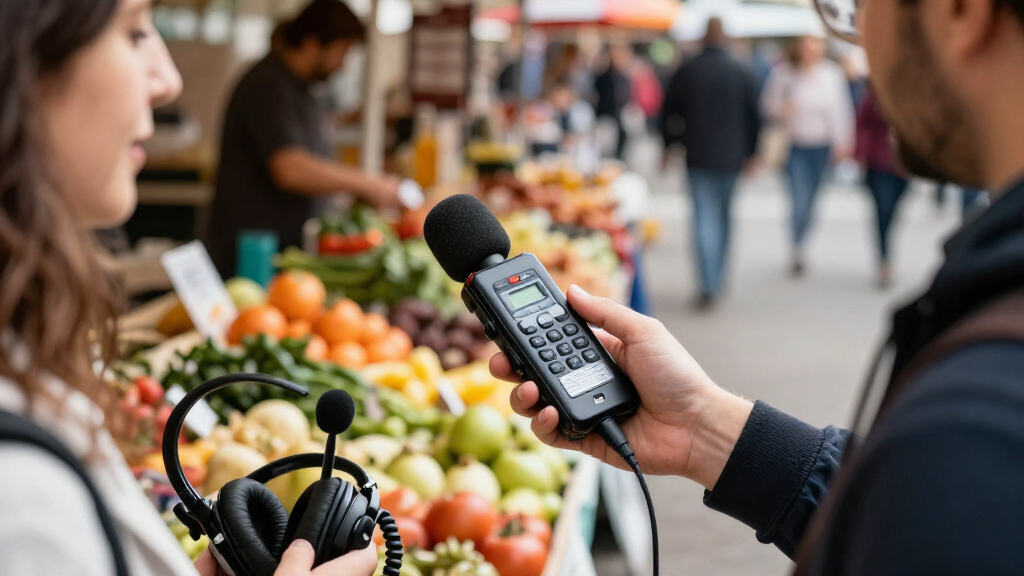
I ranked these recorders for real journalism tasks: recording interviews, gathering ambient sound, capturing a subject while moving, and reviewing or transferring audio afterward. The main criteria were microphone suitability, recording control, portability, workflow fit, and how clearly a product’s described features support field use. A large storage capacity or long battery claim did not outweigh an appropriate microphone setup or a practical way to position and operate the recorder.
The LS-P5 leads because its three-microphone configuration makes it the broadest fit across reporting situations. I placed the TASCAM DR-10L and Zoom H1n high for distinct needs—close-miked speech and straightforward stereo capture—rather than treating them as direct substitutes. Wearable models follow for reporters who need hands-free placement, while simpler voice recorders are lower because their listed features point more toward dictation and basic playback than flexible field recording. Microcassette models rank last for most current reporting workflows because tape-based recording brings extra handling and transfer steps.
Factors to Consider When Choosing Portable Audio Recorders For Journalists
Choose a recorder around the way you report, not the largest number printed on its listing. Before buying, map out where the microphone will sit, how long you expect to record, and how quickly you need to review and deliver audio. These broader tradeoffs can help prevent a recorder that looks capable on paper from slowing down an assignment.
Match the microphone to the interview setup
A recorder’s microphone arrangement shapes what it can capture cleanly before storage or editing enters the picture. Built-in stereo microphones suit room sound, ambience, and interviews where the recorder can sit near the speakers. A lavalier is better when one person is the main subject and the mic can be placed close to them. Think through whether you need one speaker, two people across a table, or a moving subject; those setups place different demands on mic position. A common mistake is buying a recorder with a large memory number while ignoring whether its mic can be placed near the voice. If the assignment changes often, prioritize microphone flexibility over a narrowly specialized setup.
Plan for monitoring and backup habits
Journalists often need to know during an interview whether the recorder is capturing usable speech, not discover a problem after leaving. Check which controls and playback or monitoring options are available for the model you are considering, and decide whether they suit your working conditions. Quiet, seated interviews allow time to check a device; a busy street or a moving interview may not. Set a repeatable routine: verify the recording has started, confirm placement, and listen to a brief sample when the situation allows. Do not assume voice activation removes the need to check that recording is underway. A simpler recorder can be the safer choice if its operation is easier to verify quickly.
Treat storage and battery claims as assignment limits
Capacity and battery life matter most when they match the length and pattern of your reporting day. Long events, multiple interviews, and travel without access to power call for more headroom than a short scheduled interview. But listed capacity does not tell you how conveniently a file can be located, reviewed, or transferred after recording. Leave space for unexpected follow-ups rather than filling a device to its limit before an assignment. For critical work, plan a transfer or backup point instead of relying on a single recording device for every file. A generous capacity is useful, but it cannot compensate for a poor mic position or an unreliable recording check.
Choose between hands-free placement and direct control
Wearable recorders can keep a mic close to a person while leaving the journalist’s hands free, which helps during walk-and-talk interviews or active reporting. A conventional handheld or pocket recorder is easier to place on a table and may make controls and status checks more accessible. These are different workflows, not simply large and small versions of the same tool. Consider who will wear the device, how visible it can be, and whether the interview subject’s movement could affect placement. A wearable unit is less useful if you need to adjust settings frequently or record a changing group of speakers. Decide whether discreet positioning or quick access to controls matters more for your assignments.
Check the transfer and archiving path before buying
Recording is only one part of the reporting workflow; files must also reach an editing system, newsroom, or archive. Confirm the connection and file-handling details for the specific model rather than inferring them from storage size or a product name. USB-C appears in one listed recorder, but a connector alone does not answer every question about transfer speed, compatibility, or file organization. If you use a phone or a particular computer setup, verify that the recorder’s transfer process fits it. Older microcassette models bring a different workflow from digital recorders and may require extra steps to preserve and share recordings. The less time you have between interview and deadline, the more important an uncomplicated transfer routine becomes.
Pay for flexibility only when your assignments need it
A more adaptable recorder can be worthwhile if you regularly move between interviews, ambient sound, and changing mic positions. Reporters who mainly capture short spoken notes may gain little from a field recorder with capabilities they will not use. At the same time, selecting a basic dictation device for assignments that demand stereo ambience or a close-worn mic can create limitations that are hard to fix afterward. Compare the specific features that alter your workflow, such as microphone configuration, lavalier inclusion, or wearable placement. Avoid treating AI noise reduction or voice activation as a substitute for good recording technique. Pay for a capability when it solves a recurring reporting problem, not just because it sounds advanced.
Frequently Asked Questions
Which recorder should I choose for interviews in a quiet room?
For a single interview subject, a recorder with a lavalier can keep the microphone close to the speaker; the TASCAM DR-10L is the clearest fit in this lineup for that arrangement. If you want a recorder that can also handle room sound and other field tasks, the LS-P5 offers a more flexible built-in microphone setup. A table interview with multiple speakers may call for a centrally placed stereo recorder instead of a lavalier on just one person. Think about mic distance and the number of voices before choosing based on storage capacity. Whatever the model, check placement and recording status before the conversation gets underway.
Is a wearable recorder a good choice for a walk-and-talk interview?
It can be, especially when hands-free placement and keeping the microphone near a moving subject matter more than frequent access to controls. The Instamic Pro Plus C models are the wearable options in this group, with one listed as mono and the other as mono/stereo. A conventional recorder may be easier to monitor or reposition when several people are speaking or the environment changes. Before relying on a wearable, consider who will wear it and whether you can check its status during the assignment. For a one-person moving interview, wearable placement may simplify the setup; for a group conversation, it may not capture everyone evenly.
Should I buy a digital voice recorder or a linear PCM field recorder?
Start with the material you report: short spoken notes and simple dictation call for a different workflow than interviews and ambient sound. The WS-series and several basic digital voice recorders in this roundup emphasize voice recording and playback, while models such as the LS-P5 and H1n are more directly suited to flexible field capture. Do not assume every product called a voice recorder offers the same microphone options or recording controls. If you expect to record room tone, stereo ambience, or varied interview setups, favor a model whose listed microphone configuration supports those tasks. If your work is mostly spoken notes, simpler operation may matter more than extra recording flexibility.
Are microcassette recorders practical for current journalism work?
They may suit someone who specifically needs a microcassette workflow or is working with existing tapes, but they are a less direct fit for routine digital newsroom production. The Olympus Pearlcorder J300 and Sony BM-575 use microcassette media, so handling and moving recordings into a digital editing or archiving workflow require more planning than with a digital recorder. Before choosing one, confirm that the media and playback process fit your assignment and equipment. For new interviews that need quick review and sharing, a digital model is generally the simpler route. A tape recorder’s distinct workflow should be a deliberate preference, not an accidental purchase.
What matters more for field reporting: storage capacity or microphone quality?
Microphone suitability and placement usually determine whether the recording captures the voices and surroundings your assignment needs; extra storage cannot repair distant or poorly placed audio. Capacity becomes more important when you record long events, many interviews, or work away from a computer for an extended period. The listings here range from modest memory figures to large advertised capacities, but that spread does not by itself rank recording usefulness. First choose the right mic format for your subject and environment, then confirm that capacity and battery arrangements cover the length of your work. Leave room for unexpected recording rather than treating the listed maximum as your target.
Conclusion
For most reporters seeking one versatile digital recorder, I recommend the OM SYSTEM LS-P5 as best overall, with its three-microphone arrangement offering the broadest fit in this lineup. The Zoom H1n is my best value-style pick for straightforward stereo field recording, while the TASCAM DR-10L is best for close-miked, single-subject interviews. Beginners who want a direct route to stereo capture can start with the H1n; those mainly recording short voice notes may prefer the simpler Olympus WS-853 or WS-883. For hands-free placement, choose an Instamic model after deciding whether mono or mono/stereo better fits the assignment. I would select a microcassette recorder only for a specific tape-based need, not as my default for current digital reporting.