

TL;DR
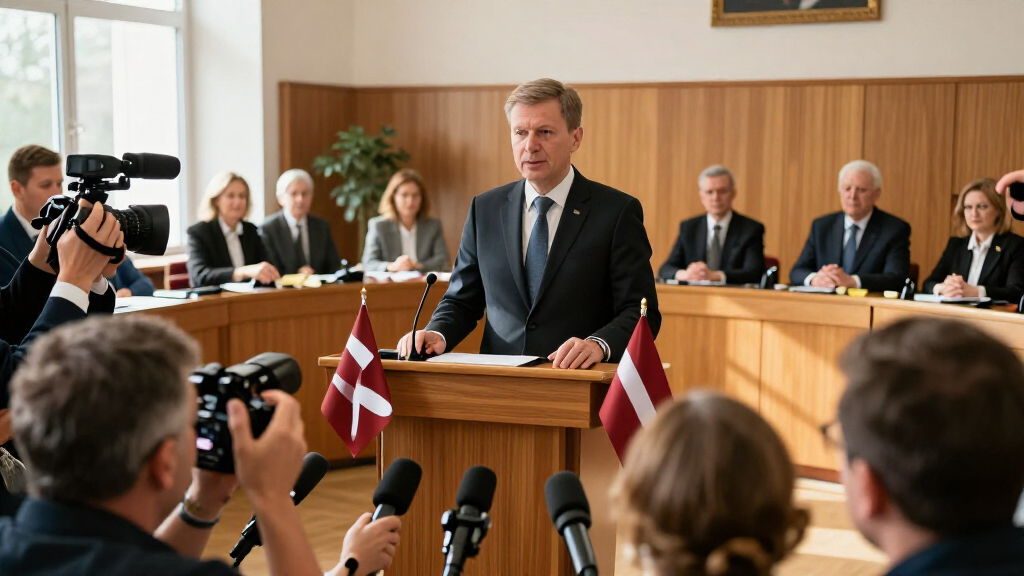
Latvian Prime Minister Andris Kulbergs has backed authorities’ decision to expel Russian journalist Leonid Ragozin and urged “great precaution” and “triple checking” when dealing with independent Russian journalism. Ragozin says his expulsion notice did not cite specific misconduct and describes the decision as political persecution; the government has said it relied on information from competent authorities.
Latvian Prime Minister Andris Kulbergs has backed the government’s decision to expel Russian journalist Leonid Ragozin, saying independent Russian journalism should be handled with “great precaution and triple checking.” Ragozin says the notice he received did not identify specific misconduct, while Latvia’s Foreign Ministry says the decision followed information from competent authorities.

Get everyday essentials delivered free with Prime
- Fast, free delivery on millions of items
- Prime Video, Amazon Music and more included
- Member-only deals all year
Kulbergs’ remarks came in response to the decision to remove Ragozin from Latvia. Plans to declare the journalist persona non grata became public in early October, according to Meduza. On October 13, Ragozin received official notice that he was being expelled from the country.
Ragozin said the notice did not cite “any specific misdemeanors or statements” that had prompted the decision. He views the expulsion as political persecution in retaliation for his work and public statements. That explanation is his allegation; the available account does not establish the government’s specific grounds for the action.
Latvia’s Foreign Ministry has said the decision was based on information “from the competent authorities.” The ministry also said it followed consultations with the interior minister and the prime minister. The government has not, in the source material, publicly identified the underlying information or set out particular acts attributed to Ragozin.
A Test for Latvia’s Media Policy
The case brings national security decisions and the treatment of independent Russian journalists into direct focus. Latvia’s authorities have invoked information from competent agencies, while Ragozin says he was not told what specific conduct justified his expulsion. That leaves readers without enough publicly available detail to independently evaluate the stated basis for the measure.
Kulbergs’ call for “triple checking” also signals that the government sees work connected to independent Russian journalism as an area requiring particular scrutiny. The remarks do not, by themselves, explain what checks officials apply or establish that independent reporting is grounds for expulsion. The distinction matters: a government can take security measures, but public explanation helps clarify how those measures are connected to an individual case.
For journalists and media organizations working across borders, the outcome may affect perceptions of whether they can report from Latvia and what protections or risks they face. The source material does not show that Latvia has announced a wider policy change or that other journalists are subject to the same action.
Popular right now

Vitamix Propel Series 510 Professional-Grade Blender, 48 oz, Slate

Dyson Ball Animal 2 Total Clean Upright Vacuum Cleaner, Blue

Bose QuietComfort Wireless Noise-Cancelling Headphones, Twilight Blue
As an affiliate, we earn on qualifying purchases.
How the Expulsion Developed
The reported sequence began in early October 2026, when plans to declare Ragozin persona non grata became public. On October 13, he received the formal notice. Kulbergs’ comments were reported two days later, on October 15, amid discussion of the government’s decision.
The Foreign Ministry’s account, as reported by Meduza, refers to information from competent authorities and consultations with the interior minister and prime minister. It does not publicly detail the evidence or explain which legal grounds were applied. Ragozin’s statement about the notice concerns what it told him; it does not independently establish what information authorities considered internally.
Meduza reported the remarks and the competing accounts. Its report says the English-language article was translated from Russian using an AI model and reviewed by an editor. The article’s central facts are the prime minister’s stated position, the date Ragozin received notice, the ministry’s general explanation and Ragozin’s response.
“Independent Russian journalism “has to be treated with great precaution and triple checking.””
— Latvian Prime Minister Andris Kulbergs
The Government’s Grounds Remain Unspecified
The information made public so far does not identify the specific evidence or conduct that led authorities to expel Ragozin. It is also unclear whether officials provided additional reasons directly to him beyond the notice he described, what legal provisions were used, or whether he has a route to challenge the decision.
Ragozin’s claim that the move was retaliation for his journalism remains an allegation. The ministry’s reference to competent authorities is the government’s stated explanation, but the source material does not provide enough detail to assess the underlying information. No broader expulsion policy or further cases are identified in the report.
Further Reasons or Review May Follow
The immediate next development would be any further explanation from Latvian authorities about the basis and process for the expulsion, or a response from Ragozin about whether he will challenge it. The source material does not report a scheduled hearing, appeal, or government announcement.
For now, the confirmed public record remains limited: authorities notified Ragozin on October 13, the Foreign Ministry cited information from competent agencies and consultations with senior officials, and Kulbergs publicly backed the decision while urging heightened scrutiny of independent Russian journalism. Whether the government will disclose more about the case is not yet clear.
Key Questions
Who is Leonid Ragozin?
Leonid Ragozin is a Russian journalist whom Latvian authorities have decided to expel from the country. The source report describes him as an independent journalist but does not provide a fuller biography.
When did Ragozin receive the expulsion notice?
Ragozin said he received official notice on October 13, 2026. Plans to declare him persona non grata had become public earlier in October.
What reason did Latvia give for the decision?
Latvia’s Foreign Ministry said the decision relied on information “from the competent authorities” and followed consultations with the interior minister and prime minister. The source material does not specify the underlying evidence or conduct.
Why does Ragozin say he is being expelled?
Ragozin describes the expulsion as political persecution linked to his work and public statements. That is his claim; the available report does not independently establish it.
What did Prime Minister Andris Kulbergs say?
Kulbergs backed the expulsion and said independent Russian journalism should be treated with “great precaution and triple checking.” He also said, “We were way too patient, way too tolerant,” according to the report.
Source: rss